DNA FINGERPRINTING

BY: RAHUL ANDHARIA (MSIWM001)

Technique to determine the nucleotide sequence at certain portions of DNA, which is unique to all is known as DNA fingerprinting. Human DNA is only 0.1% unique and 99%similar. This 0.1% makes every individual unique. DNA remains stable even after 1000 years. DNA Fingerprinting can also be called as DNA profiling. Sample of DNA can be collected and series of procedures are performed to determine the amount of polymorphism(difference in phenotypic expression)in noncoding repetitive sequence.

History:

By using Restriction digestion length polymorphism, in the year 1985, the concept of DNA fingerprinting was given by Alec Jeffery. He used Autoradiography as well as RFLP( Restriction fragment length polymorphism) methods for his work. DNA Fingerprinting work in India was revolutionized by Dr Lalji Singh, and hence he is known as father of DNA fingerprinting in India.

Principle of DNA fingerprinting:

  • 95% of the human genome is made up of noncoding, repetitive DNA, about only 5% is regulated by formation of proteins, we know it as genes.
  • By using Density Gradient centrifugation, this region’s can be separated as satellites, and can be called as satellite DNA.
  • Base repetition , is in tandem in the satellite DNA. Satellite DNA are of two types namely, microsatellites and minisatellites depending upon  number of repetitive tandem units, base composition and their length.
  • Polymorphism is shown by satellite DNA. Generally the term polymorphism is used when a variant at locus present with 0.01 frequency in a population.
  • Mutations gives rise to variations. Non coding region has mutations and these mutations gets build up with time, and forms basis of DNA polymorphism.
  • Length polymorphism, is the basis of the junk DNA region, showing changes in the Physical length of DNA molecule.
  • Number of tandem repeated varies with specific loci. This repeats are of two types based on their size, STR(short tandem repeats) and VNTRs(variable number of tandem repeats).
  • STRs have base repeats of 2-5bp while VNTRs has 9-80bp repeat.
  • Number of VNTRs will differ at particular region of DNA primarily due to deletions, insertions or mutations in base pairs because child receives 50% of DNA from mother and the other 50% from father.
  • Because of this reason, the VNTR component in each individual is different and this is the main principle in DNA fingerprinting concept.
  • Thus, the basics of DNA fingerprinting is that, DNA of individuals upon restriction digestion, results in fragment sites which will differ in their cleavage sites positions.
General Steps involved in DNA fingerprinting:

  1. First step is isolation of DNA. This isolated DNA is than treated with chemicals to break open the cell membrane to remove other materials, and extract pure form of DNA. Sample is generally taken from blood, cheek swabs.
  2. The next step, is to digest the isolated DNA with restriction enzymes. Generally, repeated sequences(DNA portion with exact same sequence) are used so that they can be identified by same restriction enzymes. Common examples of DNA repeats used are VNTRs and STRs.
  3. As per the fragment size, digested fragments are than separated by using electrophoresis. (Separation based on size and charge by passing electric current).
  4. Transfer (blotting) of separated fragment onto nitrocellulose of pvdf(polyvinyl difluoride) membranes. Gel is treated with weak acids, which break opens the DNA into individual nucleic acids which will easily get rub off onto paper.
  5. Labelled VNTR probes are used to hybridize the fragments.
  6. Autoradiography, is used to analyse the hybrid fragments.

Methods of DNA fingerprinting:

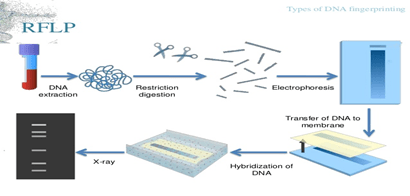
  • RFLP (Restriction fragment length polymorphism):
    • DNA isolation from sample material. Use large sample size for RFLP to obtain better results.
    • After sample isolation, subject the DNA for restriction digestion.
    • Separation of digested sample by Agarose gel electrophoresis.
    • Transfer of separated DNA to nitrocellulose membrane. The sample is than hybridised by labelled probe which is specific for VNTR region.(southern blotting)
    • After this, x-ray film is developed from the southern blot. On the x-ray film only hybridised regions(where the radioactive probe will bind) will be shown.
    • Analysis with other samples and studying band pattern and comparing different samples will give the result of DNA fingerprinting.

Advantages: Gives more accurate results compared to the PCR method. Generally because, the sample size used is large, sample DNA is fresh and also there is no chance of amplification contamination, which tends to happen in PCR
Limitations: Takes longer time to complete and proves to be a costly method for more frequent uses.

  • PCR Amplification of Short Tandem Repeats( STRs):
    • Particular variable region is amplified in thousands of copies.
    • Known repeat sequence of STR is amplified and separated with the help of electrophoresis.
    • Distance travelled by STR is noted.
    • Primers are specially designed for PCR amplification for the purpose of attaching highly conserved common non variable region of DNA which flanks the variable region of DNA.
    • STR sequence sizes are compared with various samples to give the result of DNA fingerprinting.

Advantages: Requires small amount of sample, shorter duration, faster results and less costly method.

Limitations: chancesofamplification contamination, not very accurate method.

Applications of DNA fingerprinting:

Generally, this technique is employed to identify individuals of same species by comparing their DNA.

  1. Forensic science:
  2. DNA is isolated from the crime scene and is generally useful in solving crimes. The isolated DNA is compared with the VNTR prototype.
  3. Common materials used for profiling of DNA are: blood, hair, semen, body tissue cells, etc.

       B.    Paternity and Maternity determination:

  • Dispute cases, inheritance cases and immigration cases are generally solved by parent-child VNTR analysis.
  • VNTR are generally acceded from his or her parents to the individual.

        C.    Personal identification:

  • DNA fingerprint pattern is unique in each individual.
  • Hence, this is used as a personal identification bench mark and as a genetic barcode of identification.

         D.   In diagnosis of inherited disorders:

  • Used in diagnosis of inherited disorders in new-born and prenatal.Some of this disorders include Huntington’s disease, haemophilia, cystic fibrosis, sickle cell anaemia.

          E.   Used to detect maternal cell contamination:

  • Maternal cell contamination is the common problem with prenatal diagnosis. Sometimes the amniotic fluid contains maternal tissues.
  • This type of contamination can increase the chance of false positive results and can hinder in carrier identifications.
  • So by using STR or VNTR markers and by performing gel electrophoresis, maternal cell contamination is identified during genetic pregnancy testing.

           F.   Breeding program:

  • Generally, breeders use phenotype to determine the genotype of plants or animals. It is difficult to determine whether plants are homozygous or heterozygous on the basis of appearance.
  • Thus, DNA fingerprinting method can be used for precise determination of the genotype.
  • This approach is used primarily in breeding hunting dogs and race horses.

DNA fingerprinting has many applications and is a useful technique in development of cures for inherited disorders, as the DNA prototype associated with disorder can be studied from the relatives. The accuracy for DNA fingerprinting relies more on RFLP method than in PCR methods.

MUSHROOM CULTIVATION

Content:

  • About
  • Morphology
  • Life cycle of mushroom
  • Mushroom cultivation requires

About:

  • Mushroom is a fungus which has a fleshy, spore bearing fruiting body, generally growing on the soil surface of on decaying woods.
  • The word ”mushroom” is used for the fungi which has a stem, a cap and gills on the lowerside of the cap.
  • The function of gills is to produce microscopic spore which further spread across the ground and give rise to many more mushrooms.
  • The spores produced by the gills are called basidiospores.
  • Mushroom lacks chlorophyll and is saprophytic in nature because they grow on dead organic matter.
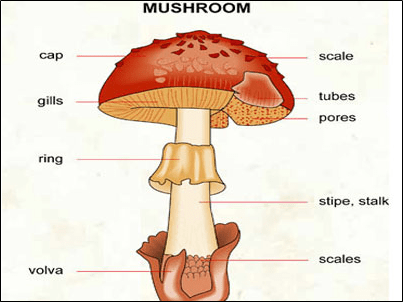
  • Consist of mainly two parts stalk (stipe) and cap (pileus).
  • A mushroom develops from underground mycelium it is protected by a thin membrane which eventually raptured as the growing mushroom pushes upward, leaving fragment on the cap.
  • There is another membrane which is attached to the cap and the stalk, also raptured and develops into a remnant ring (annulus) on the stalk.
  • On the cap’s undersurface there is radiating rows of gills which bears club-shaped reproductive structures (basidia) give rise to minute spores basidiospores each spores germinates into a mushroom.

Morphology:

  • A mushroom develops from a primordium which is nodule or pinhead less than two millimetres in diameter, found nearly on the surface of the substrate.
  • The mass of thread like hyphae make up the fungus.
  • Mushroom consist of mycelia which absorbs nutrients from the soil, it doesn’t require sunlight for growth.
  • The primordium develops into a round structure of hyphae similar to an egg called “button”. Button has a roll of mycelium, the universal veil that surround the developing mushroom.
  • With the expansion of the mushroom the universal veil ruptures and remains as cup (volva) at the base of the stalk.
  • The cap like structure is called as pileus.
  • Mycelium is the underground part which contains numerous branched network of hyphae used to absorb nutrient from organic matter where it grows.

Life cycle of a mushroom:

Cultivators follow the path of the life cycle of mushroom as the life cycle is generally difficult to observe

Inoculation:

  • Spores from mushroom are spread on substrate and after getting favourable condition it germinates.

Spore germination:

  • Spores give rise to the hyphae; compatible hyphae then mate and create mycelium.

Mycelial expansion:

  • Work of mycelium is to break down organic matter and absorb nutrients from the surroundings.
  • During the growing stage of the mushroom the mycelium grows at an exponential rate, mycelium encounters many predators  which mycelium repels with a collection of enzyme and compounds hence, mycelium is also known as the immune system of the mushroom.

Hyphal knot:

  • Mycelium then condenses into hyphal knot which then give rise to primordia (baby mushroom).

Primordia formation:

  • Produces enzyme and optimizes the constituents of both mycelium and developing fruitbody.

Fruitbody selection:

  • During the development of mushroom a thousand of primordial formed, but the most promising is selected and developed into mature fruitbodies.

Mature fruitbody:

  • In this stage all the nutrient and energy is used to develop the fruitbody which then produces spores by sexual reproduction.

Spore release:

Spores produced by the mature fruitbody release into the environment for propagation those that land on the favourable substrate get germinated and begin the new life cycle.

Mushroom cultication requires:

  • Closed rooms with proper ventilation
  • Power/fuel supply for maintaining the temperature.
  • Well skilled labour.
  • Air cooler, humidifiers.
  • Contamination condition like sterilized paddy straw in hot air oven.

Mushroom cultivation process:

Spawn production:

  • The first process of mushroom cultivation is spawn production, the spores is bought from the market

Composting:

  • Compost is the key ingredient for growing mushroom; compost is made up of straw, gypsum, chicken manure and water added to the horse manure.
  • These ingredients play its unique role in the compost preparation, gypsum ensures proper acidity, straw improves structure and both the manure provides nutrient.
  • The compost is prepared in tunnels which prevent smell from it.
  • The fresh compost looks like dark brown (earth from forest).

Preparing the bag:

  • Packing of compost is done in the plastic bags of dimensions 12*24 inches.
  • Two inches of straw than sprinkle few spores on the top of the straw along the edges. Spores sprinkled in the middle will not grow so the spores are sprinkled along the edges.
  • Watering of inoculated compost filled trays:
  • Watering should be done twice a day or less depends on the moisture availability.
  • Water is spread on the newspaper to maintain humidity.
  • Room temperature should be at 24oC for 12- 15 days for good growth of the mycelium.

Harvesting of mushroom:

  • Harvesting is by twisting and uprooting the fruitbody,
  • The lower part of the stalk is removed where the compost remains attached.

Storage of mushroom:

  • The fruitbody is stored at 4OC for few days.

Nutritional value and medicinal value:

  • Most mushroom has high protein content
  • Fibre lowers the cholesterol and is necessary for the digestive system.
  • Vitamin D – absorption of calcium.
  • Having all essential amino acids.
  • Contain folic acid
  • Contain vitamins like B, C, D and K.

Some edible and poisonous mushrooms:

Edible mushrooms:

Agaricus brunnescens

Agaricus Campestris

Pleurotus edodes

Poisonous mushrooms:

Amanita phalloides

A. virosa (destroying angles),

 A. verna (fool’s cap),

 A. muscaria

TOP MICROBIOLOGY COLLEGE IN UTTAR PRADESH

S.No.COLLEGE NAMETYPELocationLINKS
1Amity UniversityPrivateNoida, Uttar pradeshhttp://www.amity.edu/
2Chhatrapati shahu ji maharaj university (CSJMU)State universityKanpur, U.P.http://www.kanpuruniversity.org/
3Banaras Hindi universityPublicVaranasi,U.P.http://bhu.ac.in/
4Bundelkhand universityState universityJhansi,U.P.https://www.bujhansi.ac.in/
5Sam higginbottom university of agricultureState universityPrayagaraj,U.P.http://shuats.edu.in/
6Noida international universityPrivateGreater noida, U.P.http://www.niu.edu.in/
7Amity UniversityPrivateLucknow,U.P.https://www.amity.edu/lucknow/
8Dr. Ram Manohar Lohia Avadh university (RMLAU)State UniversityFaizabad, U.P.http://www.rmlau.ac.in/
9Galgotias universityPrivateGreater noida,U.P.http://galgotiasuniversity.edu.in/
10Integral universityPrivateLucknow,U.P.http://www.iul.ac.in/

GENOMICS AND PROTEOMICS

BY: RAHUL ANDHARIA (MSIWM001)

Genomics:

Complete set of genes or genetic material present in cell or an  organism is called a genome. Study of this genome is called as genomics. Genomics studies comprises of studying large number of genes through automated tools.

Genomics implies bioinformatics, sequencing methods, mapping methods, computational biology, recombinant DNA technology to study and analyse functions and structures of genomes.

History of Genomics:

Genome sequencing first started in the year 1970, when biochemist Frederick Sanger sequenced the genome for the first time. Virus and mitochondrion genomes were sequenced by Sanger in early 1970s.

 Types of genomic studies:

  1. Structural Genomics: It involves gene identification, construction of genetic and physical maps, annotating gene function and comparison of genome structures. It involves  determining structure of each and every protein encoded by genes.
  2. Functional Genomic studies:  understanding of how genes and intergenic regions of genome contribute to various biological processes. It also deals with the study of individual components of body and how it affects the phenotype. For example- functional genomics is useful in studying the dynamic expression of diseased genes.
  3. Comparative genomics: it is the comparison of genomes of different organisms. Basically it includes gene number, gene content and gene location comparison. The comparison between various genomes provides insight on conservation of different genomes and how the genome is being evolved in a particular organism.  This can also useful in genome evolutionary studies among various species.
  1. Mutation genomics: deals with studying the genome in terms of mutation that is it involves studying mutated genes and it’s effects and how gene mutations leads to diseases.

Methods in Genomics:

Genome mapping:

  • Mutations, relative locations in genes and traits on a chromosome can be identified by using genome mapping.
  • In this method, a particular gene is located or assigned at a particular position in the chromosome and than relative distance between the gene and the chromosome is mapped.
  • Linkage maps- It shows how genes and genetic markers are arranged in a chromosome.
  • Physical maps- It will show the physical distance between chromosomal landmarks and generally, physical maps represents a chromosome. The distance is measured usually in nucleotide bases.

Genome sequencing:

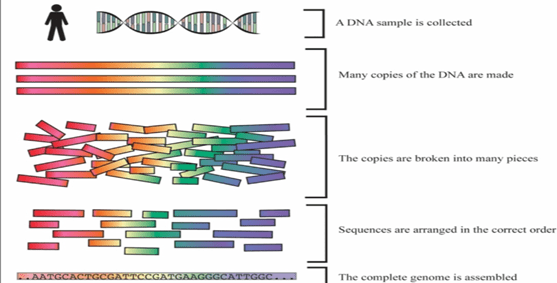
  • To sequence a genome, it is important to figure out the exact order of DNA nucleotides or bases. (A,T,G,C bases).
  • Sequencing the entire genome is a cumbersome task. The process involves breaking the DNA of genome into smaller pieces first,  than sequencing those each and every pieces and those pieces are than assembled as a single long consensus ( sequence with similar function and structure)
  • The DNA sequencing method in today’s modern era is very rapid and hence provides whole genome sequencing of various genomes of different species, which is instrumental in studying various diseases and evolutionary forms of life.

Genome sequence assembly:

  • Short sequence reads are generated from DNA clones.
  • These reads are around 500bases. Short sequence reads are joined together to form larger fragments after removing overlaps to assemble a whole genome sequence.
  • These new long sequences can be called as coting’s. They are around 5000-10,000 bases long.
  • Scaffold is formed from many number of overlapping contigs.( Oriented along a chromosome).
  • These scaffolds are than connected to make a final genome map.
  • Generally, computational tools are required to identify correct contigs and proper assembly of sequence reads.
  • Some common examples of assembly programs are Vecscreen, Phred, Phrap, TIGR assembler.

Genome annotation:

  • To analyse sequence for biological features before depositing it into the database, comments are provided for the sequences, which is called genome annotation.
  • Gene prediction and function assignment are the two types in annotating genomes which can be done using bioinformatic tools.

Human genome project: (HGP):

One of the most successful projects in scientific discovery, HGP was a major breakthrough, where scientists mapped the complete sets of genes, together called a genome. The HGP project was started in 1990 and completed in the year 2003. This was the first of its kind project that gave us the genetic blueprint for building a human being.

Applications of Genomics:

  1. Can be used in prenatal diagnosis.
  2. To analyse gene expression profiles of organisms.
  3. To identify diseased gene.
  4. Gene therapy –( defected gene is replaced by correct gene) used particularly to treat Genetic disorders.
  5. Genome editing ( to replace sections of DNA sequences, or to edit a particular sequence).

Proteomics:

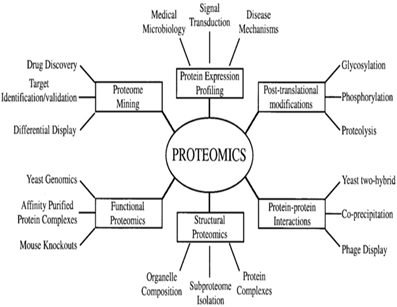
It is the study of complete set of proteins expressed by the genome.(study of functions of proteomes) Set of complete proteins encoded by a particular genome can be called as a Proteome. This includes basically studying in depth about Protein-Protein Interactions, protein modifications and how a particular protein functions in different organisms.

History of proteomics:

Proteomics is still evolving as a field and is considered as a relatively new field of molecular biology. The history of proteomics dates back to 1995, when Mark Wilkins, for the first time coined the term proteome. There are around 400,000 proteins founded in human proteome than number of protein coding genes, which was one of the major findings of the Human genome project.

First protein studies were carried out in E.coli using 2 dimensional gel electrophoresis by O’Farrell in the year 1975.

Types of proteomic studies:

  1. Expression proteomics-  it involves studying gene expression between samples that differ by some variable. This can be useful in identifying particular proteins involved in disease.
  2. Structural proteomics- it involvesstudying structure and nature of protein complexes. It involves studying and analysing Protein-Protein Interaction networks.
  1. Functional proteomics: in this role of a particular protein or group of proteins is studied in different cellular pathways, signalling pathways and in PPI networks.

Categories for designing typical proteomics experiment: ( methods used for proteomics)

  • Isolation and protein separation- By using protein electrophoresis, complex mixtures of proteins can be resolved.
  • Acquiring protein structural information for identification and characterization of protein-

ES sequencing( Edman sequencing):

  • This sequencing was done to identify N-terminal sequences of protein.
    • It involves determining the sequence of N-terminal of a protein in order to predict it’s start site.
    • Proteins separated by SDS page can be more efficiently analysed by ED sequencing.
    • Major limitation with this technique is, we cannot modify the N-terminal of protein. For example, if a protein is blocked on the N-terminal, before the sequencing procedure, it will be very difficult to identify that protein.

Mixed peptide sequencing:

  • Cyanogen bromide is used to cleave protein to convert it to a peptide.
  • This is followed by ED sequencing.

Mass spectrometry:

  • Can identify gel separated proteins.
  • Sensitivity levels are very high in mass spectrometry, and that is the reason, this technique is preferred more over ED sequencing.
  • In the gel by using, trypsin, proteins are digested into peptides.
  • ESI(electrospray ionisation): in this approach of mass spectrometry, the peptides are fragmented and than ionised by using an electrospray in a tandem mass spectrophotometer. Sample flows from microcappillary tube to orifice, due to potential difference between the two, it results in generation of fine droplets. This has the ability to dissociate into carboxyl terminal, which gives fragments a and b.

Peptide mass mapping:

  • Eluted peptide mixture is used to obtain mass spectrum of the peptide eluted. This is followed by studying the peptide mass finger print resulting from the peptide spectrum.
  • In this method, as trypsin cleaves proteins at arginine and lysine amino acid, tripeptide mixtures are generally analysed in peptide mass mapping.

  Protein databases and utilization:

  • Submission of sequences and sequencing proteins or peptides leads to creation of protein assembly which are called as Protein data bases.
  • The database contains all the basic protein data.
  • The main aim of creating such database is to have accurate and quick results and to store information  at one place.

Applications of proteomics:

  1. Studying gene expression profiles of various proteins.
  2. To analyse Protein-Protein Interactions- how one protein interacts with other proteins and leads to changes or alterations, it’s expression and level of expression.
  3. To study post-translational modifications like glycosylation and phosphorylation.
  4. Molecular medicine- clinical proteomics information is used to design drugs. Proteins are considered as medical relevance for this studies and are used as targets to study their role in disease progression, and to develop better therapeutics.

MEDICAL MICROBIOLOGY

BY: RAHUL ANDHARIA (MSIWM001)

Medical Microbiology

Deals with prevention, diagnosis and treatment of infectious diseases caused by infectious agents like bacteria, fungi, parasites and viruses. This field is also known as Clinical microbiology. Understanding of various infectious agents and how this agents causes the disease, development and pathogenesis of the disease are being studied under medical microbiology.

History of medical microbiology:

  • Infectious diseases caused by transfer of seed like entities was first given in the year, 1546 by Girolamo  Fracastoro. He said that the disease can be caused by direct contact or by indirect contact with the infectious agent.
  • Advancements in the field of medical microbiology actually started in the year 1888, when Pasteur institute was established in Paris. Louis Pasteur and Robert Koch are considered as father of medical microbiology due to their contributions in the field.
  • Disapproval of the spontaneous generation theory(theory which claimed that non living matter is involved in giving life to living things), Pasteurization(heating at lower temperatures- less than 100 degree Celsius)methods, vaccines for Tabbies, cholera and anthrax(caused by- Bacillus anthraces) were proposed by Louis Pasteur.
  • Specific microbes are responsible to cause a particular disease. The concept of Germ theory of Disease, was given by Robert Koch. Koch cultured various Micro-organisms in the lab that caused the disease, including bacteria, mycobacterium tuberculosis, which is known to cause Tuberculosis. He used to grow Micro-organisms on solid medium like agar.
  • Koch’s postulates:
    • Organisms suffering from the disease should have the microbes that are responsible for the diseases. Microbes should not be found in healthy organisms.
    • Pure culture must be used to isolate the Micro-organisms from the diseased organism.
    • When the Micro-organism is Administered into a healthy organism, it should confer the disease.

From the same inoculated diseased experimental host, the same Micro-organism must be isolated and it has to be identical to the original agent that was responsible for the disease.

  • Concept of anti-sepsis was given by Joseph Lister. He showed that carbolic compounds, now it’s known as phenol, can be used for wound sepsis and cleaning.
  • Extensive work on TMV(Tobacco mosaic virus) was carried by Dmitri Ivanovsky. He studied TMV and differentiated it with bacteria by preforming a simple experiment in the year 1892, where he showed that when passed through filters, larger bacteria will be retained .
  • Propagation of  polio virus in monkey kidney cell cultures was given by John Enders, Thomas Weller and Frederick Robbins.

Fields in Medical microbiology:

  1. Microbial Physiology: It deals with the studies of growth of Micro-organisms, metabolism of micro-organisms and microbial cell culture. It also deals with pathophysiology of micro-organisms and role of Micro-organisms in diseases.
  2. Microbial Genetics: It involves studying how microbial genes function. Organisation of microbial genome, it’s genomic characteristics are being studied in this field.
  3. Parasitology: involves in depth studies of parasites. Sample studies can be done using feces, blood, urine and sputum samples.
  4. Virology: It deals with detail studies of various types of viruses. Host-viral mechanisms, viruses mode of action in host, diseases caused by viruses are some aspects involved with virology.
  5. Immunology: Immune system studies, which involves studying hosts immune system and it’s role in combating pathogens and foreign substances. Antigen-antibody interactions are primarily used as diagnostic tools in diseases.

Role of Medical microbiology:

  • When a Patient experiences any signs of infections, physicians recommends medical and diagnostic laboratory procedures.
  • Antibiotic sensitivity test, direct stain or culture are the type of tests performed.
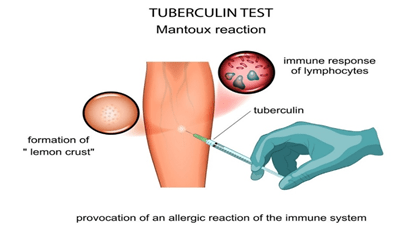
  • Different types of testing’s are performed like collection of appropriate specimen and than plating the specimen on appropriate culture medium, inoculating and sub culturing it and than performing different tests to confirm the type of disease. For example- Mantoux test is used for tuberculosis.
  • Serological, biochemical, molecular tests are performed and the types of micro-organisms associated with the disease are identified.
  • Basically it involves testing samples for the presence of infectious agents, and than performing diagnostic procedures.
  • Various subfields have different procedures, like for example- immunology procedures involves performing ELISA to detect antibodies in blood.

Types of Infectious agents:

Bacteria:

There are certain bacteria which are essential for the human body and it’s functions. These are termed as normal flora. For example- gut microbes are involved in synthesis of vitamin k and vitamin B12. During immunocompromised conditions, this microflora can lead to infections.

Invasiveness: can spread within the host body. Structures like capsules helps them to skip phagocytosis. Toxins also help them to defend host machineries.

Immunopathology: host immune response is responsible for pathogenesis in most of the Infections.

Viruses:

They are obligate parasites( they require host system to grow and develop as they cannot synthesise proteins and utilize it’s own energy). Viral diseases are more common in humans, particularly in children.

Invasiveness: They require host machineries to multiply and divide. They make the host system to synthesise viral components and as a result, host machineries are destroyed by viral components leading to viral diseases.

Immunopathology: host immune response is responsible for pathogenesis in most of the Infections.

Fungi:

Invasiveness: mucosal tissues or keratin are the places commonly where fungi can multiply and cause the Infection.

Toxin Production: food contaminated with fungi can cause serious food poisoning.

Immunopathology: When fungal spore or hyphae are inhaled, can cause hypersensitivity.(allergy).

Parasites:

Much more complex than viruses and bacteria. They can cause disease via multiple routes. Example- Giardiasis- Intestinal infection- by giardia, mainly through contaminated food and water.

Applications of Medical microbiology:

  • Vaccine development: understanding pathophysiology of the disease and than preparing a vaccine against it. Basically vaccine generates a immune response which will be lacking when the body is compromised during a disease. Rubella and measles are the two common examples of diseases which have been eradicated by vaccination.
  • Diagnostic tests: cultural tests, serological tests, microscopy, PCR all this diagnosis testing helps to identify infectious agents.

ISOLATION OF MICROBES FROM SOIL

Content:

  • Theory
  • Requirements
  • Procedure
  • Observation
  • Result

Theory:

  • Soil contains diversity of microbes include bacteria, fungi, algae and protozoa.
  • Bacteria is the most abundant and important microorganism.
  • They are unicellular, non-chlorophyll containing, very small and primitive microorganism.
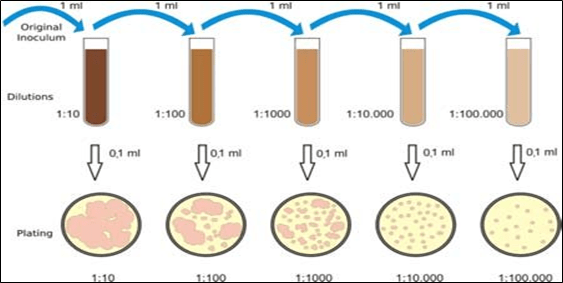
  • There are various methods for isolation and enumeration of microorganism from any material but serial dilution is the most simple and commonly used method.
  • Principle of this method is that when any sample containing microbes spread on agar plate, each single microorganism will develop into colony.
  • Since the no of microorganism in soil is high, so spreading the sample in an undiluted manner leads to the dense growth of microorganism with overlapped colonies makes harder to isolate and study.
  • So it is necessary to dilute the sample before spreading and this is done by the serial dilution method.
  • Serial dilution made the concentration low to 10, 100, 1000 and more folds.  The extent of dilution is depends on the type of sample or material.

Requirements:

  • Sterile culture tubes
  • Nutrient agar petriplates
  • Micropipettes and tips
  • Autoclaved water
  • Cotton plugs
  • Glass spreader

Procedure:

  • First prepare stock solution by adding 1 g of soil to 10 ml autoclaved water in a test tube.
  • Take 5 test tubes and mark 10-2, 10-3, 10-4, 10-5 … with a glass maker and add 9 ml autoclaved water to each test tube.
  • From the stock solution pipette 1 ml solution with the help of micropipette and transfer it to the second test tube containing 9 ml of autoclaved water marking 10-2.
  • From second test tube transfer 1 ml solution to the next tube, repeat this to desirable dilution.
  • Now from each test tube pipette out  80-100μl solution and spread on the solidified agar media plates with a spreader.
  • Incubate the plates for 18-24 hours at 37OC.

Observation:

  • After incubation observe the number of colonies and also observe the different growing patterns of the colony as well as morphology.

Results:

  • By using the following formula calculate the number of microorganism per gram of the soil.
  • Viable cells/ gram of soil =  X dilution factor

CELL SIGNALLING

BY: RAHUL ANDHARIA (MSIWM001)

Communication between cells is referred to as cell signalling. Cell signalling is the process through which cells responds to external stimuli. While studying the duct secretion system, Claude Bernard, in 1855 discovered process of cell signalling.

What kinds of signals do cells receive?

  • Cells communicate by sending chemical signals.
  • Sending cell is the one which sends the signal in form of proteins or other molecules which is received by a target cell.

How do cells recognise signals?

  • Cells posses special molecules called receptors which binds to signalling molecules and initiate physiological response.
  • For a target cell to detect the signal, it must have a appropriate receptor to bind to.
  • Receptor is called a transmembrane protein, which binds to cells and transmits signals.

How do cells respond to signals?

  • When a signal is received by a receptor protein, it undergoes conformational changes and leads to series of biochemical reactions.
  • Signal transduction cascade( intracellular pathway) than amplify the message producing many intracellular signals from the receptor to which it was originally bound.
  • When receptors are activated, it initiates synthesis of second messenger(ligand) which coordinates intracellular pathways.

Example of molecule common second messenger- Cyclic AMP

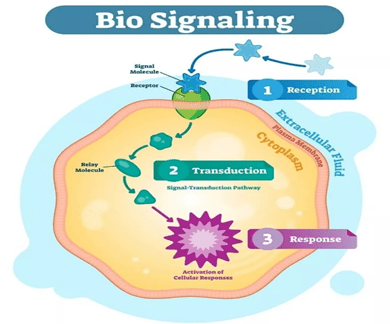
Three stages of cell signalling:

  1. Stage 1 where receptor molecule binds with the signal molecule, called reception stage.
  2. Stage 2, in which series of chemical signals results in activation of enzyme molecules, called signal transduction stage.
  3. Stage3, resulting cellular responses, which is the response stage.

Forms/types of signalling:

Paracrine signalling:

  • Cell signalling to neighbouring cell.
  • In this type of signalling, signals are transmitted within relatively shorter distances.
  • Allows cells to coordinate locally with neighbour cells.
  • They play a role in many tissue and context signalling, but their vital role is during development where they communicate one group of cells to select which type of cellular identity from other group of cells.
  • Example- spinal cord development in humans.

Synaptic signalling:

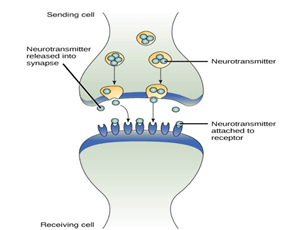
  • In synaptic signalling, nerve cells transmit the signal. This kind of signalling is an example of paracrine signalling.
  • The name is synaptic, because the signal transduction takes place between Junction of two nerve cells, which is called a synapse.
  • When a signal is received by a sending neuron, an electrical impulse is generated in the cell which travels through Axon, a fibre like extension.
  • Ligands, called neurotransmitters are released, when impulses reaches synapse.
  • Neurotransmitters than, binds to the receptors of the receiving cell, causing chemical changes in the cell.
  • Immediately, the sender cell than, degrades the neurotransmitters that are released into the chemical synapse. This way the system resets again, to receive a second signal and this process continues.

Autocrine signalling:

  • In autocrine signalling, the cell targets itself, that is cell signals itself. The ligand released will bind to the cell’s own receptors.
  • This type off signalling plays many roles, like for example autocrine signalling is involved in development, where it guides cells to take-up it’s correct identity.
  • This type of signalling bid also known to play a role in cancer, where it is known to be involved in metastasis ( spread of cancer to other body parts).
  • Sometimes, cell simultaneously has both paracrine as well as autocrine effect, so as a result it binds to itself as well as to the sender cell.

Endocrine signalling:

  • This type of signalling uses circulatory system as a network to transmit messages for long distances.
  • In long distance endocrine signalling, specialized cells produces the signals and releases into blood stream, through which they reach the target cells.
  • Here signals are produced and circulated in blood stream via hormones. Hormones carries signal produced in one part of the body to other parts.
  • Thyroid glands, pituitary glands, hypothalamus, gonads and pancreas are the endocrine glands that releases hormones.

Example: GH- growth hormone, released by pituitary gland promotes growth of cartilage and skeleton.

Signalling via cell-cell contact:

  • Cell-cell contact signalling occurs via Gap junctions. These water filled channels allows intracellular mediators to diffuse between two cells.
  • Molecules like DNA and proteins cannot fit through channels without special assistance, but small molecules like ions and water can pass through.
  • Transfer of signalling molecules will lead to transfer of current state of one cell to the neighbouring cell. This will allow cells to coordinate the response, which only one of them would have received.
  • Two cells carrying compliment protein may bind to each other, resulting in the change of shape of one or both the protein that transmits the signal. This is another type of direct cell signalling which is particularly seen in immune cells, which uses it to recognise its own self cells and pathogen cells.

Types of Receptors involved in signalling:

Intracellular receptors:

  • Located in the cytoplasm of cells. It has other two types:
  • Nuclear receptors: It has  DNA binding domains. When these are bound to thyroid or steroid hormones, it results in formation of a complex which enters the nucleus and regulates gene transcription.
  • IP3 receptors: present in endoplasmic reticulum. It helps in releasing ca2+ ions which are vital for muscle contraction.

Ligand gated ion channel receptors:

  • They spann  across the plasma membrane.
  • Major function of this receptor is to allow hydrophilic ions to pass the thick fatty membranes of our cells.
  • When bound to acetylcholine, a neurotransmitter, ions like k+, ca2+, Na+ and cl- are allowed to flow across the membrane to allow neural firing to take place(transmission of impulse.

G-protein coupled receptors:

  • Largest receptors in eukaryotes.
  • They are known to be very diverse as they receive input from complex and diverse group of signal ranging from sugars, peptides and light energy.
  • Binding of ligand to this receptors results in activation of G-protein, which transmits entire cascade of second messenger signals, which carry out important functions like sight, sensation, growth and inflammation.

Receptor Tyrosine kinases:

  • When ligand binds to this receptors, it results in dimerization of tyrosine kinase domains.
  • This results in phosphorylation of their tyrosine kinase domains which allows the intracellular proteins to become active by binding to phosphorylated sites.
  • One of the major role of this receptors is in growth pathways.

Ligand used in signalling:

  • Hydrophobic ligands- binds to intracellular receptors. These have fatty properties and possess steroid hormones and D3 vitamin.
  • Hydrophilic ligands- binds directly to cell surface receptors. These are mostly amino acids derived ligands.

Types of signalling molecules:

  • Intracrine: produced by target cells and binds to receptors present within the signalling cells.
  • Autocrine: they are distinct. They function on target cells as well as they function internally. Example- immune cells of the body.
  • Juxtacrine: often called contact-dependant signalling. They generally target adjacent cells.
  • Paracrine: targets cells that are in the vicinity of original cells that transmits the signals. Example- neurotransmitters.
  • Endocrine: signal is transmitted via bloodstream through hormones produced by cells.

Importance of cell signallingCell signalling basically allows cells to respond and perceive to external environment allowing their growth, development, immunity. Without cell signalling it’s not possible to handle complex body mechanisms and perform important biological functions. Errors in cell signalling process results in diseases like cancer, diabetes.

FERMENTATION

BY: ARCHANA PRIYADARSHINI JENA (MSIWM006)

SYNOPSIS:

  1. INTRODUCTION
  2. BACKGROUND OF FERMENTATION PROCESS
  3. FERMENTATION
  4. PRODUCT FORMATION
  5. TYPES OF FERMENTATION
  6. LARGE SCALE FERMENTATION
  7. DESIGN AND PARTS OF FERMENTORS
  8. INDUSTRIAL APPLICATIONS OF FERMENTATION PROCESS
  9. CONCLUSION

INTRODUCTION:

The science of fermentation is known as zymology. Microorganisms play an important role in the fermentation technology. Through their actions the fermentation process transforms and preserves food. Thousands of years ago, people have started fermenting food. Now we have other techniques to preserve food still the fermentation process persists. People are interested in fermented food due to its interesting flavours, their vitamins and enzymes, or organic acids and “good bacteria”.

BACKGROUND OF FERMENTATION TECHNOLOGY:

Fermentation comes under the umbrella of industrial microbiology (it’ the interdisciplinary study that uses microbes, to produce commercial products or carry out important chemical transformations usually grown on large scale). So fermentation can be carried out both in small scale and large scale production.

Now the microbial biotechnology joined with the industrial microbiology which leads to many fold increase of products and also to produce New products, by means of genetic manipulations of these microorganisms which are originally not produced by these microorganisms.

FERMENTATION:

Fermentation refers to any large scale process in which the commercial products like vitamins, enzymes, vaccines, organic acids are produced from the raw materials by using different microorganisms either aerobically or anaerobically.

In microorganisms, fermentation is the aerobic degradation of organic nutrients to produce adenosine triphosphate (ATP) for their growth.

PRODUCT FORMATION:

The product that is produced during fermentation(or microbial growth) was of two groups.

Primary metabolites : It’s the product which is formed during the active growth stage (log phase) of the microorganism.    

Ex. Alcohol produced by yeast. By the action of primary metabolic pathway of yeast (EMP         pathway), the alcohol is produced and will be accumulated during the active growth stage of yeast.

Secondary metabolites : These are the products which are formed either at the end of active growth stage or at the beginning of the stationary phase are referred to as secondary metabolites.

Example: Antibiotics are usually produced in the stationary phase. These are formed by the secondary       metabolic pathways That is not essential for the growth of microorganisms. Few organisms show this characteristic.

TYPES OF FERMENTATION :

There are various types of fermentation process based on its characteristics.

Based on the state, the fermentation process can be classified into two.

Submerged (liquid) fermentation : Fermentation is carried out in liquid forms.

Ex. From sugarcane industrial waste alcohol can be produced- Molasses by yeast.

Solid fermentation : With about 30-50% moisture level the Fermentation is carried out in solid condition.

Example: Gibberellic acid produced from grains by fungus Fusarium moniliformi

Based on the microbial growth (culturing method):

Batch fermentation : It is a closed system of microbial fermentation in which the volume is already fixed.

Fed batch fermentation : As the fermentation process is continuing the substrate for fermentation (raw material) is added in increments.

Continuous fermentation : It is an opened system of microbial fermentation in which the input (nutrients solutions or media) is added continuously with the withdrawal of equal portion of converted or fermented solution.

LARGE -SCALE FERMENTATIONS:

Fermentation process is carried out in a closed vessel which is called as Fermentor. The volume of the Fermentor may varies from 5-10 lit to 500,000 lit. Similarly the Fermentor model will vary for both aerobic and anaerobic process.

DESIGN AND PARTS OF FERMENTOR :

There are various types of Fermentor. But the basic structure of Fermentor is as follows:

 The components are:

  • Inlet : to add the the substrates for microorganisms etc
  • Outlet : to collect the products and check the samples
  • Stirrer : to mix the contents inside the Fermentor
  • Air sparger : by releasing small bubbles into the Fermentor to provide oxygen to the microorganisms
  • pH meter : to check the pH and maintaining by adding acid or alkali
  • Thermometer : to check the temperature
  • Outer jacket : for cooling process ( because during the Fermentation, lot of heat will be generated)
  • Sterilization unit : stem is supplied to sterilize the medium and container
  • Scale up : it refers to sequence wise step in any Fermentation to yield Maximum product

Fermentor Model

Scale up of fermentation

INDUSTRIAL APPLICATION OF FERMENTATION PROCESS :

Presently, “ Fermentation technology” is replaced by the word “Bioprocess technology” . The commercial products formed by the fermentation technology is very useful for the industrial purposes.

The following are the commercial products obtained through the fermentation process by different microorganisms.

 Antibiotics

Most of the antibiotics can be produced by microbial fermentations. Sometimes, the antibiotic needs to be modified through some chemical processes, referred as semi- synthetic antibiotics. Here are some antibiotics and the organisms involved in its production.

AntibioticsOrganism
CephalosporinCephalosporium
PenicillinPenicillium chrysogenum
StreptomycinSreptomyces griseus

Vitamins

Vitamin B12 and Riboflavin are vitamins which is commercially produced by pseudomonas denitrificans and Ashbya gossipii respectively.

Amino acids

L-glutamate, L- aspartate, glycine, cysteine, tryptophan etc are some common amino acids commercially produced by microbes.

Presently, these amino Acids can be produced by genetically modified bacteria.

Bio conversion

For conversion of one compound to another product the microorganisms act as bio-catalyst in bio conversion process.

Ex. Most of the steroids are produced by this process

Enzymes

Enzymes can also be produced by fermentation process which is mostly used in food industry and molecular biology.

The following table shows the enzymes and the involved organisms

EnzymeOrganism
LipaseAspergillus, Candida
ProteaseBacillus licheniformis
DNA polymeraseThermus aquaticus
AmylaseBacillus licheniformis, Aspergillus

Chemicals

Acetic acid, citric acid, acetone, butanol etc are produced by microorganisms.

ChemicalsOrganism
Acetic acidAcetobacter
Lactic acidLactobacillus
Citric acidAspergillus niger

 Single cell protein

By using fermentation technology protein is also  produced which can be used as food referred to as Single cell proteins (SCP)

Example: The yeast, chlorella, spirulina etc .

Alcohols and alcoholic beverages

The yeast play a major role in the alcohol industry. As we know it is a facultative aerobe it can be grown aerobically and anaerobically. When, yeast grows aerobically its biomass increased with low alcohol, used for the production of baker yeast while if it grows anaerobically, the alcohol production will be Maximum.

Example: Whiskey, rum, otka etc  are the commercial preparations of alcohol.

Food

The microorganisms itself can be used as food. Following are some of the foods obtained from microbes.

  • Mushroom : Agaricus bisflorus(button mushroom)
  • Bread : by yeast
  • Butter, yogurt, dairy products : Lactobacillus, Leuconostoc

Vaccines

Vaccines are the immunized antigens which has part of cell or whole cell or cell product. Presently viral DNA also act as vaccine which is referred as DNA vaccines are commercially produced.

CONCLUSION:

Downstream processing is the product recovery process that is to collect the final product after the fermentation process. Beside this the waste management need to be done after every fermentation.

PLANT BIOTECHNOLOGY

BY: RAHUL ANDHARIA (MSIWM001)

Plant biotechnology:

Deals with insertion of desirable characteristics into plants through genetic modifications for the purpose of creating beneficial plants. Plants which are modified genetically are termed as Transgenic plants. Transgenic plants usually are created by modifying their DNA to serve different purposes.

History:

The principle foundation of plant biotechnology was through the theories of cellular Totipotency( totipotency is the ability of single cell to divide and differentiate) and Genetic transformation. This theories led to the development of modifications in plants. Genetic transformation theory was proposed by Griffith, while cell theory was given by Schleiden and Theodore Schwann.

The plant breeding process has a rich history and developments in plants began as early as 12000 years ago. It is known that, the bread making wheat was started in Egypt during 4000-5000bc where it was grown in Egypt and cultivated in China. Selective breeding techniques were known to be used first by Babylonians for date palm cultivation.(875bc).  The term biotechnology in the year 1919 was first given by Karoly Ereky. Demonstration of plant tissue culture technique for the first time was given by Haberlandt.

Methods in Plant biotechnology:

Tissue and cell culture:

This technique helps to maintain cells and tissues for a longer duration of time in an artificial medium. Cells are isolated and grown in a medium which is called as tissue culture medium that contains all the necessary nutrients required for the plant growth and it’s proliferation.

Method:

  1. Selection of a suitable explant and than sterilizing it using disinfectant.
  2. Preparation of an appropriate culture medium which suits the explant selected.
  3. The prepared medium is than sterilized by using autoclave.
  4. Inoculation of the sterilized explant and is than transferred to the culture medium in aseptic conditions.
  5. Incubation of cultures in a culture room with proper temperature, moisture and humidity conditions.
  6. Next step is, sub culturing where the cultures are transferred to a fresh nutrient medium to obtain plantlets.
  7. After acclimatising plantlets to environmental conditions, they are transferred to green house or can be grown in pots.

By using this technique it is possible to cultivate any plant species by using a variable explant, for example: pedicle, stem segment, leaf segment, petiole, anther, etc. Plant tissue culture can be carried out in both solid or liquid media depending on the plant specie and requirement of conditions.

Recombinant DNA technology:

Technology in which DNA from one genome is inserted to the other. This approach is best suited for recombination between unrelated species. With this technique, foreign gene is introduced to the plant genome artificially and the resultant plant is genetically engineered or modified.

Three main components involved with genetic engineering:

  1. Isolation of foreign gene from a suitable source.
  2. Suitable vector carrying the gene.
  3. Various means to introduce the vector into the host genome.

Genetic Engineering has following steps:

Isolation of gene of interest to be cloned from desired organism.

Transfer of the isolated gene to create recombinant DNA molecule. By cutting the DNA molecules at specific sites by using Restriction Enzymes, recombinant DNA molecules can be created.

Restriction enzymes cut DNA at specific locations. Restriction enzymes are designated as I, II, III, and IV. This enzymes varies  in their structure, site of cleavage and some cofactors (substance which is required for enzyme activity).

By the action of RE, DNA is left with sticky ends (short portion of unpaired bases). Same restriction enzymes is used to cut the plasmid, so that the plasmid also has the similar sticky ends and can base pair.

The plasmid and the isolated gene are joined together by an enzyme called DNA ligase.

The two pieces of DNA with same sticky ends (as cut by same RE) are being linked together by DNA ligase and forms a single, unbroken molecule.

Than the genetically engineered plasmid is inserted into bacterial cell (Transformation). The gene is transferred by means of Vectors. Selection of vectors is specific and  will depend on the type of gene to be inserted.

When the bacteria reproduce, the plasmid will get copied and this recombinant plasmid spreads as bacteria multiply and expresses the gene and makes a human protein.

By using recombinant DNA technology, transgenic plants can be prepared.

Transgenic plants:

Plants with their genome modified by either addition of a foreign gene or removal of damaged gene are called as Transgenic plants. Transgenic plants are created based on the need. For example plants can be modified to resist pests, pathogens, insects and environmental conditions.

Example: Bt cotton is a genetically modified crop. It is modified to combat bollworms.

Production of transgenic plants using Ti plasmids:

Agrobacterium tumifaecins, is a soil bacterium that causes crown gall disease by incorporating the T-DNA region of Ti(tumour inducing plasmid) into the host cells. Thus, Ti plasmids can be used to prepare genetically engineered plants by modifying the T-DNA region of Ti plasmid. Steps are as follows:

  1.  Ti plasmid is genetically engineered at T-DNA region  by inserting an antibiotic resistant gene.(Kan R- kanamycin) as well as a foreign gene of interest.
    1. The plant cells in culture containing this cointegrated Ti plasmid transfers the foreign DNA into host cell.
    1. Thus, when foreign DNA is integrated, it disrupts the tumour formation, and only those plant cells can grow which are resistant to Kan-R.
    1. Plants are than regenerated from the culture through calluses.
    1. Foreign gene is usually expressed by the adult transgenic plants.

Mutation Breeding:

  • This method is also called as variation breeding.
  • In this method the seeds are exposed to radiation or chemicals to generate mutants.
  • This technique generally helps to improve disease resistance to plants.
  • It helps to improve specific characteristics of high yielding varieties. For example- Jiahezazhan Rice.
  • Mutation can be induced by both physical and chemical agents.
  • This type of breeding is more suitable to improve one or two specific traits. (Selective traits)

Hybrid breeding:

Crossing between 2 different plants to produce hybrids is called as hybrid breeding. Hybrid breeding is generally used to create hybrids that are completely different product as they are made from different parent lines.

Advantages of hybrid breeding:

  • Fast growing plants, so it is advantageous for farmers as they can reap more crop and can earn larger profit.
  • More disease resistant than parent plant.
  • Can withstand abiotic stresses.

Disadvantages of hybrid breeding:

  • Heterosis effect( progeny exhibits greater fertility, biomass, growth than parents) lasts only for one generation.

Application and Potential of Plant biotechnology:

Micro-propagation:

  •  Large scale plant species can be raised by this method.
  • Meristem is used in this method and is cultured in basal medium containing hormones, nutrients, carbohydrates and nitrogen sources.
  • Technique is employed to eliminate pathogens and viruses.
  • Examples of plants: Sugarcane and potato are micro-propagated commercially to prevent virus and pathogen free plants for better yield and profit.

Herbicide resistant plants:

  • Weeds often ground the crop plants and reduces the yield. To control weeds, farmers uses herbicides to destroy weeds.
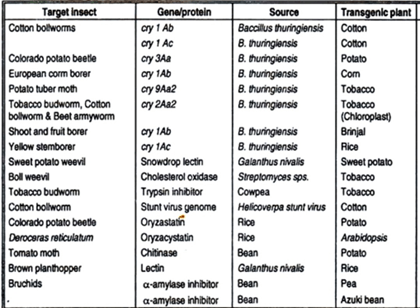
  • But generally, it has been observed that herbicides used can cause side effects to plants. For this reason genes for some enzymes have been genetically engineered to provide resistance to various herbicides. Table below is attached showing the gene strategy used and the plants benefitted through it:

Resistant to abiotic stresses:

  • Conditions like drought, salinity(high salt concentration), flooding, heat and freezing leads to poor harvest of the crop.
  • Protective proteins or enzymes from other plants or organisms are genetically engineered to fight against such adverse conditions.
  • saturation levels of membrane fatty acids are usually altered. Other than this Osmolytes, osmoprotectants and rate of reactive oxygen intermediate is also changed.
  • Abiotic stress tolerant genes, when introduced into plants can provide tolerance to abiotic stresses.
  • Example- Enzyme choline dehydrogenase from E.coli when injected into potato and tobacco plants, produces glycine betaine, which resistance to salts and freezing.

Insect pests and disease resistance:

  • Insects destroys plants and leads to economic loss. Traditional insecticides can kill the pests but simultaneously it also causes damage to useful insects and leads to soil damage.
  • Many strategies have been adopted to engineer disease resistant gene in plants. One common example is Bt cotton, where resistant gene is introduced to kill cotton bollworms.
  • Genes conferred with protease inhibitors, alpha amylases are introduced which interacts with insect metabolism and confers resistance by destroying it.

Apart from these, plant biotechnology is also used to improve nutritional quality of food and to enhance its nutritional value. Nutritional value of plants can be increased by altering the amino acid composition of plants proteins and by introducing transgene with desired traits.

CLASSIFICATION OF BACTERIA

Content:

  • Classification based on morphology of bacteria
  • Anatomical Based Classification
  • Classification Based On Staining
  • Classification Based Of Cultural Characteristics
  • Classification Based On Environmental Factors
  • Largest bacteria- Thiomargarita namibiensis
  • Longest bacteria- Epulopiscium fishelsoni
  • smallest bacteria- Mycoplasma genitalium

Classification Based On Morphology Of Bacteria:

  • Cocci: spherical shape, classified on the basis of arrangement
TypesExample
MonococciMonococcus
DiplococciStreptococcus pneumonia
StaphylococciStaphylococcus aureus
StreptococciStreptococcus pyogenes
TetradMicrococcus
Octardsarcinae
  • Bacilli: rod shaped, classified on the basis of arrangement
TypesExample
DiplobacilliMoraxella bovis
StreptobacilliStreptobacillus moniliformis
PalisadesCorynebacterium diphtheria
Chinese-letter formCorynebacterium glutamicum
CoccobacilliGardnerella vaginalis
  • Actinomycetes: they are bacteria but resemble fungi by exhibiting branching

Example: Actinomyces israeli

  • Spirochetes: these are spiral shaped long, slender, non- branched microorganism.

Example: Borrelia burgdorferi

  • Mycoplasma: lack rigid cell wall and are highly pleomorphic.

Example:Mycoplasma pneumonia

  • Rickettsiae and Chlamydiae: they are small and obligate parasite.

Example: Chlamydiae psittaci, Rickettsia rickettsii

Anatomical Based Classification:

  • Capsule:
TypeExample
CapsulateStreptococcus pneumonia
Non-capsulateViridans streptococci
  • Flagellate:
TypeExample
MonotrichousVibrio cholerae
LophotrichousPseudomonas fluorescens
Amphitrichousrhodospirillum rubrum
PeritrichousE. coli
  • Aflagellate: shigella spp.
  • Spore:
TypeExample
Spore-formingBacillus spp.
Non-sporingEscherichia coli

Classification Based On Staining:

  • Gram’s stain:
TypesExample
Gram-positive cocciStaphylococcus aureus
Gram-negative cocciNesseria gonorrhoeae
Gram-positive rodsClostridium
Gram-negative rodsEnterobacteriaceae
  • Acid-fast stain:
TypesExample
Acid-fast bacilliMycobacterium tuberculosis
Non acid-fast bacilliSalmonella typhi

Classification Based Of Cultural Characteristics:

  • Extra growth factors requirements:
TypeExample
FastidiousHemophilus influenza
Non-fastidiousEsherichia coli
  • Hemolysis on sheep blood agar:
TypesExample
Alpha-hemolysisStreptococcus pneumonia
Beta-hemolysisStreptococcus pyogenes
Gamma-hemolysisStaphylococcus saprophyticus
Alpha-prime hemolysisStreptococcus pyogenes
  • Utilization of carbohydrates:
TypesExample
OxidativeMicrococcus
FermentativeEscherichia coli
  • Growth rate:
TypesExample
Rapid growersVibrio cholera
Slow growersMycobacterium tuberculosis
  • Pigment production:
TypesExample
Pigment producerStaphylococcus aureus
Pigment non-producerEscherichia coli

Classification Based On Environmental Factors:

  • Temperature:
TypesExample
Psychrophiles(15-20o C)Pseudomonas fluorescens
Mesophiles (20-40o C)Salmonella enterica
Thermopiles (50-60o C)Bacillus stearothermophillus
Extremely thermophiles (as high as 250o C)Pyrococcus furiosus
  • Oxygen:
TypesExample
AerobeStreptococcus spp.
Obligate aerobesPseudomonas aeruginosa
MicroaerophilicCampylobacter jejuni
Facultative anaerobeE. coli
Obligate anaerobeClostridium
CapnophilicN. gonorrhoeae
AerotolerantStreptococcus
  • pH:
TypesExample
Acidophiles (pH less than 3)Lactobacillus acidophilus
Alkaliphiles (pH roughly 8.5-11)Vibrio
Neutralophiles (pH 6.5-8)Pseudomonas aeruginosa
  • Salt concentration:

Non-halophiles: cannot grow in high salt concentration

Example: E. coli

Halotolerant: Can tolerate low level upto 8% of salt concentration

Example:

Halophiles: can grow in high salt concentration

TypesExample
Slightly halophilic (require 0.5-3% concentration)Vibrio, pseudomonas
Moderately halophilic (requires 3-15% conc)Bacillus
Extremely halophilic (requires 15-30% conc)halococcus