POLYPHENOLS

BY: SREE LAKSHMI (MSIWM012)

 Polyphenols are one of the most important and certainly the most abundant among the phytochemicals present in the plant kingdom. Polyphenols are a large and complex group of chemical substances or phytochemicals or plant-derived foods, which contain more than one phenolic hydroxyl group. Natural compounds found mainly in fruits, vegetables, grains and beverages. Chemical composition of polyphenols. Polyphenols are compounds that contain a -OH group placed in a benzene ring. Naturally, they are a compound with structural phenolic properties, which can be associated with various organic acids and carbohydrates.

The main categories of polyphenols –

1. Phenolic acids and products

2. Flavonoids

3. Stilbenes

4. Lignans

1. Phenolic Acids and Derivatives

 Phenolic Acids are a non-flavonoid polyphenolic chemical. It is further divided into two main types – benzoic acid and cinnamic acid derivatives based on C1-C6 and C3-C6.It is found in a variety of plant foods; the seeds and skins of fruit and vegetable leaves contain very high concentrations.

Types and resources:

Hydroxybenzoic acid:

 Eg. Ellagic and gallic acid – with water-based tannins – are present in berries and nuts, tea

Hydroxycinnamic acid:

 Eg. Caffeic and ferulic acid.

• Caffeic acid – a precursor to lignin

• Caffeic and Quinic acid provide chlorogenic acid.

• Fruits, vegetables, coffee beans, grains and sunflower seeds appear.

• Other sources are coffee, blueberry, kiwis, plums, cherries, apples, red wine, and cereals: corn, whole grains, oats, and rice.

 Benefits of Phenolic acid

It is easily absorbed into the walls of your intestinal tract, and can be beneficial to health as they act as antioxidants that prevent cell damage due to excessive oxidation reactions.They can also promote anti-inflammatory properties in the body when used.

2. Flavonoids

They form the largest group of plant polyphenols.They are found in different colors of plants yellow, orange and red.They have a standard structure C6-C3-C6 where two C6 units are phenolic.Due to the hydroxylation pattern and variability in the chromane ring , flavonoids can continue to be subdivided into subgroups such as –

Anthocyanins

 Flavan-3-ols

 Flavanones

 Flavonols

 Flavones, Flavonols, Flavanones, Flavanonols

These small groups are very common and are found throughout plants.Flavones and their flavonols derived from 3-hydroxy, including glycosides, methoxides and other acetylled products in all three rings, make this the largest group among all polyphenols.The most common flavonol aglycones – Quercetin and Kaempferol

3. Stilbenes

 They are not as rich in flavonoids, lignans and phenolic acids.There are two stilbenes

Resveratrol

Pterostilbene

Resveratrol

 It is a non-flavonoid polyphenolic compound found in the skin of dark grapes and products made from such grapes, such as wine and grape juice.It belongs to the stilbene class of aromatic phytochemicals and occurs as free (cis or trans transations) aglycone (slightly soluble but active form) or as glycoside (called piceid, highly soluble form).It is transferred across the intestinal tract and the circulatory system such as glucuronide (glycoside) but can also be injected into aglycone form once it has reached the organs or body fluids where it is processed by β-glucuronidases.This compound is a well-known inhibitor of cyclooxygenase-1 and cyclooxygenase-2 , which are commonly shown in colon cancer.It also inhibits monoamine oxidase while enhancing Ab protease degradation and acts as an effective antioxidant.

4. Lignans

It is a small group of non-flavonoid polyphenols. It is widely distributed in plant kingdoms – standing in more than 55 plant families – acting as antioxidants and antibodies against germs and viruses. Lignans are  found in more than 60 families of vascular plants .Biological activity includes Antiviral, anticancer, cancer prevention, anti-inflammatory, antimicrobial, antioxidant, immunosuppressive, hepatoprotective, osteoporosis Prevention.

 Health benefits of polyphenols

1. It can lower blood sugar levels

Polyphenols can help lower blood sugar levels leading to a lower risk of type 2 diabetes. This is because polyphenols can prevent the decomposition of starch into light sugars, reducing the chances of high blood sugar after a meal.Polyphenols can also help to stimulate insulin secretion. A rich polyphenol diet can lower the blood sugar levels, high glucose tolerance, and increases insulin sensitivity which are important in reduction of type 2 diabetes.

 2. It can improve the functioning of heart

Polyphenols can improve heart health.This is mainly due to the antioxidant properties of polyphenols that help reduce chronic inflammation which is a risk factor for heart disease.Polyphenol supplementation lowers blood pressure and LDL (bad) cholesterol and increases HDL (good) cholesterol.

3. It can prevent blood clots

Polyphenols can reduce the risk of bleeding. Blood clots form when platelets circulate in the blood and begin to clot. This process is known as platelet aggregation and helps prevent excessive bleeding.Excessive platelet aggregation can cause blood clots, which can have serious health consequences, including deep vein thrombosis, stroke, and pulmonary embolism.

 4. It can protect against cancer

 Foods rich in polyphenols reduce the risk of cancer. Polyphenols have powerful antioxidant and anti-inflammatory effects, both of which can help prevent cancer.

5. It can promote healthy digestion

 Polyphenols can benefit digestion which increases the intestines of beneficial bacteria while protecting harmful ones. Polyphenol-rich tea extracts can promote beneficial bifidobacterial growth.Green tea polyphenol can help fight harmful germs, including C. Difficile, E.coli, Salmonella and improvement in symptoms of peptic ulcer disease (PUD) and inflammatory bowel disease (IBD).

 6. It can improve brain function

Polyphenol-rich foods can increase concentration and memory. Grape juice – rich in polyphenols – helps increase memory in older adults with mild mental retardation. Cocoa flavanols can increase blood flow to the brain and link these polyphenols to improve working memory and attention. The extraction of rich Gypsum polyphenols Biloba plants seems to increase memory, learning, and concentration. It also linked improved mental functioning and short-term memory loss.

ATOMIC ABSORPTION SPECTROSCOPY

BY- SREELAKSHMI (MSIWM012)

Atomic absorption spectroscopy has proven to be the most powerful method in the use of liquid-density implants since it was introduced by Alan Walsh in the mid-1950s.

More than 60 -70 items including the rarest earth metals determined by this method in the focus from tracking to large numbers. The direct use of this process is limited to instruments other than B, Si, As, Se & Te.

Several non-ferrous metals are weighed with indirect metals. Since atomic spectroscopy does not require sample correction it is an appropriate non-chemical tool as well.

Some elements, especially metals, play a vital role in biological processes, whether they are simple cofactors in enzymes, the atom in the macromolecule of living organisms such as iron in hemoglobin or magnesium in chlorophyll, or as toxins that affect the body.

The use of atomic spectroscopy will make important data available in understanding the biological roles of these substances.

In general, molecules enlarge the band spectra and atoms provide a clearly defined line of line. So, in atomic spectroscopy, the line spectra are studied. These lines are seen visually as light, corresponding to a certain length of the boundaries, which are the atomic emission rays or black lines against the luminous background, which is the atomic absorbing spectra.

On the surface of the element, the wavelength at which the absorption or discharge is detected is associated with changes in which a small change in energy occurs. In general, the appearance of a number of cells, the concentration of atoms is not measured directly in solution but is converted into free atoms.

The process of converting an analyte into a solid, liquid form, or solution into a free gas atom is called atomization. Atoms that are volatilized can be flame or electro thermally in the oven.

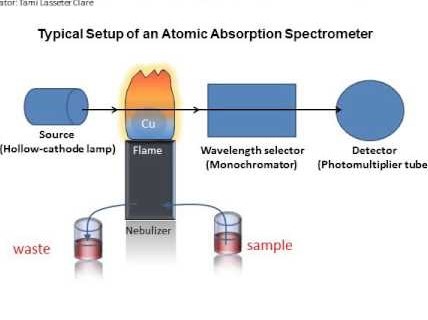
In this case, the elements will easily penetrate or emit monochromatic radiation at the right distance. Usually nebulizers (atomizers) are used to spray a standard solution or test in the flame where light is transmitted. Alternatively, the light beam is transferred, to the oven, through a hole containing the inspired apparatus.

Principle

The volatilization of molecules in the sun produces free atoms. These free atoms are happy when light of a certain length is able to emit spectral lines corresponding to the energy required for the electronic transition from the earth’s state to a happy state, allowed to pass through flame. The atomic spectra obtained is fully determined by the object involved and the amount of light concentrated is equal to the number of atoms in the path of light. Therefore, in addition to granting ownership of the material in the sample, this process of viewing and providing information on the quantity of the material.

INSTRUMENTATION

For all types of atom-absorbing spectrometer, the following components are required:

Radiation source:

The source should be such that it emits strong rays of the element to be determined, usually the resonance line of the object. It is almost impossible to separate the maximum length of resonance from a continuous source using a prism or diffraction grating or both at the same time. This problem was solved by the invention of empty cathode emission lamps. Such lamps emit monochromatic radiation element analyzes.

(a) Empty Cathode Lamp:

The cathode contains an empty cup in which the element will be cut. The anode is a tungsten wire. Both electrodes are inserted into a tube containing internal gas (argon or neon). The light window is constructed using quartz, silica or glass. The exact metal depends on the length of the scale to be transmitted. When a potential of approximately 3000V is used between these two electrodes, electrons trigger the immersion of gas into the lamp. These ions which receive enough energy to decompose atoms in the cathode, that is, explode other atoms of iron. These atoms regenerate and when they return to the ground, they begin to release the visible metal used to build the cathode (The light emitted spectrum corresponds to the elevation of the cathode emissions and the gas in the lamp. filling, and selection of very sharp spectral lines to obtain better sensitivity, without cases of disruption caused by other elements). The pressure stored in the lamp is 1 to 5 torr. Each blank cathode lamp emits a wide range of metal used in the cathode; this looks bad as a separate lamp should be used for each item to be analyzed. Another hollow cathode lamp is a wireless emission lamp (EDL) now made available for its light intensity of almost 10-100 times but not as stable as HCL (hollow cathode lamps). They are made of a closed quartz tube containing the salt of the substance and gas entering. The radio frequency field is used to cool the gas which makes the metal ionized. These lamps are usually reserved for items such as As, Hg, Sb, Bi and P.

Working of Atomic Absorption Spectrometer

Practically the meter is adjusted to learn zero absorption when spraying a blank solution in flame and the uninterrupted light of an empty cathode lamp passes through a photomultiplier tube. When a solution with a suction type is inserted then a portion of the light is applied which leads to a decrease in the intensity of the light which falls into the photomultiplier and produces a deviation from the meter needle. Standard object solutions are used to create a measuring curve where the content of the test solutions can be measured.

Applications

  • Used to determine the trace of a metal in a liquid.
  • Used in clinical laboratories for the removal of body fluids.
  • Estimation of soil and water samples.
  • Determination of lead in petrol.
  • Determination of metallic elements in food industry

IMMOBILIZATION OF ENZYME

BY- SREELAKHSMI (MSIWM012)

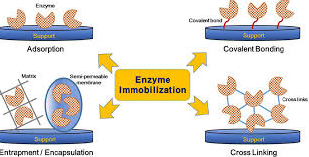
In the field of enzyme technology, immobilization is now a well-developed process. The effectiveness of a few industrial plants has been demonstrated. In cell immobilization technology the most important factor is that the enzymes are active and stable for a long time. It keeps within the cellular domain and all parts of the cell whether the cells are dead or active but in a state of rest. The mechanisms for all cellular degradation are similar to those described for enzyme degradation e.g. adsorption, covalent bonding, cell to cell cross-linking, encapsulation, and entrapment in a polymeric network. As long-term extraction of cells from a pre-made agent has been made, for example the use of wood as a carrier of Acetobacter has been used for the production of vinegar since 1823. The pre-selected carrier of the selected items is used. It attaches the cell to the surface of the pre-selected carrier made by binding.

Methods of Enzyme Immobilization

There are five different ways to reduce the strength of enzymes: (i) adsorption, (ii) covalent bonding, (iii) Entrapment (iv) copolymerisation and (v) Encapsulation

Adsorption

 If the enzyme does not work in the body externally, the size of the network particles must be very small in order to obtain a binding area for binding. Due to the reduction of enzymes on the outer surface, no pore circulation limitations are met. In addition, the inactive enzyme in the internal body is protected from damage, unstable mass solutions and bacterial attacks, and can achieve a stable and effective enzyme system. In addition, in reducing the internal pore the size of the pore of carriers can be adjusted for internal defects There are four mechanisms for degradation by adsorption: (i) static process (the enzyme is blocked by the carrier by allowing the enzyme-containing solution to affect the carrier without displacement (ii) a powerful batch process (the carrier is immersed in an enzyme solution and mixed by continuous stirring or stirring in the shaker), (iii) the reactor loading process (the carrier is inserted into a reactor for later processing, and the enzyme solution is transferred to the reactor and the carrier is loaded locally. potentially complex network company solution with the enzyme), and (iv) electrode stabilization process (carrier is placed close to one of the electrodes in the enzyme tuber, currently inserted, the enzyme moves to the carrier and is placed on top).

Covalent binding

Covalent bond is formed between the chemical groups of the enzyme and the chemical groups above the carrier. Covalent compounds are used under a wide range of pH, ionic forces and other flexible conditions. Measures of inhibition of attachment of the binding agency followed by the activation process, or attachment of the active group and ultimately enzyme attachment. The different methods of bonding are: (i) diazoation (bonding between an amino support group e.g. between an amino or carboxyl support group and an amino or carboxy enzyme group), (iii) group formation (use of cyanogen bromide is based on glycol-containing compounds i.e. cellulose, syphadex, sepharose, etc.), and (iv) poly active reagents (use of active or multi-functional reagent e.g. glutaraldehyde that forms the interaction between the helper amino group and the amino group of the enzyme) .An major problem with coexistence is that the enzyme may not work by bringing about changes in cohesion when dealing with reactions to active sites. However, this problem can be overcome by using inactivation in the presence of an enzyme or competitor inhibitor or protease. The most effective polymers are these celluloses or polyacrylamides which include diazo, carbodimide or azide groups.

Entrapment
Enzymes can be physically absorbed within the matrix (support) of a water-soluble polymer such as polyacrylamide gels and naturally occurring gels e.g. cellulose triacetate, agar, gelatin, carrageenan, alginate, etc. The type and nature of the matrix varies. The pore size of the matrix should be adjusted to prevent enzyme loss from the matrix due to overgrowth. There is a possibility of leakage of low-weight enzymes from the gel. Agar and carrageenan have large pore sizes (<10m). There are several mechanisms for the binding of enzymes: (i) gluing (gel-enzyme), (ii) stringing (fiber-coated enzyme), and (iii) microcapsule (-enzyme embedded in microcapsules forming monomer compounds (polyamine and polybasic chloride, polyphenol and polyisocyanate). Enzyme binding has been widely used to detect use, but no significant success has been achieved with the industrial process.

Co-polymerization

The short-term bond is characterized by a cohesive interaction between various enzyme molecules using a reagent acting as glutaraldehyde, a diazonium salt. Reduction in the use of active reagents that can release enzymes. This method is cheap and easy but is rarely used with pure protein because it produces very little of the enzyme that is not able to do the most internal work. It is widely used in trade preparation.

Encapsulation

Encapsulation is the closure of a drop of the enzyme solution in an unmeasured membrane capsule. The capsule is composed of cellulose nitrate and nylon. The insertion method is cheap and simple but its effectiveness depends on the stability of the enzyme even though the catalyst is well stored inside the capsule. This method is restricted to medical science only. In this way a large amount of the enzyme cannot work but the worst is that only a small substrate molecule with a strong membrane is used.

REGENERATIVE MEDICINES

BY: SREELAKSHMI (MSIWM012)

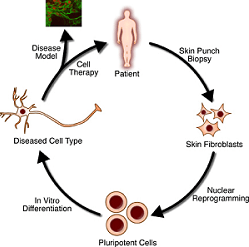
An emerging field of medicine called regenerative medicine or cell therapy refers to treatment derived from the idea of ​​producing new cells that will replace malfunctioning or damaged cells as a vehicle for the treatment of diseases and injuries. The focus is on developing effective mechanisms for stem cell replacement. This is especially beneficial for age-related diseases such as Alzheimer’s disease, Parkinson’s disease, type II diabetes, heart failure, arthritis, and aging of the immune system. It is believed that replacing damaged or dysfunctional cells with full functionality could be a useful treatment strategy in the treatment of many of these diseases and conditions.

Different Types of Renewable Medicine

Cell Therapy

Each of the 200 integrated cells in the human body is derived from one cell which is the fertilized egg. As the fertilized egg grows, it forms embryonic stem  cells, each of which has the potential to form the different types of cells found in adults and are organized into structures that will become tissues and organs. But some live in an inseparable state with older stem stem cells that can be transformed into a limited range of cell types.

Remedies that use patients’ cells to regenerate their organs or tissues are called spontaneous therapies. Methods include ongoing testing at two London hospitals to treat 100 heart attack patients with stem cells in their bone marrow to help repair damaged heart tissue. Therapies that use cells or tissue derived from a non-patient patient are called allogeneic therapies. Examples include the use of bone marrow or stem cells from similar donors or the use of ES cell lines established for treatment.

Tissue Engineering

The term “engineering tissue” came into use in 1985, by Y. Fung, a pioneer in the field of biomechanics and bioengineering, also stated that Tertiary engineering is a multidisciplinary field that uses the principles of engineering and health science to improve biological processes that restore, maintain or improve tissue function.” Tissue engineering modifies the cells or tissues in some way in order to repair, regenerate, or regenerate tissue. Perhaps the most well-known example of this was the process of trachea formation for a patient with airways that had been severely damaged by tuberculosis. Other examples of tissue engineering include artificial skin, which is made using human cells (fibroblasts) implanted in a matrix of proteins (fibrin) and cartilage membranes to be implanted in patients who have ruptured the cartilage of the knee.

Tissue engineering at its basic level fills the scaffolding of 3D tissues (biomaterials) by cells to produce functional organ formation. Tissue engineering aims to address the latest shortage of critical organs through the formation of living organs.

Biomedical Engineering

Another form of self-rehabilitation therapy is to make biomedical devices that mimic the function of tissue or organ. For example, Type 2 diabetes results in the destruction of beta-producing insulin-producing cells. Patients with this type of diabetes should monitor their blood glucose levels regularly and inject the hormone insulin to keep the level normal. While some research teams are working to restore beta cell functionality they are using biomedical engineering to improve artificial limbs. Using ultra-low power electronics originally designed for mobile phones, they developed a small built-in glucose sensor chip that can be inserted into a patient. The chip would regularly monitor blood glucose levels, produce the high amount of insulin needed to maintain stable glucose levels and send wireless signals to the pump to release the right amount of insulin.

Genetic Therapy

Although there are a variety of genetic therapies, the most obvious is to identify a medical condition that can be treated with a specific protein, and then introduce genetic code into that protein in the affected cells. In practice, finding genes that work in cells with the result of continuous treatment is extremely difficult. Nevertheless, in recent years there has been some progress in the use of genetic therapy to regenerate tissues, especially in the area of ​​heart disease.

Stem cells and Regenerative medicines

Stem cells have are able to develop into many types of cells in the body. They can act as a kind of immune system they can also differentiate without limit to fill other cells. When a stem cell divide, the new cell obtained has the ability to reside as a stem cell or into another type of cell which are having specific functions it can turn out to be like a muscle cell, a red blood cell, or a brain cell. There two types of stem cells: embryonic stem cells and adult stem cells. Embryonic stem cells are found in embryos and the sources of adult cells are the umbilical cord, menstrual blood, muscles, tendons, adipose tissue, bone marrow etc. a group of adult stem cells can be incorporated in vitro or in vivo to separate osteoblasts, chondrocytes, adipocytes, tenocytes, myotubes, neural cells and stroma supporting hematopoietic. The sheer strength of these cells, their easy separation from culture, and their extremely high ex vivo power make these cells an attractive therapeutic tool in reconstructive medicine.

Recent Advancements in Regenerative Medicine

  • Direction of cell expansion and differentiation, which explains the processes of how tissues and organ grow.
  • Development of techniques for assembly of cells into large, three dimensional tissue-like structures, which will lead to the physical creation of three dimensional organs.
  • Custom-designed biomaterials to serve as structural templates for tissue development, which helps scientists build organs.
  • Automated bioreactor culture vessels, which allow scientists to mass produce cells and tissues.

MINERALS

BY: SREELAKSHMI (MSIWM012)

Minerals are the chemical elements used by the body to maintain certain physicochemical processes that are essential for health. Although they do not provide energy, they have important roles to play in many bodily functions. This should be provided in the diet and varies from grams to micrograms per day in large and small items respectively. Minerals can be divided into two groups-Macro minerals – including calcium, phosphorus, magnesium, sodium, potassium, chloride and sulfur. Also those only needed in small amounts (trace element / micronutrients) – including iron, zinc, selenium, chromium, copper, manganese, iodine and fluoride. Minerals are substances found in food that our bodies need to grow and be healthy.

 Major Functions:

• Building strong bones and teeth

• Control of bodily processes, especially the nervous system

• A major component of body fluids and cells

• Form part of the enzymes and other proteins needed for energy production

• Minerals are found in foods such as meat, cereals (including whole grain products such as bread), fish, milk, and dairy products, vegetables, fruits (especially dried fruit) and nuts.

CALCIUM

Calcium (Ca) is a key component of bones and teeth and has important physiological functions in the body. It plays a role in blood clotting, muscle contraction and relaxation, nerve transfer and the availability of cell fluids. Calcium deficiency is one of the major causes of osteoporosis arthritis where strength and bone are affected.

 Health Benefits of Calcium

High urinary oxalate levels are a risk factor for calcium oxalate formation. Adequate calcium intake by diet can reduce the absorption of edible oxalate and low-grade oxalate by the formation of unresolved calcium oxalate salts. Colorectal cancer (CRC) is a common bowel cancer. Prospective study of the group has consistently reported a correlation between milk consumption and CRC risk. Cultural and cell culture studies have suggested sensible mechanisms that play a role in calcium, a major nutrient in dairy products, in preventing CRC.Adequate calcium intake can protect against lead poisoning. Increased calcium intake is known to reduce lead depletion. Adequate calcium intake also prevents arterial stimulation from the bones during weight loss. High calcium diets, which are often associated with the use of dairy products, are closely related to body weight and obesity in many separate studies. Weight loss and fat loss are significantly reduced by a high-calorie diet compared to a regular diet. The results suggested that while calcium intake may play a role in weight control, in addition to the benefits derived from other components of dairy products (proteins, fatty acids, and branched chain amino acids).Premenstrual Syndrome (PMS) refers to a set of symptoms, including but not limited to fatigue, irritability, mood / depression, fluid retention, and breast tenderness, which begin sometime after ovulation (mid-cycle) and decrease the onset of menstruation. Low calcium intake has been linked to PMS in early reports, and more calcium has been shown to reduce symptoms. The data currently available indicate that daily intake of calcium from diet and / or supplements may have therapeutic benefits for women diagnosed with PMS.

PHOSPHORUS

Phosphorus is concerned with many metabolic processes, including those that involve dehydration. It acts as part of bones, teeth, adenosine triphosphate (ATP), phosphorylated metabolic intermediates and nucleic acid. Phosphate buffers are involved in the production of high-energy chemicals, i.e., ATP and are involved in the production of phospholipids and phosphoproteins.Phosphorus improves the health of the digestive system. Effectively stimulates the digestion of riboflavin and niacin. These vitamins also help to strengthen and improve the emotional and emotional response system. It helps to break down digestion, diarrhea, constipation, and, in general, stimulates the digestive system with normal, healthy bowel movements. Focus, memory, and mental performance may be enhanced with the use of phosphorus. Adequate nutrition ensures mental development. Phosphorus deficiency can lead to the onset of neurological disorders such as dementia and Alzheimer’s. It can also increase the risk of mental retardation.

IRON

Iron (Fe) is an important component of hemoglobin, a protein in the erythrocyte that transports oxygen from the lungs to the tissues. As part of myoglobin, a protein that provides oxygen to muscles, iron supports metabolism. Iron is also needed for growth, growth, normal cell function, and the synthesis of other hormones and connective tissue. Iron is known to promote healthy pregnancy, increased energy and better performance in sports.

ZINC

Zinc (Zn) is a trace element, essential for the formation and function of many macromolecules, including enzymes that regulate cellular processes and cell identification pathways. Minerals regulate the immune response and show antioxidant and anti-inflammatory activity. Zinc maintains oxidative processes for a long time by reducing the expression of metallothioneins. These rich cysteine-rich proteins do the job of maintaining zinc-related homeostasis and act as powerful electrophilic supplements and cytoprotective agents

Health Benefits Zinc

 Zinc increases the activity of protein antioxidants and enzymes, such as glutathione and catalase. On the other hand, zinc exerts its antioxidant effect through two acute mechanisms, one of which is the stabilization of the oxidation-resistant sulfhydryls.The second machine consists of a metal resistor that is activated which is reduced. Zinc can replace redox metals, such as copper and iron, in certain binding areas and reduce site-specific oxidative damage. Zinc attracts expression from the brain from a neurotropic factor (BDNF). Clinical studies have shown serum hypozincemia in depression, which was a common practice in effective depressive therapy. Record the benefits of zinc supplementation in antidepressant therapy in the treatment of resistant and resistant patients. Therefore, zinc homeostasis is important in psychopathology and in the treatment of depression. The treatment of zinc headaches appears to be better than oral treatment due to its action in reducing high infection and necrotic material through improved local immunity, collagen lytic activity and continuous extraction of zinc ions that reactivate wounds in normal normozincemic individuals.

COPPER

Copper (Cu) is required for hematologic and neurologic systems. It is a combination of several enzymes and proteins, most of which promote oxidation-reducing reactions. It is necessary for bone growth and formation, the formation of myelin sheaths in the nervous system, aids in the synthesis of iron in hemoglobin, aids in the absorption of iron from the intestinal tract (GIT) and the transport of iron from plasma tissues. Cu seems to influence genetic expression by committing itself to certain aspects of writing. Cu is widely known to stimulate the brain. Cu-rich foods are often classified as ‘Brain Foods’. Research has shown a direct link between its content within the brain and creative thinking, which shows that it makes neural pathways grow in different ways. A powerful antioxidant that acts in front of the antioxidant enzyme superoxide dismutase to protect the cell membrane from free radicals of various organs. Some studies have been performed on the effects of aging, wrinkles, macular degeneration, and kidney failure. Adequate Cu in the diet prevents premature aging. Studies have shown that Cu can destroy or inhibit E.coli growth. Cu can lower LDL cholesterol levels and help increase HDL. This reduces the risk of cardiovascular diseases such as atherosclerosis, heart disease, and stroke. The immune system needs copper to perform several functions, the least known of which is a direct function. Some recent studies have shown that interleukin 2 is reduced in copper deficiency and may be the means by which T cell proliferation is reduced.

LIPIDS

BY: SREELAKSHMI (MSIWM011)

The lipid includes fats and oils, waxes, steroids and phospholipids. These molecules are less soluble in water but dissolve in solvents such as ether, chloroform, ethanol etc. Fats and oils are made from glycerol molecules and fatty acids Glycerol is a 3-carbon alcohol molecule. Fatty acids are made up of hydrocarbon chains of varying lengths with a methyl group on one side and a carboxylic acid group on the other. Fatty acids can be saturated or saturated. All the interactions between carbon atoms in a hydrocarbon chain are a single bond. These fatty acids are therefore full of hydrogen atoms. The saturated fat contains entirely saturated acids and is an animal fat.

Unsaturated fatty acids:

Unsaturated fatty acids are less saturated with hydrogen atoms. Unsaturated fats contain unsweetened fatty acids and therefore contain a double layer of bonds. In general, the larger the number of bonds doubles, the lower the temperature at which the lipid dissolves. A large number of double bonds in vegetable oil make their liquid form. Polyunsaturated fats are considered good fats.

E.g., Oleic acid, Linoleic acid, Linoleic acid.

Lipids classification:

1. Simple Lipids: Fatty acid esters contain a variety of alcohol. Also known as neutral oil

 Fats and oils are fatty acid esters containing glycerol. The chemical structure of fats (also known as triglyceride) consists of three different molecules of fatty acids secured by one glycerol molecule in its three hydroxyl groups.

Wax: Fatty acids esters have high alcohol content without glycerol.

2. Compound Lipids: Esters of fatty acids contain other groups in addition to alcohol and fatty acids. E.g., Phospholipids, glycolipids, lipoproteins etc.

3. Derived lipids: Objects found in the above groups by hydrolysis. E.g., similar steroids

Properties of Lipids

The oil does not dissolve in water but is easily soluble in ether, chloroform, benzene etc. They melt easily in hot alcohol but melt slightly in the cold. They are the best solutions for other oils, fatty acids etc.

Hydrolysis of alkaline oils is called saponification. The products are glycerol and an alkaline salt of fatty acids called soap.

Number Purification Number: The amount of milligrams of KOH needed to infuse 1 gram of oil or oil.

Number Acid number: The amount of milligrams of KOH needed to reduce the free fatty acids of 1 gram of fat.

Number Iodine number: This is the amount (in grams) of iodine absorbed per 100 grams. This is a measure of fat storage.

 Hydrolysis of alkaline fats is called saponification. The products are glycerol and an alkaline salt of fatty acids called soap.

Purification Number: The amount of milligrams of KOH required to add one gram of oil or oil.

Acid Number: The amount of milligrams of KOH needed to reduce the free fatty acids of 1 gram of fat.

Iodine number: This is the amount (in grams) of iodine that is obtained per 100 grams. This is a measure of fat storage.

 Rancidity: Almost all natural oil is released into the air when exposed to air, light and moisture, especially when it is warm and unpleasant. This is due to the formation of peroxide in the double bonds of fatty acids. Vitamin E is an important natural antioxidant.

 Features of fatty acids:

Humidity:

Fatty acids do not dissolve well in water due to their unprocessed form (acid).They are very hydrophilic like potassium or sodium salt. Fatty acids are easily excreted by liquid chemicals that do not come from the solution or suspension by lowering the pH to form a free carboxyl group. On the other hand, increasing pH increases water solubility through the formation of alkaline iron salts, known as soaps. Soaps contain essential substances such as colloids and are effective agents for the face. Therefore, the actual melting of water, especially of long acids, is often more difficult to determine because it is highly influenced by pH, and also because fatty acids have a tendency, which leads to the formation of monolayers or micelles. The formation of micelles in aqueous solutions of lipids is associated with rapid changes in body composition in the concentration range of concentrations. The point of change is known as micelle concentration (CMC), and it shows a tendency for thicker lipids than to remain as single molecules.

Melting point

The effect of the formation of fatty acids on its soluble chains with branch chains and double bond will reduce the melting point compared to that of the full equivalent chain. In addition, the melting point of fatty acids depends on whether the chain is equal to or abnormal; the latter have very melting points.

Reduction

 Sufficient acids are very stable, while low fatty acids are affected by oxidation: double bonds, high inclination. Therefore, unsaturated fatty acids should be treated in the form of imported gases and kept away from oxidants and compounds that lead to the formation of free radicals. Antioxidants can be very important in preventing potential attacks on vivo acyl chains

Rancidity

Almost all natural oils are released into the air when exposed to air, light, and moisture, especially when warm and unpleasant. This is due to the formation of peroxide in the double bonds of fatty acids. Vitamin E is an important natural antioxidant.

Biological   Properties of Lipids

  • Emulsification: Amphipathic lipids are emulsifiers. In fact, the fats have to be emulsified before they can be absorbed by the intestinal wall, bile juice secreted from the liver helps in this process
  • Mechanical support: Lipids of connective tissue of internal organs, protect them eventual damage on exposure to mechanical action.
  • Dissolving capacity: Under physiological conditions, certain lipids function as solvents to dissolve other lipids.
  • Hormones: The major group of hormones is formed of steroids. They regulate a large variety of physiological functions.
  • Enzyme activation: Lipids are essential for the activation of enzymes
  • Vitamins: Vitamin-D (calciferol) is a steroid derivative.
  • Solubility of Vitamins: Lipids are carriers of natural fat soluble vitamins such as A. D and E


CARBOHYDRATES

BY- SREELAKSHMI (MSIWM012)

Carbohydrates are polyhydroxy aldehydes or ketones, or substances that produce such substances in hydrolysis. Most, but not all, carbohydrates have a positive effect (CH2O) n.

Stereo Isomerism:

     The presence of carbon asymmetric atoms allows the formation of isomers. Chemicals that have the same structure but differ only in localization are called stereoisomers or geometric Glucose isomers with 4 asymmetric carbon atoms with 2n (16) Isomers. n = unequal number of carbon atoms.

Epimers: a sugar that differs only in the configuration around a single carbon atom. E.g. D-glucose and D-Mannose 2. D-Glucose and D-Galactose

Diastereomers: One type of diastereomers (or geometric stereoisomers) differs in terms of “cis” and “trans”. In diastereomers, some chiral centres are similar and some are opposite. The molecule does not resemble a mirror image of its diastereomer.

D and L isomers:

Enantiomers: Enantiomers are mirror image molecules that cannot be elevated to each other. The suggestion suggests that two mirror molecules can be psychologically integrated into one object as they are integrated. Eg, D-glucose and L-glucose. When the OH group in the carbon atom adjacent to the terminal primary alcohol (carbon atom 5 in the right), sugar is a member of series D. On the left is a member of the L series. Most monosaccharaides are classified as D.

 Optical Isomerism: When a cooled light beam is transferred to a solution that reflects light performance, the part will be moved right or left depending on the type of combination present. The element that alternates the illuminated light to the right is said to be dextrorotatory and the plus (+) sign is used for designation. The rotation of the pole on the left (laevorotatory action) is marked with a minus sign (-). When an equal number of dextrorotatory and laevorotatory isomers are present, the resulting mixture has no optical functions, because the functions of each isomer overlap. That mixture is said to be a racemic mixture.

.

There are three categories of carbohydrates:

1. Monosaccharides

2. Oligosaccharides

3. Polysaccharides

Monosaccharides or simple sugars:

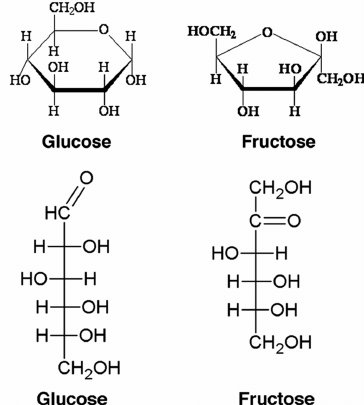
It contains one unit of polyhydroxy aldehyde or ketone. E.g.: Sugar, Fructose, Galactose.

Once the group is at the end of the carbon chain (i.e., in the aldehyde group) monosaccharide is an aldose. If the group can be in another position (in the ketone group) monosaccharide is ketoses. The simplest monosaccharaides are trios-carbon trioses including Glyceraldehyde aldotriose, and Dihydroxyacetone ketotriose.

Glucose, a major source of energy for many living things. Glucose is present in both open chains and a ring form with rings forms when glucose is dissolved in water. It contains radical aldehyde as part of the structure. Group C = O in the aldehydic group has reduced concentrations and therefore lowers blood sugar. This is the most prominent monosaccharide in natural D-glucose, sometimes called dextrose. Fructose has a ketonic group as part of the structure. Group C = O in the group has reduced areas which is why it reduces sugar. Galactose is an aldohexose with reduced properties. One of the ingredients of Lactose.

Oligosaccharides: composed of short chains of monosaccharide units bound by glycosidic bonds. The most abundant are disaccharides, which have two monosaccharide units connected by glycosidic bonds. E.g., Maltose, Lactose, Sucrose.

Maltose is also known as a sugar source made up of two sugar molecules. Maltose is formed by joining two alpha glucose molecules that meet the condensation reaction and form a glycosidic bond between molecules. It has reduced properties.

Sucrose is a common household sugar or sugar cane and is composed of monosaccharides glucose and fructose bond. Sucrose does not contain an unknown free carbon atom.Anomeric carbons atoms of both monosaccharide units form a glycosidic bond. So sucrose sugar does not decrease. Non-reducing disaccharides are called glycosides.

Polysaccharides: Sugar polymers contain more than 20 or more units of monosaccharides called polysaccharides. E.g., Starch (Amylose, Amylopectin), Glycogen, Cellulose, Chitin. Polysaccharides are the main polymers of monosaccharaides .The polysaccharides may not be soluble or form colloidal suspensions. Starch is an alpha glucose polymer that is a mixture of two different polysaccharides.

AMYLOSE AND AMYLOPECTIN

AMYLOSE: They are long, unstable plates of sugar units. It is made up of a series of condensation reactions that include alpha glucose molecules that have been synthesized into an extended chain that forms many glycosidic bonds

AMYLOPECTIN – a very powerful polymer for glucose units. It contains an open series of alpha glucose units with branch points across all twelfth glucose. Branch points are formed when carbon 6 of the glucose molecule within an open chain forms a glycosidic bond with carbon 1 of the glucose molecule placed above the series

Glycogen

• Glycogen is often referred to as glycogen. The structure of Glycogen is almost identical to amylopectin but there are many branches in glycogen. Glucose is stored as glycogen in large mountains in both liver and bone tissue.

Cellulose:

• Cellulose is one of the most important structural polysaccharides because it is the major component of plant cell walls. Many identical chains of beta glucose units are formed and the whole chain contains hydrogen bonds between groups of OH adjacent chains.

Chitin:

• Chitin can be a polysaccharide that makes many invertebrate exoskeletons. N-acetyl glucosamine polymer in beta 1 to 4 glycosidic bonding. It is a key component of the insect and crustacean sac that protects and supports.

ENZYMES AND ROLE OF ENZYMES IN DETERGENT

BY: RAHUL ANDHARIA (MSIWM001)

Enzymes:

  • Enzymes are substances which can speed up rate of rate of biochemical reactions.
  •  Enzymes are also known as biological catalysts. Enzyme can accelerate both rate and specificity of metabolic reactions and hence they are highly selective catalysts.
  • Most of the enzymes end with suffixase. There are few exceptions like Ptyalin, trypsin and pepsin. The names of the enzymes are given based on chemical reaction they carry out and also on the basis of substrate to which it acts. This whole process is known as Nomenclature of enzymes.

History:

  • To represent Ferments (process of fermentation-sugar to alcohol conversion) in the year 1878 F.W Kuhne coined the term enzyme.
  • In the year 1903, first ever enzyme was isolated by E. Buchner. In the year 1926 urease enzyme was purified and obtained in its crystalline form. This work demonstrated protein nature of enzyme and was given by James Sumner.

Properties of enzymes:

  • Enzymes are considered as proteins and nearly all enzymes are proteins, although catalytically active few RNA molecules have been identified.
  • Mild conditions are typically required by enzymes for their catalysis (temperatures below 100 degree Celsius, neutral pH and atmospheric pressure).
  • Enzymes acts as catalyst and speed up chemical reaction without being altered by itself in the process.
  • Enzymes are highly specific and acts on specific substrates.
  • Based on the concentration of substrates, activity of enzymes can be regulated.
  • Enzymes can form hydrosols in Free State and are hydrophilic in nature.
  • Turn over(kcat) number of enzymes can be defined as number of substrate molecules altered per minute by an enzyme. If the turn over number is high, enzyme will be more efficient.
  • Nature of enzymes is reversible. Energy requirements, availability of reactants, concentration and pH of products are some factors upon which reversibility of enzyme depends.
  • Specific confirmation for holding and binding to substrates is present at the active site of an enzyme.
  • Enzymes require optimum temperature of around 25-35 degree Celsius and most of the enzymes are heat sensitive (thermo labile). 

Characteristics of enzymes:

  • Holoenzyme: If an enzyme is combined with a co-enzyme (non-protein moiety) it forms holoenzyme. It is catalytically active. Example- DNA and RNA Polymerases.
  • Apoenzyme: It is an inactive enzyme but gets activated when an organic or in-organic co-factor binds to it. Example: Apoglucose oxidase (Can be extracted from Aspergillus Niger).
  • Co-enzyme: It is a non-protein compound and is essential for the activity of enzyme. Co-enzymes can be separated from apoenzymes. Example: S- adenosyl metheionines.
  • Prosthetic group: It is a non-protein component of any conjugated protein. If a substance is attached covalently to the protein part of an enzyme it is called as prosthetic group.      Examples- flavin, biotin, heme.
  • Activator: Generally metal ions (Mg, Mn, and Zn) are designated as activators. They form a co-ordination complex between substrate and enzyme. They can also activate the substrate by inducing electronic shifts.
  • Zymogens: They are secreted in inactive forms and are generally simple protein enzymes. Examples: Trypsinogen, Pepsinogen.

Mechanism of enzyme action:

  • Multiple weak forces present in the active site binds the substrate which results in the formation of enzyme-substrate complex.
  • Once the substrate molecule gets binded, active residues present in the active site of enzyme acts on substrate molecule and transforms it into transition state complex and then to products, which are released.
  • Now, after the release, enzyme is free to bind another substrate molecule to begin its catalytic cycle again.

Substrate-Enzyme Binding:

  • Substrate binds to the active site of an enzyme and active site converts the substrate into products. It is a three dimensional entity made up of amino acid residues.
  • Substrate-Enzyme binding is explained with the help of two famous models:
  • Lock and Key Model:
  • Based on the name, the model explains that the substrate and the active site of enzyme fits together like a key (substrate) into its lock (active site). The theory was proposed in the year 1894 by Emil Fischer.
  • Shapes formed are considered as Rigid and fixed and compliments each other when brought together in a right alignment.
  • Induced Fit Model:
  • When substrate binds to active site it induces a conformational change in the active site of enzyme. This theory was proposed in the year 1958 by Daniel E. Koshland.
  • The theory also states that, enzyme may distort the substrate, which forces the enzyme into a conformational change similar to transition state. Example- Glucose binding to hexokinase.

Classification of Enzymes:

  • Oxidoreductases: It can catalyze oxidation-reduction reactions in which electron transfer takes place. These electrons are usually hydrogen atoms or hydride ions.
  • Transferases: It is involved in transfer reaction from donor molecule to acceptor molecule. Example- Hexokinase used in glycolysis.
  • Hydrolases: Involves transfer of functional groups to water. It generally catalyzes reactions that involves hydrolysis. Example- Chymotrypsin.
  • Lyases: when functional groups are added to break double bonds in molecules, lyases enzymes can be used. Example- fructose biphosphate aldolase (converts fructose 1, 6 bisphosphate to G3P and DHAP by cutting the C-C bond.
  • Isomerases: As the name suggest, they catalyzes transfer of functional groups within a molecule and forms isomeric structures. They allow structural and geometric changes within a compound. Example- Phosphogluco-isomerase.
  • Ligases: Used in joining of two substrates. They are coupled to cleavage of ATP.

Enzymes play an important role in normal metabolism. If enzymes are absent, biochemical processes won’t work. They tend to increase the rate of reaction and essential components in living systems.

Role of enzymes in detergents:

  • Detergents combines with dirt and impurities and makes them soluble. Detergents are water soluble cleansing agents.
  • One main reason in using enzymes for detergents is that they are capable of removing stains at lower temperatures and reduces water consumption.
  • Enzymes are obtained from renewable sources and hence are environment friendly and are incorporated with detergents to minimize the usage of chemicals.
  • Use of toxic compounds also reduces if enzymes are used in detergent formulations.
  • Efficiency of cleaning increases by using enzymes, as number of wash cycles can be reduced.
  • Most common type of enzymes used in detergent formulations are Proteases.
  • Enzymes used in detergents must be effective at alkaline pH, should be able to withstand wide range of temperatures.
  • When enzymes are used in different combinations efficiency of cleaning can be improved drastically. About 80% of detergents in market contains an enzyme or combination of enzymes.

Enzymes used in detergents:

  • Proteases: Hydrolyses of peptide bonds is catalyzed by proteases. In protein based stains, these proteases cleaves peptide bonds. Most common type of protease used in detergent formulation is alkaline serine proteases.
  • Lipases: Triglycerides ester bonds are broken in oil-water interface and hydrolyzes it into mono and diglycerides. Thermostable lipases has been used as additives in detergents. Lipolase was the first detergent based lipase introduced by Novo Nordisk in the year 1988. The other enzymes used in detergents are Amylases, Mannanases, and cellulases.

PROTIENS STRUCTURE, CLASSIFICATION AND FUNCTION

                   BY: Sreelakshmi S Nair

Proteins:

Proteins are macromolecules obtained from the one or more amino acids chain linked by peptide bonds. They are the natural polymers of amino acids. It contains nitrogen, carbon, hydrogen and oxygen. They act as a biological catalyst form structural parts of different organisms, participate in different cell reactions.

CLASSIFICATIONS OF PROTIENS

Proteins are classified on the basis of

  • Structure of Protein
  • Composition of Protein
  • Functions of Protein

Based on the structure of Protein

  • Fibrous Protein

They are linear in shape. Usually they do not have tertiary structure. They are physically strong and are insoluble in water. They perform the structural functions in the cell. Examples are: Keratin, Collagen, and Myosin.

  • Globular Protein

They are spherical or globular in shape.Teritary structure is the most functional structure. Physically they are soft while comparing to fibrous proteins. They are readily soluble in water. Most of the proteins present in the cell belongs to globular protein. It forms enzymes, antibodies and some hormones. Examples are Insulin, haemoglobin, DNA polymerase and RNA polymerase.

Based on the composition of Protein

  • Simple proteins

They are composed of only amino acids. They may be fibrous or globular. They are generally simple in structure. Examples are Collagen, Myosin, Insulin

  • Conjugated Proteins

They are complex proteins which contains one or more amino acid components. The non-protein parts are called prosthetic group. Prosthetic group may contain metals, ions, carbohydrates, lipids, nucleic acid. Conjugated proteins are generally water soluble and globular in structure. Most of the enzymes are conjugated proteins.

Based on the Function

  • Structural Proteins

Most of them are fibrous proteins. Components in connective tissue, bone, tendons, cartilage, skin, feathers, nail, hairs and horn are made of structural proteins.

  • Enzymes

They are the biological catalyst. Mostly globular conjugated proteins. Examples are DNA polymerase, Nitrogenase, and Lipase.

  • Hormones

They include proteinaceous hormone in the cells. Examples are Insulin, ACH

  • Respiratory Pigments

They are coloured proteins. All of them are conjugated proteins. Examples are haemoglobin, Mycoglobin.

  • Transport Proteins

They transport the materials in the cell. They form channels in the plasma membrane. They also form a component in blood and lymph in animals.

STRUCTURE OF PROTEIN

There are four levels

  1. Primary Structure
  2. Secondary structure
  3. Tertiary Structure
  4. Quaternary Structure
  1. Primary Structure

They give details about the amino acid sequence of a protein. It tells about the number of amino acid residues in the protein and also about the sequence of amino acids. It is stabilized by peptide bonds. Each component of an amino acid is called residue or moiety. It starts from the amino terminal (N) end and ends in the carboxyl terminal(C) end.

  • Secondary structure

It is formed by hydrogen bond between backbones atoms. Three most important secondary structure in protein are:

  • α-helix
  • β- plates
  • β-Turns

α -Helix

It is the most common secondary structure which repeat every 5.4It is the simplest arrangement of a polypeptide chain which was proposed by Puling and Corey in 1954.It is so common because it makes optimal use of internal hydrogen bond. The interactions between the amino acid chains can stabilize or destabilize the α-helix.

                    β- Plates

It is an extended form of a polypeptide chain.Polypetide backbone forms a zigzag structure. Similar to α-Helix structure is stabilized by hydrogen bond. The R-groups of adjacent amino acids protrude from the zigzag structure to the opposite direction forming an alternative pattern. It can be arranged in either parallel or anti-parallel direction.

                    β-Turns

         It’s a very common in proteins where peptide make a reverse direction. It forms a 180 degree turn involving four amino acids. The carbonyl oxygen of the first residue forms a hydrogen bond with the amino group hydrogen in the fourth amino acid in the turn. Glycine and proline allows the β-Turns frequently.

3. Tertiary Structure

                   The tertiary structure will have a single polypeptide backbone consisting of one or more    secondary structures. It can be defined by atomic coordinates. It is stabilized with the help of both covalent and non-covalent bond.

4. Quaternary Structure

Proteins which have more than one polypeptide subunit and which do not have a permanent (covalent) interaction between the subunits (like disulphide bond) are classified under quaternary structure. Bonds stabilizing quaternary structure includes hydrogen bonds, hydrophilic interactions, hydrophobic interactions, van der Waals interactions. A protein with a single subunit cannot have a quaternary structure.

Functions of Protein

  • Boosts Immune System
  •  Provides Structure
  • Maintains pH
  • Transports and stores nutrients

METABOLISM

Metabolism: an overview and types

Content:

  • About
  • Catabolism
  • Anabolism
  • Metabolic pathways

About:

  • Metabolism is the collection of chemical reactions takes place to sustain life of an organism.
  • The main purposes of metabolism is to convert food to energy to run cellular activity; to convert food to building blocks for nucleic acids, lipids, protein and carbohydrates; and to remove metabolic waste.
  • The metabolic reactions which are enzyme catalysed are responsible for the growth and reproduction of organism, to maintain their structure and interact with environment.
  • Metabolic reaction is of two types one is catabolic reaction, means the breaking down of compounds and another is anabolic reaction- the building up of the compounds. The catabolic reaction liberates energy and the anabolic reaction uses energy.
  • Metabolic pathways include the steps through which one chemical is transformed into another and each step is facilitating by an enzyme.
  • Enzymes are the key component of the metabolic reaction; they act as catalyst- allows the reaction to proceed more rapidly.

Types:

Metabolic reaction is of two types:

  1. Catabolism
  2. Anabolism

Catabolism:

  • In catabolism the compound through the set of chemical reaction is broken down into simpler compound or molecules.
  • This is achieved by breaking down and oxidizing food molecules.
  • Catabolism is responsible to provide energy for working of the cell and component needed for the anabolic processes which build molecules.
  • The nature of these catabolic reactions based on the source of energy and carbon which is differ from organism to organism.

The chief metabolic processes in a cell are:

  • Glycolysis
  • Pentose-phosphate pathway
  • Entner-doudoroff pathway
  • Tricarboxylic acid cycle
  • Fermentation
  • Glyoxylate cycle
  • Lipid hydrolysis
  • Protein hydrolysis

Anabolism:

  • Anabolism is the set of constructive reactions which used energy released by the catabolic pathway to synthesize complex molecules.
  • The complex molecule construct cellular structure step by step, make up from small and simple precursor.
  • The biomolecules are necessary for the growth and reproduction, some biomolecule serve as the central metabolic intermediates.
  • Some organisms can synthesis all the necessary organic compound like autotrophs. They can be grown on simple media. On the other hand, the organisms which cannot synthesize organic compounds from atmosphere are known as fastidious organisms.
  • Following anabolic process takes place in organism:
  • Synthesis of glucose, lipids, amino acid and protein, nucleic acids
  • Synthesis of other growth factors like vitamins, hormones etc.

Metabolic process:

Glycolysis:

  • In the glycolysis process glucose and other sugar are partially oxidized to the smaller molecule i.e. pyruvate
  • Embden-Myerhof pathway, pentose phosphate pathway and Entner-Doudroff pathway are the three routes for the conversion of sugar into pyruvate.
  • It is anaerobic process in which organism obtain energy in the absence of oxygen, also called anerobic fermentation.

Tricarboxylic acid pathway:

  • Given by H. A. kerbs in 1973
  • Also known as citric acid cycle. Because citric acid is the first product of the kerb cycle which is as known as TCA cycle as the citric acid has three carboxylic group.

Glyoxyalte cycle:

  • It is anaplerotic reaction which means one product of a cycle is taken up by the other cycle
  • Oxaloacetate is taken from TCA cycle and used for carbon source from the amino acid synthesis.

Pentose phosphate pathway:

  • It is an alternative pathway for the sugar degradation.
  • Its main function is to generate power in the form of NADH in extramitochondrial cytoplasm and the second function is to convert hexoses into pentose for the synthesis of the nucleic acids. The third function is complete degradation of pentose.