ANTIBIOTICS

BY: SAI MANOGNA (MSIWM013)

Introduction :

Antibiotics are used in the treatment of preventing bacterial infection. They work by destroying or stopping bacteria from reproducing and spreading. Antibiotics do not work against respiratory infections like the common cold, flu, most coughs, and sore throats. The immune system can also cleanse several mild bacterial infections without using antibiotics, but they are not regularly prescribed. Antibiotics must be administered and appropriately taken to help prevent the development of antibiotic resistance.

Antibiotics, also known as antibacterials, are medicines that destroy or slow bacterial growth. In 1929, Alexander Fleming identified penicillin, the first antibiotic compound. Penicillins, Aminoglycosides, Quinolones,  Macrolides, Sulfonamides, Cephalosporins, Carbapenems, and Tetracyclines are common antibiotics. General antibiotic prescription principles are used: first-line antibiotics, reserve wide-spectrum antibiotics only for indicated conditions, prescribe antibiotics for bacterial infections if symptoms are severe or extreme.

Antibiotics can be given in several ways:

Oral antibiotics: pills, capsules, or a liquid drink to treat most cases of mild to severe body infections

Topical antibiotics: creams, lotions, sprays, or drops sometimes used to treat skin infections

Antibiotic injections: these may be administered or infused directly into the blood or muscle and are typically reserved for more extreme infections

Types Of Antibiotics :

There are hundreds of different forms of antibiotics: but most can be grouped into six classes. They are listed below.

Penicillins (such as penicillin and amoxicillin)

Cephalosporins (such as cephalexin)

Aminoglycosides (such as gentamicin and tobramycin)

Tetracyclines (such as tetracycline and doxycycline)

Macrolides (such as erythromycin and clarithromycin)

Fluoroquinolones (such as ciprofloxacin and levofloxacin)

1. Penicillins :

a. Penicillins are an antibiotic of penicillium fungi. An antibiotic is a drug that prevents bacteria ‘s growth or destroys.

b. The 1928 accident discovered penicillin G (also called benzylpenicillin). Alexander Fleming, a Scottish physicist, developed a form of bacteria called Staphylococcus Aureus on an uncovered petri dish when infected with mold spores. He noticed the bacteria near the mold dying. He isolated the mold material that destroyed the bacteria and named it penicillin.

c. Natural penicillins (penicillin G, penicillin V) are active only against gram-positive bacteria. Penicillin V is acid-resistant than penicillin G

d. Penicillin V was isolated from the same mold. All other penicillins are semi-synthetic, made by changing the structure of the original naturally occurring penicillins.

e. Classic semi-synthetic penicillins include ampicillin and oxacillin. These have some degree of beta-lactamase resistance and are effective against some gram-negative bacteria.

f. Most bacteria can be categorized as gram-positive or gram-negative based on variations in their cell wall structure, which can be microscopically differentiated using the dye form.

g. One of the main distinctions is that gram-positive bacteria are more susceptible to antibiotics, whereas gram-negative bacteria are more antibiotic-resistant.

Penicillins such as piperacillin and ticarcillin are penicillins with additional activity against some hard-to-kill types of gram-negative bacteria (Pseudomonas, Klebsiella, and Enterococcus).

A beta-lactamase inhibitor incorporates certain penicillins. A beta-lactamase inhibitor blocks beta-lactamase enzyme activity but tends to have little antibiotic activity. Some penicillins (like oxacillin, dicloxacillin, and nafcillin) are naturally resistant to certain beta-lactamases and are called penicillin-resistant. Others, such as amoxicillin, ampicillin, and piperacillin, may be extended by combining them with a beta-lactamase inhibitor. Clavulanate, sulbactam, and tazobactam all inhibit beta-lactamase.

Penicillins function by preventing bacterial cell wall cross-linking of amino acid chains. This does not affect pre-existing bacteria, but new bacterial cells have fragile cell walls that rupture easily.

Uses: Penicillins are used to treat

 i. Dental abscess

ii. Ear infections

iii. Gonorrhea

iv. Pneumonia

v. Rheumatic fever

vi. Skin infections

vii. Urinary tract infections

2. Tetracyclines:

a. The first tetracyclines were derived from Streptomyces bacteria in the 1940s.

b. These can be used to treat infections caused by susceptible microorganisms such as gram-positive and gram-negative bacteria, chlamydiae, mycoplasma, protozoans and rickettsiae.

c. Tetracyclines inhibit protein synthesis in microbial RNA (an essential molecule for DNA messenger). They are mainly bacteriostatic, thereby stopping bacteria from spreading but not necessarily killing them.

d. Although tetracyclines all function the same way, there are variations between the four tetracyclines (demeclocycline, doxycycline, minocycline, and tetracycline).

Doxycycline is the most commonly used tetracycline. It causes photosensitivity or binds to calcium, causing dental discoloration or bone growth retardation.

Uses: Tetracyclines are used to treat

i. Malaria

ii. Treatment of moderate to severe acne

iii. Anthrax

iv. Infections of an eye, gastrointestinal tract, respiratory tract, and skin

v. infections caused by Campylobacter, Yersinia pestis, Vibrio cholerae, Chlamydiae, and other atypical organisms

3. Cephalosporins :

a. Cephalosporins are a broad group of Acremonium-derived antibiotics (formerly Cephalosporium).

b. Cephalosporins are bactericidal (kill bacteria), similar to penicillins. They bind and block enzyme activity responsible for producing peptidoglycan, an essential bacterial cell wall component. They are called broad-spectrum antibiotics because they affect a wide range of bacteria.

c. Since the first cephalosporin was discovered in 1945; scientists have refined cephalosporin structure to make it more effective against broader bacteria.

d. Whenever structure changes, a new “generation” of cephalosporins is made. There are five generations of cephalosporins.

e. Both cephalosporins begin with cef, ceph, or kef. Notice that this classification scheme is not used consistently across countries.

Currently, there are five “generations” of cephalosporins, each generation varying slightly in their antibacterial range ( i.e., how successful they are in destroying certain types of bacteria). There are variations in administration (such as oral or intravenous administration), absorption, excretion, and how long the body’s cephalosporin activity lasts.

First-generation :

First-generation cephalosporins are the first group of cephalosporins found. Their optimal activity against gram-positive bacteria like staphylococci and streptococci. They have little anti-gram-negative activity.

Second-generation :

Second-generation cephalosporins are more active against gram-negative bacteria, with less gram-positive bacteria.

Third-generation :

The second-generation cephalosporins preceded third-generation cephalosporins. No third-generation cephalosporin treats all scenarios of infectious disease.

Cefotaxime and ceftizoxime provide the best gram-positive coverage of all third-generation agents; ceftazidime and cefoperazone are unique in providing antipseudomonal coverage.

Fourth generation :

Fourth-generation cephalosporins are structurally similar to third-generation cephalosporins. However, they have a different ammonium group that enables them to penetrate the outer membrane of gram-negative bacteria, enhancing their activity. They are also active against β-lactamase generating Enterobacteriaceae that may inactivate cephalosporins of third-generation.

Some fourth-generation cephalosporins have excellent activity against gram-positive bacteria such as staphylococci, penicillin-resistant pneumococci, and streptococci group viridans.

Fifth-generation :

Ceftaroline is currently the only cephalosporin of next-generation available in the U.S. It acts against methicillin-resistant Staphylococcus aureus ( MRSA) and gram-positive bacteria. It also retains later-generation cephalosporin activity and works against susceptible gram-negative bacteria.

Uses: Cephalosporins are used to treat

i. Bone, skin, and ear infections

ii. Urinary tract infections

4. Quinolines:

a. Quinolones are antibiotics that kill or inhibit bacteria.

b. Five separate quinolone groups exist. Another antibiotic class, called fluoroquinolones, was derived from quinolones by modifying their fluorine structure.

c. Quinolones and fluoroquinolones have some common and some differences, such as against which organisms they work.

d. Quinolones and fluoroquinolones affect the role of topoisomerase IV and DNA gyrase so that they can no longer fix DNA or assist in its development.

e. Quinolones and fluoroquinolones vary in their action against the two enzymes produced by bacteria, topoisomerase IV and DNA gyrase.

f. Those more active against topoisomerase IV have more effect on gram-positive bacteria; those active against DNA gyrase are more active against gram-negative bacteria.

g. Quinolones and fluoroquinolones also vary in body absorption, metabolization, and excretion.

Uses: Quinolines are used to treat

i. Unusual infections such as plague and anthrax

5. Macrolides :

a. Macrolide derivatives are either a macrolide or macrolide-related antibiotics.

b. Macrolides are antibiotics found in streptomycetes.

c. They are natural lactones with a complete ring of 14-20 atoms.

d. Macrolides bind to the bacterial ribosome 50S subunit and inhibit ribosomal translocation, leading to bacterial protein synthesis inhibition.

e. Their action is primarily bacteriostatic, but at high concentrations, depending on the type of microorganism.

Uses: Macrolides are used to treat uncomplicated skin infections, pneumonia, pertussis, and other susceptible infections.

6. Aminoglycosides :

a. Aminoglycosides are a class of antibiotics used primarily to treat aerobic gram-negative bacilli infections

b. These are effective against other bacteria such as Mycobacterium tuberculosis Staphylococci. They are often used with other antibiotics.

c. Aminoglycosides can function by inhibiting protein synthesis within bacteria.

d. Bacteria kill rates are increased when higher aminoglycoside concentrations are present.

e. Kidney impairment and hearing loss are the most common side effects of aminoglycosides.

f. Aminoglycosides are usually used when other antibiotics are contraindicated or ineffective.

g. Aminoglycosides are not well absorbed by mouth, so healthcare workers need to be injected.

Others :

a. Carbapenems

These injectable beta-lactam antibiotics have a wide range of bacteria-killing ability. They can be used for mild to life-threatening bacterial infections such as stomach infections, pneumonia, kidney infections, hospital-acquired multidrug-resistant infections, and many other severe bacterial diseases. They are often saved or used as “last-line” agents to help prevent resistance.

b. Antibiotic – Glycopeptide

Members can be used to treat methicillin-resistant staphylococcus aureus (MRSA) infections, complicated skin infections, C. Difficult-associated diarrhea, enterococcal infections such as beta-lactam-resistant endocarditis, and other antibiotics.

c. Sulphonamides

Sulfonamides function against some gram-positive and many gram-negative bacteria, but resistance is widespread. Sulfonamide uses include urinary tract infections ( UTIs), pneumonia treatment or prevention, or ear infections (otitis media).

d. Lincomycins :

Lincomycins have activity against gram-positive aerobes and anaerobes, as well as some gram-negative anaerobes. Lincomycin derivatives may be used to treat severe infections such as pelvic inflammatory disease, lower respiratory tract infections, intra-abdominal infections, and bone and joint infections. Some forms are also used topically to treat acne.

Antimicrobial resistance:

Overuse of antibiotics in recent years means they become less successful, and “superbugs” have arisen. There are bacterial strains that withstand several different forms of antibiotics, including:

Methicillin Staphylococcus aureus (MRSA)

Clostridium difficile (CD)

Multidrug – resistant tuberculosis (MDR-TB) bacteria

Carbapenemase Enterobacteriaceae (CPE)

These infections can be extreme and challenging to manage and are rapidly causing disability and death worldwide.

Antibiotic side-effects

Like any drug, antibiotics can cause side-effects. Most antibiotics do not cause problems if adequately used, and severe side effects are rare.

The most popular side-effects are:

Bloating, indigestion, diarrhea

Some people may be allergic to antibiotics, particularly penicillin, and a form called cephalosporins. This may lead to an extreme allergic reaction (anaphylaxis), a medical emergency in scarce circumstances.

MALT BEVERAGES

BY: SAI MANOGNA (MSIWM013)

In Latin, the word beer, bibere: meaning to drink. The beer-making process is known as brewing. The ancient Egyptians practiced beer brewing from barley as far back as 4,000 years ago. However, evidence indicates that Egyptians learned the craft from the Tigris and Euphrates tribes, where man’s culture is said to have originated. However, hops’ use is much more recent and can be traced back to a couple of centuries ago. 

Types of Beers :

It is possible to classify barley beers into two broad groups: top-fermented beers and bottom-fermented beers. This distinction is dependent on whether, at the end of fermentation, the yeast stays at the top of the brew (top-fermented beers) or the bottom of the sediment (bottom-fermented beers). 

Bottom-fermented beers 

Bottom-fermented beers are often referred to as lager beers because they have been processed for clarification and maturation or ‘lagered’ in cold cellars after fermentation. The strains of Saccharomyces uvarum (formerly Saccharomyces carlsbergensis) are yeast used in bottom-fermented beers. Most of the world’s lager beers are of the Pilsener kind (70 percent-80 percent). 

a. Pilsener beer: This is a medium hop, pale beer. 3.0-3.8 percent by weight is the alcohol content. It is traditionally lagered for two to three months. However, modern breweries dramatically reduced the lagering period that has been reduced in many breweries across the globe to about two weeks. The water is soft for the Pilsener brew, producing relatively few ions of calcium and magnesium. 

b. Dortmunder beer: a pale beer, but with fewer hops (and therefore less bitter) than Pilsener. It has a thicker body and taste, in any case. The alcohol level is also 3.0-3.8 percent and is slightly longer in a classical lager: 3-4 months. Brewing water, which contains significant quantities of carbonates, sulfates, and chlorides, is difficult. 

c. Munchner: This is a mildly sweet beer with a dark, aromatic, and full-bodied flavor since it is just mildly hopped. The alcohol content, ranging from 2 to 5% alcohol, may be very high. The water used for brewing is high in carbonates but low in other ions. 

d. Weiss (Weizen): Weiss beer from Germany made from wheat and steam beer from California, USA, are both highly effervescent bottom-fermented beers. 

Top-fermented beers 

Top-fermented beers with Saccharomyces cerevisiae strains are brewed. 

a. Ale: While it can be said that lager beer is of German or continental European origin, ale (Pale ale) is an English beer of its own. English ale is a pale, heavily hopped beer with a 4.0 to 5.0 percent (w / v) alcohol content, often as high as 8.0 percent. During and sometimes after fermentation, hops are added. Therefore, its high ester content is very bitter and has a sharp acid taste and wine aroma. The mild ale is sweeter since it hops less vigorously than the traditional pale ale. 

b. Porter: This is a medium-brown, heavy-bodied, highly foamed beer made of medium malts. It contains fewer hops than ale and is sweeter as a result. It has an alcohol content of approximately 5.0%. 

c. Stout: Stout is a heavy-bodied, very dark, vigorously hopped beer with a heavy aroma of malt. It is made from dark or caramelized malt; caramel can be added occasionally. It has a moderately high alcohol content, 5.0-6.5 percent (w / v), and is usually kept for up to six months, with fermentation in the bottle. Some stouts are less hopped than usual, which is sweet.

Raw Brewing Materials 

The raw materials are barley, malt, yeast, hops, water, and adjuncts. 

Malt from barley 

As a cereal for brewing, barley has the following benefits. Its husks are thick, hard to crush, and stick to the kernel. After mashing, this makes malting and filtration much more straightforward than for other cereals such as wheat. The second benefit is that during storage, the thick husk is protection against fungal attack. Third, the temperature of gelatinization (i.e., the temperature at which the starch is transformed into a water-soluble gel) is 52-59 ° C, far lower than the optimal temperature of barley malt alpha-amylase (70 ° C) as well as beta-amylase (65 ° C). 

Adjuncts :

Adjuncts are starchy materials that were initially introduced because a malt with higher diastatic power ( i.e., amylases) was developed by the six-row barley varieties needed to hydrolyze the starch in the malt. The definition now encompasses products other than those which are amylase hydrolyzed. For example, the word now contains added sugars (e.g., sucrose) to improve the beer’s alcoholic content. Starchy adjuncts, typically containing little protein, lead to fermentable sugars after their hydrolysis, which raises the alcoholic content. 

Hops :

Hops (varieties include: H. lupuloides, H. cordifolius, H. neomexicanus) are the dried cone-shaped female flowers of the hop-plant Humulus lupulus. 

(a) Hops, particularly against beer sarcina (Pediococcus damnosus) and other beer spoiling bacteria, have some antimicrobial effects. 

(b) They contribute to colloidal stability and foam head retention of beer because of the bitter substances’ colloidal origin. 

(c) During the wort’s boiling, the hops’ tannins help to precipitate proteins; if not extracted, these proteins create a low-temperature haze in the beer. 

Aquatic Water 

Water is so critical that the natural water available in the world’s great brewing centers has given beers unique to these centers a special character. As is the case, water with a vital calcium and bicarbonate ion content is ideal for developing darker, sweeter beers. 

(a) With the addition of calcium sulfate (gypsum), the water can be ‘brutalized.’ Gypsum addition neutralizes the carbonates’ alkalinity. 

(b) Acids: lactic acid, phosphoric acid, sulfuric acid, or hydrochloric acid can be added. CO2 is emitted, but there is an unwelcome risk that the resulting salt may remain. By gas stripping, the CO2 released is extracted. 

(c) Water may be decarbonated by the addition of lime calcium hydroxide or by boiling. 

(d) Water can be enhanced by ions’ exchange, eliminating all the ions if desired. 

One or more of the methods described above may be used simultaneously.

Brewer’s Yeasts :

Yeasts typically produce sugar alcohol under anaerobic conditions, although not all yeasts are inherently suitable for brewing purposes. In addition to alcohol production, brewing yeasts can generate a balanced proportion of wort sugars and proteins that generate esters, acids, higher alcohols, and ketones. The distinctive taste of beer contributes to these compounds. Several features differentiate the two kinds of brewers’ yeasts (i.e., the top and bottom-fermenting yeasts). 

(a) S. Uvarum typically occurs alone or in pairs (formerly S. carlsbergensis). S. Cerevisiae typically produces chains and even cross-chains sometimes. 

(b) S. Cerevisiae sporulates with greater ease than S. uvarum. 

(c) S. Cerevisiae can only ferment the fructose moiety; in other words, it lacks the enzyme system necessary to ferment the galactose and glucose-formed melibiose. 

(d) S. Cerevisiae strains have a more significant respiratory system than S. Uvarum, which is mirrored in the two groups’ various cytochrome spectra. 

After fermentation, yeasts have reused a variety of times, depending on the individual brewery tradition. In this practice, mutation and pollution are two risks.

Brewing Process: The brewing process involves the sequential events of malting, cleaning, mashing, operation, wort boiling treatment, fermentation, storage, and packaging.

Malting

Malting is intended to produce amylases and proteases in the grain. The germinated barley generates these enzymes to allow it to break down the carbohydrates and proteins in the grain to nourish the germinated seedling before its photosynthetic systems are sufficiently developed to support the plant. 

1. For brewing, not all barley strains are suitable. Barley grains are cleaned during malting; broken barley grains and foreign seeds, sand, metal bits are removed. 

2. At 10-15 ° C, the grains are then soaked in water. The grain absorbs water and ultimately increases in volume by about 4 percent. Embryo respiration begins as soon as the water is absorbed. 

3. Microorganisms develop in steep water, and the steep water is altered at 12-hour intervals until the grain’s moisture content is about 45 percent to allow grain deterioration. Steeping takes between two and three days. 

4. The grains are then drained from the moisture and moved for germination to a malting floor or a rotating drum. 

5. The heat produced by the sprouts hastens germination. Sometimes, moist, warm air is blown about 30 cm deep through the beds of germinating seedlings. Water on them may also be sprinkled. 

6. The starch granules in the endosperm are located inside the cells. Hemicellulose, which is broken down by hemicellulases before amylases can invade the starch, is composed of these cell walls. The grain also synthesizes alpha-amylase. Beta-amylase is already present but is bound to proteins and released by proteolytic enzymes and is not synthesized. Enzyme modification or development is completed in 4-5 days of seedling growth. 

Klining, which includes heating the green malt in an oven at a relatively mild temperature, prevents further reactions in the grain before the moisture content is reduced by around 40 percent to 6 percent. The heating temperature depends on the form of beer made. 

Klining takes 20-40 hours at 80-900C for the form of Pilsener. 

For Munich beers, drying at 100-1100CC takes up to 48 hours. 

Some alterations in the gross composition of the barley grain occur at the end of malting. As cattle feed, the rootlets are removed and used. At each point of malting, weight loss known as malting loss occurs, and the accumulated loss can be as high as 15 percent. Barley malt resembles swollen grains of unthreshed rice with its rich enzyme content and can be processed for significant periods before being used.

Malt cleaning and milling operations: 

1. The barley is carried to the upper part of the brewing tower. Subsequent processes take place on increasingly lower floors throughout the brewery process. 2. On the ground level floor, laggering and bottling usually are performed. 

3. Gravity is used in this way to transport the goods, and the pumping cost is removed. 

4. The barley malt is cleaned of dirt at the top of the brewing tower and passed over a magnet to remove pieces of metal, particularly iron, and then milled to expose malt particles to malt enzymes’ hydrolytic effects during the mixing process. 

The smaller the particles, the larger the malt extract would be. However, very fine particles hinder and unduly prolong filtration. Therefore, the brewer has to find a compromise particle size that will offer maximum extraction but allow a relatively quick filtration rate. The crushing is done regardless of the particle size, preserving the husks that contribute to filtration while reducing the endosperm to fine grits. 

Mashing : 

1. Mashing determines the nature of the wort. 

2. The mashing object is to extract as much as possible of the soluble portion of the malt and hydrolyze insoluble portions of the malt and adjuncts enzymatically. 

3. Mashing consists of combining the ground malt and adjuncts at temperatures suitable for the malt-derived amylases and proteases. 

4. Wort is known as the aqueous solution resulting from mashing. 

Starch (55%) and protein (10-12%) are the two largest grain’s dry weight components. The controlled breakdown of these two components affects the character of beer enormously. 

The degradation of starch during mashing : 

Around 55 percent of the dry weight of barley malt is produced by starch. 20-25 percent of the malt starch is composed of amylose. The alpha- and beta-amylases are the main enzymes in malt starch breakdown. 

Breakdown of proteins during mashing 

During malting, the breakdown of malt proteins, albumins, globulins, hordeins, and glutenins begins and continues during mashing through proteases that break down proteins into polypeptides and polypeptidases by peptones that break down polypeptides into amino acids. There is no pronounced optimum temperature of protein breakdown, but it occurs uniformly up to 60 ° C during mashing, above which temperature proteases and polypeptidases are greatly retarded. 

General environmental circumstances that affect mashing : 

A combination of temperature, pH, time, and concentration of the wort affects mashing progress. When the temperature is sustained for long periods at 60-65 ° C, a maltose-rich wort occurs because the beta-amylase activity is at its peak, and this enzyme mainly produces maltose. 

EnzymeOptimum TemperatureTemperature for destruction Optimum pH
Alpha- amylase70° C80° C5.8
Beta- amylase60-65° C75° C5.4

As shown in Table, the optimal pH for beta-amylase activity is approximately the same as that of proteolysis. The mash concentration is essential: the thinner the mash, the higher the maltose content and the extract.

Methods for mashing 

There are three main techniques for mashing: 

(a) Methods of decoction, where part of the mash is moved from mash tun to the mash kettle where it is boiled. 

(b) Methods of infusion, where the mash is never boiled, but the temperature rises steadily. 

(c) Form of double mash, where starchy adjuncts are boiled and added to the malt. 

Mash Separation : 

Husks and other insoluble materials are removed from the wort in two stages at the end of mashing. The wort is separated from the solids first. Second, by washing or sparring with hot water, the solids themselves are liberated from additional extractable content. 

1. The traditional way of separating the husks and other solids from the mash is to strain the mash in a lauter tun that is a vessel about 10 mm above the real bottom with a perforated false bottom, which the husks themselves form a bed in which filtration takes place. 

2. In recent times, the Nooter strain master has come into use in large breweries, particularly in the United States. 

3. Filtration, like the Lauter tun, is through a bed shaped by the husks, but straining is through a series of triangular perforated pipes positioned at various bed heights instead of a false bottom. 

4. Whereas the Lauter tub is cylindrical, the strain master itself is rectangular with a conical rim. Among others, its advantage is that it can accommodate more significant amounts than the Lauter pool. 

5. Cloth filters located in plate filters and scanning centrifuges are also used, and the Lauter tun and the strainmaster. 

The sparging (or hot water washing) of the mash’s solids is performed at about 80 ° C with water and continues until the extraction is complete. The material that is left is known as spent grain after sparging and is used as animal feed. The liquid is often extracted by centrifuging from the spent grain; the extract is used for cooking the adjuncts. 

Boiling Wort : 

The wort is boiled in a brew kettle used to be made of copper for 1–1.5 hours. It is applied when corn syrup or sucrose is used as an adjunct at the beginning of boiling. It also adds hops, some before and some at the end of the boiling process. The boiling objective is as follows: 

(a) Wort concentrate: 5-8 percent of the volume is lost during the boiling by evaporation. 

(b) To sterilize the wort before its entry into the fermenter to reduce its microbial load. 

(c) To inactivate some enzymes so that the composition of the wort does not alter. 

(d) To extract from hops soluble materials which not only aid in the removal of proteins but also help in the removal of proteins; 

The bitterness of hops was also added. 

(e) To precipitate proteins which, due to heat denaturation and complexing, form large flocks with tannins extracted from hops and malt husks. In beer, unprecipitated proteins form hazes, but too little protein contributes to the foam’s head’s inadequate formation. 

(f) To produce the beer color: some of the beer colors come from malting, but the bulk forms during the wort’s boiling. Color is produced by various chemical reactions, including sugar caramelization, phenolic compound oxidation, and amino acid and sugar reduction reactions. 

(g) Removal of volatile compounds: removal of volatile compounds such as fatty acids that may contribute to beer’s rancidity. 

The amount of precipitation and flock forming can be increased during the boiling, agitation, and circulation of the wort. 

Pre-fermentation treatment of wort: 

The hot wort is not sent to the fermentation tanks directly. If dried hops are used in a hop strainer, then they are typically removed. The proteins and tannins are precipitated during boiling while the liquid is still warm. When the wort has cooled to around 50 ° C, some more precipitation occurs. The warm precipitate is referred to as “trub” and consists of 50-60% protein, 16-20% hop resins, 20-30 percent polyphenols, and around 3% ash. The wort is oxygenated at approximately 8 mg/liter of wort during the fermenter transition to provide the yeast with the required oxygen for initial growth.

Fermentation :

The cooled wort is pumped into fermentation tanks or allowed to flow by gravity, and yeast generally collected from a previous brew is inoculated or ‘pitched in’ at a rate of 7-15 x 106 yeast cells/ml. 

Top Fermentation :

For the yeasts’ initial growth, the wort is applied via a fishtail mist so that it is aerated to the tune of 5-10 mg/liter of oxygen. At a temperature of 15–16 ° C, yeast is pitched in at the rate of 0.15 to 0.30 kg/hl. For about three days, the temperature is allowed to increase to 20 ° C steadily. At this stage, it is cooled to a constant temperature. It takes approximately six days for the whole primary fermentation. During this time, Yeasts float to the surface; they are scooped off and used for future pitching. The yeast transforms into a hard leathery coating in the last three days of fermentation, which is also skimmed off. Occasionally, the wort is moved after the first 24-36 hours to another vessel in the so-called dropping method. The switch assists in aerating the system and also allows the cold-break sediments to be discarded. It is also possible to achieve aeration by paddle circulation and using pumps. Nowadays, the conventional open tanks are being replaced by cylindrical vertical, closed tanks. 

Bottom Fermentation :

Wort is inoculated per ml of wort to the tune of 7-15 x 106 yeast cells. Over three to four days, the yeasts then expand four to five times in number. At 6-10 ° C, yeast is pitched in and is allowed to increase to 10-12 ° C, which takes about three to four days. At the end of fermentation, it is cooled to around 5 ° C. CO2 is released, and this produces a head called Krausen that starts to collapse as the yeasts begin to settle after four to five days. The total duration of fermentation can last for 7-12 days. 

Beer Components :

Anaerobic conditions predominate during wort fermentation in the top and bottom fermentation; the original oxygen is only necessary for cell growth. Fermentable sugars are converted by cooling to alcohol, CO2, and heat that must be extracted. There is no fermentation of Dextrins and Maltotetraoses. Amino acids produce higher alcohols (sometimes known as fusel oils), including propanol and isobutanol. Using the tricarboxylic acid cycle, organic acids such as acetic, lactic, pyruvic, citric, and malic are also derived from carbohydrates. 

Lagging : 

(a) Lagering: The beer, known as the ‘green’ beer, is harsh and bitter at the end of the primary fermentation above. It has a yeasty flavor because of higher alcohols and aldehydes, perhaps. It is stored at low temperatures (around 0 ° C) in closed vats for times that are used for as long as six months before maturing in some cases. 

There is secondary fermentation during lagering. Yeasts are often added, using some sugars in the green beer. Secondary fermentation saturates the beer with CO2, and the development of secondary fermentation is accompanied by the exhaust rate of CO2 from the safety valve. Active fermentation of wort or Krausen can be applied occasionally. CO2 may be chemically applied to the beer at some times. Evaporation during secondary fermentation reduces materials that can undesirably influence taste and are found in green beer, e.g., diacetyl, hydrogen sulfide, mercaptans, and acetaldehyde. There is an improvement in the desired beer ingredients, such as esters. During the lagering phase, any tannins, proteins, and hop resins that are still left are precipitated. 

Lagering gives the beer its final organoleptic characteristics that are attractive, but it is hazy due to protein-tannin complexes and yeast cells. To remove these, the beer is filtered through kieselguhr or membrane filters. 

(b) Beer Treatment: no extensive lagering of bottom-fermented beers occurs. In different ways, they are handled in casks or bottles. In specific procedures, at the end of fermentation, the beer is moved to casks with a load of 0.2–4.00 million yeast cells/ml. It is ‘primed’ by adding a small amount of sugar combined with caramel to enhance its taste and appearance. The yeast grows in the sugar, and the beer is carbonated. Hops at this point are also often added. At around 15 ° C, it is kept for seven days or less. The beer is ‘fined’ by the addition of Isinglass after ‘priming.’ Yeast cells, tannins, and protein-tannin complexes are precipitated by Isinglass, a gelatinous substance from the swimming bladder of fish. Following that, the beer is filtered or pasteurized and distributed. 

Packaging : 

Beer is moved to pressure tanks and then distributed to cans, bottles, and other containers. Beer cannot contact oxygen during the transfer; CO2 loss or contamination with microorganisms is also not permitted. Alcohol is applied to tanks under CO2 atmosphere, distilled under a CO2 counter-pressure, and all the equipment is routinely washed and disinfected to achieve these objectives. 

Before being filled, bottles are thoroughly washed with hot water and sodium hydroxide. A pasteurizer passes through the filled and crowned bottles, which heats the bottles for half an hour at 60 ° C. It takes about half an hour for the bottles to hit the pasteurizing temperature, stay in the pasteurizer for half an hour, and cool down for another half an hour. This pasteurization method often creates hazards that lead some larger breweries to carry out bulk pasteurization today and aseptically fill containers.

Schematic representation of industrial process of production of malt beverages.

ATOMIC ABSORPTION SPECTROSCOPY

BY- SREELAKSHMI (MSIWM012)

Atomic absorption spectroscopy has proven to be the most powerful method in the use of liquid-density implants since it was introduced by Alan Walsh in the mid-1950s.

More than 60 -70 items including the rarest earth metals determined by this method in the focus from tracking to large numbers. The direct use of this process is limited to instruments other than B, Si, As, Se & Te.

Several non-ferrous metals are weighed with indirect metals. Since atomic spectroscopy does not require sample correction it is an appropriate non-chemical tool as well.

Some elements, especially metals, play a vital role in biological processes, whether they are simple cofactors in enzymes, the atom in the macromolecule of living organisms such as iron in hemoglobin or magnesium in chlorophyll, or as toxins that affect the body.

The use of atomic spectroscopy will make important data available in understanding the biological roles of these substances.

In general, molecules enlarge the band spectra and atoms provide a clearly defined line of line. So, in atomic spectroscopy, the line spectra are studied. These lines are seen visually as light, corresponding to a certain length of the boundaries, which are the atomic emission rays or black lines against the luminous background, which is the atomic absorbing spectra.

On the surface of the element, the wavelength at which the absorption or discharge is detected is associated with changes in which a small change in energy occurs. In general, the appearance of a number of cells, the concentration of atoms is not measured directly in solution but is converted into free atoms.

The process of converting an analyte into a solid, liquid form, or solution into a free gas atom is called atomization. Atoms that are volatilized can be flame or electro thermally in the oven.

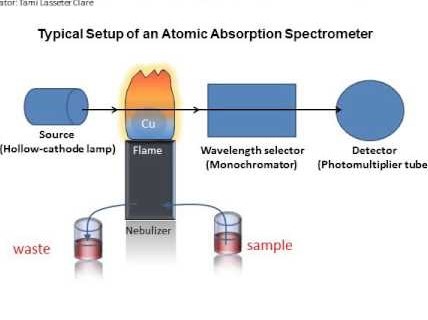
In this case, the elements will easily penetrate or emit monochromatic radiation at the right distance. Usually nebulizers (atomizers) are used to spray a standard solution or test in the flame where light is transmitted. Alternatively, the light beam is transferred, to the oven, through a hole containing the inspired apparatus.

Principle

The volatilization of molecules in the sun produces free atoms. These free atoms are happy when light of a certain length is able to emit spectral lines corresponding to the energy required for the electronic transition from the earth’s state to a happy state, allowed to pass through flame. The atomic spectra obtained is fully determined by the object involved and the amount of light concentrated is equal to the number of atoms in the path of light. Therefore, in addition to granting ownership of the material in the sample, this process of viewing and providing information on the quantity of the material.

INSTRUMENTATION

For all types of atom-absorbing spectrometer, the following components are required:

Radiation source:

The source should be such that it emits strong rays of the element to be determined, usually the resonance line of the object. It is almost impossible to separate the maximum length of resonance from a continuous source using a prism or diffraction grating or both at the same time. This problem was solved by the invention of empty cathode emission lamps. Such lamps emit monochromatic radiation element analyzes.

(a) Empty Cathode Lamp:

The cathode contains an empty cup in which the element will be cut. The anode is a tungsten wire. Both electrodes are inserted into a tube containing internal gas (argon or neon). The light window is constructed using quartz, silica or glass. The exact metal depends on the length of the scale to be transmitted. When a potential of approximately 3000V is used between these two electrodes, electrons trigger the immersion of gas into the lamp. These ions which receive enough energy to decompose atoms in the cathode, that is, explode other atoms of iron. These atoms regenerate and when they return to the ground, they begin to release the visible metal used to build the cathode (The light emitted spectrum corresponds to the elevation of the cathode emissions and the gas in the lamp. filling, and selection of very sharp spectral lines to obtain better sensitivity, without cases of disruption caused by other elements). The pressure stored in the lamp is 1 to 5 torr. Each blank cathode lamp emits a wide range of metal used in the cathode; this looks bad as a separate lamp should be used for each item to be analyzed. Another hollow cathode lamp is a wireless emission lamp (EDL) now made available for its light intensity of almost 10-100 times but not as stable as HCL (hollow cathode lamps). They are made of a closed quartz tube containing the salt of the substance and gas entering. The radio frequency field is used to cool the gas which makes the metal ionized. These lamps are usually reserved for items such as As, Hg, Sb, Bi and P.

Working of Atomic Absorption Spectrometer

Practically the meter is adjusted to learn zero absorption when spraying a blank solution in flame and the uninterrupted light of an empty cathode lamp passes through a photomultiplier tube. When a solution with a suction type is inserted then a portion of the light is applied which leads to a decrease in the intensity of the light which falls into the photomultiplier and produces a deviation from the meter needle. Standard object solutions are used to create a measuring curve where the content of the test solutions can be measured.

Applications

  • Used to determine the trace of a metal in a liquid.
  • Used in clinical laboratories for the removal of body fluids.
  • Estimation of soil and water samples.
  • Determination of lead in petrol.
  • Determination of metallic elements in food industry

IMMOBILIZATION OF ENZYME

BY- SREELAKHSMI (MSIWM012)

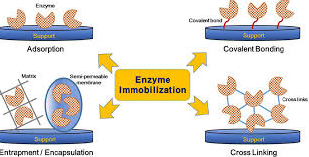
In the field of enzyme technology, immobilization is now a well-developed process. The effectiveness of a few industrial plants has been demonstrated. In cell immobilization technology the most important factor is that the enzymes are active and stable for a long time. It keeps within the cellular domain and all parts of the cell whether the cells are dead or active but in a state of rest. The mechanisms for all cellular degradation are similar to those described for enzyme degradation e.g. adsorption, covalent bonding, cell to cell cross-linking, encapsulation, and entrapment in a polymeric network. As long-term extraction of cells from a pre-made agent has been made, for example the use of wood as a carrier of Acetobacter has been used for the production of vinegar since 1823. The pre-selected carrier of the selected items is used. It attaches the cell to the surface of the pre-selected carrier made by binding.

Methods of Enzyme Immobilization

There are five different ways to reduce the strength of enzymes: (i) adsorption, (ii) covalent bonding, (iii) Entrapment (iv) copolymerisation and (v) Encapsulation

Adsorption

 If the enzyme does not work in the body externally, the size of the network particles must be very small in order to obtain a binding area for binding. Due to the reduction of enzymes on the outer surface, no pore circulation limitations are met. In addition, the inactive enzyme in the internal body is protected from damage, unstable mass solutions and bacterial attacks, and can achieve a stable and effective enzyme system. In addition, in reducing the internal pore the size of the pore of carriers can be adjusted for internal defects There are four mechanisms for degradation by adsorption: (i) static process (the enzyme is blocked by the carrier by allowing the enzyme-containing solution to affect the carrier without displacement (ii) a powerful batch process (the carrier is immersed in an enzyme solution and mixed by continuous stirring or stirring in the shaker), (iii) the reactor loading process (the carrier is inserted into a reactor for later processing, and the enzyme solution is transferred to the reactor and the carrier is loaded locally. potentially complex network company solution with the enzyme), and (iv) electrode stabilization process (carrier is placed close to one of the electrodes in the enzyme tuber, currently inserted, the enzyme moves to the carrier and is placed on top).

Covalent binding

Covalent bond is formed between the chemical groups of the enzyme and the chemical groups above the carrier. Covalent compounds are used under a wide range of pH, ionic forces and other flexible conditions. Measures of inhibition of attachment of the binding agency followed by the activation process, or attachment of the active group and ultimately enzyme attachment. The different methods of bonding are: (i) diazoation (bonding between an amino support group e.g. between an amino or carboxyl support group and an amino or carboxy enzyme group), (iii) group formation (use of cyanogen bromide is based on glycol-containing compounds i.e. cellulose, syphadex, sepharose, etc.), and (iv) poly active reagents (use of active or multi-functional reagent e.g. glutaraldehyde that forms the interaction between the helper amino group and the amino group of the enzyme) .An major problem with coexistence is that the enzyme may not work by bringing about changes in cohesion when dealing with reactions to active sites. However, this problem can be overcome by using inactivation in the presence of an enzyme or competitor inhibitor or protease. The most effective polymers are these celluloses or polyacrylamides which include diazo, carbodimide or azide groups.

Entrapment
Enzymes can be physically absorbed within the matrix (support) of a water-soluble polymer such as polyacrylamide gels and naturally occurring gels e.g. cellulose triacetate, agar, gelatin, carrageenan, alginate, etc. The type and nature of the matrix varies. The pore size of the matrix should be adjusted to prevent enzyme loss from the matrix due to overgrowth. There is a possibility of leakage of low-weight enzymes from the gel. Agar and carrageenan have large pore sizes (<10m). There are several mechanisms for the binding of enzymes: (i) gluing (gel-enzyme), (ii) stringing (fiber-coated enzyme), and (iii) microcapsule (-enzyme embedded in microcapsules forming monomer compounds (polyamine and polybasic chloride, polyphenol and polyisocyanate). Enzyme binding has been widely used to detect use, but no significant success has been achieved with the industrial process.

Co-polymerization

The short-term bond is characterized by a cohesive interaction between various enzyme molecules using a reagent acting as glutaraldehyde, a diazonium salt. Reduction in the use of active reagents that can release enzymes. This method is cheap and easy but is rarely used with pure protein because it produces very little of the enzyme that is not able to do the most internal work. It is widely used in trade preparation.

Encapsulation

Encapsulation is the closure of a drop of the enzyme solution in an unmeasured membrane capsule. The capsule is composed of cellulose nitrate and nylon. The insertion method is cheap and simple but its effectiveness depends on the stability of the enzyme even though the catalyst is well stored inside the capsule. This method is restricted to medical science only. In this way a large amount of the enzyme cannot work but the worst is that only a small substrate molecule with a strong membrane is used.

MHC Molecules

BY- SAI MANOGNA (MSIWM014)

Each mammalian species studied to date has a closely linked gene cluster.  The major histocompatibility complex (MHC) plays a role in intercellular recognition and self-nonself-discrimination. The MHC is involved in the production of immune responses that are both humoral and cell-mediated. While antibodies may respond on their own with antigens, most T cells only recognize antigens when combined with an MHC molecule. Also, since MHC molecules act as antigen-presenting structures, the unique collection of MHC molecules expressed by an individual influences the antigen repertoire to which the TH and TC cells of that individual may respond. For this reason, an individual’s response to antigens from infectious organisms is partly determined by the MHC and has therefore been involved in disease susceptibility and autoimmunity production.

General Organization and Inheritance of the MHC:

1. The theory that foreign tissue rejection is the result of an immune reaction to cell-surface molecules, now called antigens of histocompatibility, arose from Peter Gorer ‘s work in the mid-1930s.

2. To recognize blood-group antigens, Gorer used inbred strains of mice. He identified four groups of genes, designated I through IV, that encoded blood-cell antigens in the course of these studies.

3. Work carried out by Gorer and George Snell in the 1940s and 1950s established that gene-encoded antigens in the group designated II were involved in the rejection of transplanted tumors and other tissue. Snell called these genes “histocompatibility genes”; their current designation was about Gorer ‘s group II blood-group antigens as histocompatibility-2 (H-2) genes.

4. Although Gorer died before his contributions were fully recognized, Snell was awarded the 1980 Nobel Prize for this work.

A series of genes arranged inside a long, continuous stretch of DNA on chromosome 6 in humans and chromosome 17 in mice is the main histocompatibility complex. The MHC is referred to in humans as the HLA complex and in mice as the H-2 complex. Although the arrangement of genes is quite different, the MHC genes are grouped into regions encoding three groups of molecules in both cases.

Class I MHC Genes: Glycoproteins expressed on the surface of almost all nucleated cells are encoded by class I MHC genes; the critical feature of class I gene products is the presentation to TC cells of peptide antigens.

Class II MHC Genes: Glycoproteins expressed predominantly in antigen-presenting cells (macrophages, dendritic cells, and B cells) are encoded by class II MHC genes, where they present processed antigenic peptides to TH cells.

Class III MHC Genes: In addition to other products, Class III MHC genes encode different secreted proteins which have immune functions, including components of the complement system and molecules that are involved in inflammation.

Both MHC molecules of class I and class II are membrane-bound glycoproteins closely related in both structure and function. These molecules have been isolated and purified, and x-ray crystallography has determined their extracellular domains’ three-dimensional structures. Both membrane glycoprotein types act as highly specialized antigen-presenting molecules that form extremely stable antigenic peptide complexes, displaying them on the cell surface for T cell recognition. MHC molecules of class III, on the other hand, are a group of unrelated proteins which do not share structural similarities and common function with molecules of class I and II.

Class I MHC Molecules:

1. A 45-kilodalton (kDa) alpha chain-linked noncovalently with a 12-kDa beta2-microglobulin molecule is found in Class I MHC molecules.

2. The alpha chain is a transmembrane glycoprotein encoded within the A, B, and C regions of the human HLA complex by polymorphic genes and within the K and D/L regions of H-2 complex of the mouse.

3. Beta2-Microglobulin is a protein encoded on a distinct chromosome by a strongly conserved gene.

4. For the expression of class-I molecules on cell membranes, the alpha chain association with beta2-microglobulin is required.

5. With its hydrophobic transmembrane part and hydrophilic cytoplasmic tail, the alpha chain is anchored in the plasma membrane.

Structure of Class I MHC:

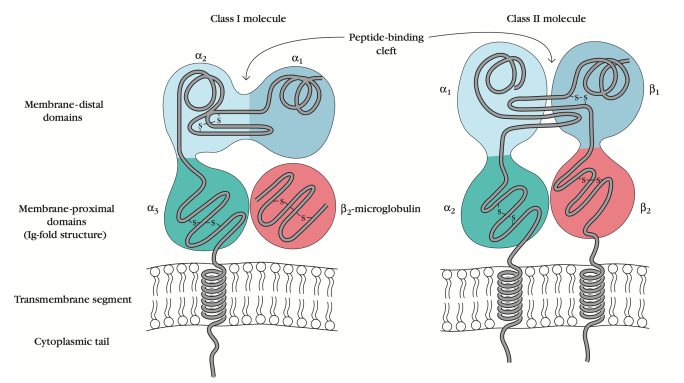
1. Structural analyses have shown that the class I MHC alpha chain molecules are divided into three external domains (alpha1, alpha2, and alpha3. Each contains approximately 90 amino acids; a transmembrane domain-containing approximately 25 hydrophobic amino acids, followed by a short stretch of charged amino acids; and a 30 amino acid cytoplasmic anchor segment.

2. The beta2-microglobulin is similar in size and organization to the alpha3 domain; it does not contain a transmembrane region and is noncovalently bound to the class I glycoprotein.

3. Sequence data shows homology in immunoglobulins between the alpha3, beta2-microglobulin, and constant-region domains.

4. The enzyme papain cleaves the alpha chain just 13 residues proximal to its transmembrane domain, releasing the extracellular portion of the molecule, consisting of a1, a2, a3 beta2-microglobulin.

5. Two pairs of interacting domains were revealed by purification and crystallization of the extracellular portion: a membrane-distal pair composed of the alpha-1 and alpha-2 domains and a membrane-proximal pair composed of the alpha-3 domain and beta2-microglobulin.

6. The alpha-1 and alpha-2 domains combine to form a platform of eight antiparallel beta-strands spanned by two long alpha-helical regions.

7. With long alpha-helices as sides, and beta-strands of the beta-sheet as the bottom, the structure forms a deep groove, or cleft, about 25Å ×10Å ×11Å.

8. On the top surface of class I MHC molecule, this peptide-binding cleft is located, and it is wide enough to bind a peptide of 8-10 amino acids.

9. The discovery of tiny peptides in the cleft that had co-crystallized with the protein was the big surprise in the x-ray crystallographic study of class I molecules. These peptides are processed antigen and self-peptides bound to the alpha-1 and alpha-2 domains in this deep groove.

10. The a3 domain and beta2-microglobulin are organized into two beta-pleated sheets, each formed by antiparallel beta-strands of amino acids. As defined, this structure, known as the immunoglobulin fold, is characteristic of immunoglobulin domains.

11. Class I MHC molecules and beta2-microglobulin are known as immunoglobulin members due to this structural similarity.

12. Among class I MHC molecules, the alpha-3 domain appears highly conserved and contains a sequence interacting with the CD8 membrane molecule present on TC cells.

13. Beta2-Microglobulin deeply interacts with the alpha-3 domain and also interacts with the a1 and a2 domain amino acids.

For the Class I molecule to achieve its fully folded conformation, the interaction of beta2-microglobulin and a peptide with a class I alpha chain is necessary. The assembly of class I molecules is assumed to occur by the initial interaction of beta2-microglobulin with the folding class I alpha chain. The binding of a suitable peptide to form the native trimeric class I structure consisting of the class I alpha chain, beta2-microglobulin, and a peptide stabilizes this metastable “empty” dimer. Ultimately, this full molecular complex is transferred to the cell surface.

Class II MHC Molecules:

1. There are two distinct polypeptide chains in Class II MHC molecules, a 33-kDa alpha chain and a 28-kDa beta chain connected by noncovalent interactions.

2. Class II MHC molecules, including class I alpha chains, are membrane-bound glycoproteins containing external domains, a segment of the transmembrane, and a segment of the cytoplasmic anchor.

3. In a class II molecule, each chain comprises two external domains: the domains alpha-1 and alpha-2 in one chain and the domains beta-1 and beta-2 in the other.

4. Like the membrane-proximal alpha-3 / beta-2-microglobulin domains of class I MHC molecules, the membrane-proximal alpha-2, and beta-2 domains bear sequence resemblance immunoglobulin-fold structure; thus, class II MHC molecules are also known as super-family immunoglobulins.

5. The membrane-distal part of the class II molecule consists of the domain’s alpha-1 and beta-1 and forms the antigen-binding cleft for the antigen being processed.

6. The X-ray crystallographic analysis indicates that class II and class I molecules are identical, which is remarkably obvious when the molecules are superimposed.

7. Like that in class I molecules, the peptide-binding cleft of HLA-DR1 is composed of a floor of eight antiparallel beta-strands and sides of antiparallel alpha-helices.

8. The class II molecule lacks conserved residues that bind short peptides to the terminal residues and form an open pocket instead; class I offers more of a socket, class II, an open-ended groove.

REGENERATIVE MEDICINES

BY: SREELAKSHMI (MSIWM012)

An emerging field of medicine called regenerative medicine or cell therapy refers to treatment derived from the idea of ​​producing new cells that will replace malfunctioning or damaged cells as a vehicle for the treatment of diseases and injuries. The focus is on developing effective mechanisms for stem cell replacement. This is especially beneficial for age-related diseases such as Alzheimer’s disease, Parkinson’s disease, type II diabetes, heart failure, arthritis, and aging of the immune system. It is believed that replacing damaged or dysfunctional cells with full functionality could be a useful treatment strategy in the treatment of many of these diseases and conditions.

Different Types of Renewable Medicine

Cell Therapy

Each of the 200 integrated cells in the human body is derived from one cell which is the fertilized egg. As the fertilized egg grows, it forms embryonic stem  cells, each of which has the potential to form the different types of cells found in adults and are organized into structures that will become tissues and organs. But some live in an inseparable state with older stem stem cells that can be transformed into a limited range of cell types.

Remedies that use patients’ cells to regenerate their organs or tissues are called spontaneous therapies. Methods include ongoing testing at two London hospitals to treat 100 heart attack patients with stem cells in their bone marrow to help repair damaged heart tissue. Therapies that use cells or tissue derived from a non-patient patient are called allogeneic therapies. Examples include the use of bone marrow or stem cells from similar donors or the use of ES cell lines established for treatment.

Tissue Engineering

The term “engineering tissue” came into use in 1985, by Y. Fung, a pioneer in the field of biomechanics and bioengineering, also stated that Tertiary engineering is a multidisciplinary field that uses the principles of engineering and health science to improve biological processes that restore, maintain or improve tissue function.” Tissue engineering modifies the cells or tissues in some way in order to repair, regenerate, or regenerate tissue. Perhaps the most well-known example of this was the process of trachea formation for a patient with airways that had been severely damaged by tuberculosis. Other examples of tissue engineering include artificial skin, which is made using human cells (fibroblasts) implanted in a matrix of proteins (fibrin) and cartilage membranes to be implanted in patients who have ruptured the cartilage of the knee.

Tissue engineering at its basic level fills the scaffolding of 3D tissues (biomaterials) by cells to produce functional organ formation. Tissue engineering aims to address the latest shortage of critical organs through the formation of living organs.

Biomedical Engineering

Another form of self-rehabilitation therapy is to make biomedical devices that mimic the function of tissue or organ. For example, Type 2 diabetes results in the destruction of beta-producing insulin-producing cells. Patients with this type of diabetes should monitor their blood glucose levels regularly and inject the hormone insulin to keep the level normal. While some research teams are working to restore beta cell functionality they are using biomedical engineering to improve artificial limbs. Using ultra-low power electronics originally designed for mobile phones, they developed a small built-in glucose sensor chip that can be inserted into a patient. The chip would regularly monitor blood glucose levels, produce the high amount of insulin needed to maintain stable glucose levels and send wireless signals to the pump to release the right amount of insulin.

Genetic Therapy

Although there are a variety of genetic therapies, the most obvious is to identify a medical condition that can be treated with a specific protein, and then introduce genetic code into that protein in the affected cells. In practice, finding genes that work in cells with the result of continuous treatment is extremely difficult. Nevertheless, in recent years there has been some progress in the use of genetic therapy to regenerate tissues, especially in the area of ​​heart disease.

Stem cells and Regenerative medicines

Stem cells have are able to develop into many types of cells in the body. They can act as a kind of immune system they can also differentiate without limit to fill other cells. When a stem cell divide, the new cell obtained has the ability to reside as a stem cell or into another type of cell which are having specific functions it can turn out to be like a muscle cell, a red blood cell, or a brain cell. There two types of stem cells: embryonic stem cells and adult stem cells. Embryonic stem cells are found in embryos and the sources of adult cells are the umbilical cord, menstrual blood, muscles, tendons, adipose tissue, bone marrow etc. a group of adult stem cells can be incorporated in vitro or in vivo to separate osteoblasts, chondrocytes, adipocytes, tenocytes, myotubes, neural cells and stroma supporting hematopoietic. The sheer strength of these cells, their easy separation from culture, and their extremely high ex vivo power make these cells an attractive therapeutic tool in reconstructive medicine.

Recent Advancements in Regenerative Medicine

  • Direction of cell expansion and differentiation, which explains the processes of how tissues and organ grow.
  • Development of techniques for assembly of cells into large, three dimensional tissue-like structures, which will lead to the physical creation of three dimensional organs.
  • Custom-designed biomaterials to serve as structural templates for tissue development, which helps scientists build organs.
  • Automated bioreactor culture vessels, which allow scientists to mass produce cells and tissues.

MINERALS

BY: SREELAKSHMI (MSIWM012)

Minerals are the chemical elements used by the body to maintain certain physicochemical processes that are essential for health. Although they do not provide energy, they have important roles to play in many bodily functions. This should be provided in the diet and varies from grams to micrograms per day in large and small items respectively. Minerals can be divided into two groups-Macro minerals – including calcium, phosphorus, magnesium, sodium, potassium, chloride and sulfur. Also those only needed in small amounts (trace element / micronutrients) – including iron, zinc, selenium, chromium, copper, manganese, iodine and fluoride. Minerals are substances found in food that our bodies need to grow and be healthy.

 Major Functions:

• Building strong bones and teeth

• Control of bodily processes, especially the nervous system

• A major component of body fluids and cells

• Form part of the enzymes and other proteins needed for energy production

• Minerals are found in foods such as meat, cereals (including whole grain products such as bread), fish, milk, and dairy products, vegetables, fruits (especially dried fruit) and nuts.

CALCIUM

Calcium (Ca) is a key component of bones and teeth and has important physiological functions in the body. It plays a role in blood clotting, muscle contraction and relaxation, nerve transfer and the availability of cell fluids. Calcium deficiency is one of the major causes of osteoporosis arthritis where strength and bone are affected.

 Health Benefits of Calcium

High urinary oxalate levels are a risk factor for calcium oxalate formation. Adequate calcium intake by diet can reduce the absorption of edible oxalate and low-grade oxalate by the formation of unresolved calcium oxalate salts. Colorectal cancer (CRC) is a common bowel cancer. Prospective study of the group has consistently reported a correlation between milk consumption and CRC risk. Cultural and cell culture studies have suggested sensible mechanisms that play a role in calcium, a major nutrient in dairy products, in preventing CRC.Adequate calcium intake can protect against lead poisoning. Increased calcium intake is known to reduce lead depletion. Adequate calcium intake also prevents arterial stimulation from the bones during weight loss. High calcium diets, which are often associated with the use of dairy products, are closely related to body weight and obesity in many separate studies. Weight loss and fat loss are significantly reduced by a high-calorie diet compared to a regular diet. The results suggested that while calcium intake may play a role in weight control, in addition to the benefits derived from other components of dairy products (proteins, fatty acids, and branched chain amino acids).Premenstrual Syndrome (PMS) refers to a set of symptoms, including but not limited to fatigue, irritability, mood / depression, fluid retention, and breast tenderness, which begin sometime after ovulation (mid-cycle) and decrease the onset of menstruation. Low calcium intake has been linked to PMS in early reports, and more calcium has been shown to reduce symptoms. The data currently available indicate that daily intake of calcium from diet and / or supplements may have therapeutic benefits for women diagnosed with PMS.

PHOSPHORUS

Phosphorus is concerned with many metabolic processes, including those that involve dehydration. It acts as part of bones, teeth, adenosine triphosphate (ATP), phosphorylated metabolic intermediates and nucleic acid. Phosphate buffers are involved in the production of high-energy chemicals, i.e., ATP and are involved in the production of phospholipids and phosphoproteins.Phosphorus improves the health of the digestive system. Effectively stimulates the digestion of riboflavin and niacin. These vitamins also help to strengthen and improve the emotional and emotional response system. It helps to break down digestion, diarrhea, constipation, and, in general, stimulates the digestive system with normal, healthy bowel movements. Focus, memory, and mental performance may be enhanced with the use of phosphorus. Adequate nutrition ensures mental development. Phosphorus deficiency can lead to the onset of neurological disorders such as dementia and Alzheimer’s. It can also increase the risk of mental retardation.

IRON

Iron (Fe) is an important component of hemoglobin, a protein in the erythrocyte that transports oxygen from the lungs to the tissues. As part of myoglobin, a protein that provides oxygen to muscles, iron supports metabolism. Iron is also needed for growth, growth, normal cell function, and the synthesis of other hormones and connective tissue. Iron is known to promote healthy pregnancy, increased energy and better performance in sports.

ZINC

Zinc (Zn) is a trace element, essential for the formation and function of many macromolecules, including enzymes that regulate cellular processes and cell identification pathways. Minerals regulate the immune response and show antioxidant and anti-inflammatory activity. Zinc maintains oxidative processes for a long time by reducing the expression of metallothioneins. These rich cysteine-rich proteins do the job of maintaining zinc-related homeostasis and act as powerful electrophilic supplements and cytoprotective agents

Health Benefits Zinc

 Zinc increases the activity of protein antioxidants and enzymes, such as glutathione and catalase. On the other hand, zinc exerts its antioxidant effect through two acute mechanisms, one of which is the stabilization of the oxidation-resistant sulfhydryls.The second machine consists of a metal resistor that is activated which is reduced. Zinc can replace redox metals, such as copper and iron, in certain binding areas and reduce site-specific oxidative damage. Zinc attracts expression from the brain from a neurotropic factor (BDNF). Clinical studies have shown serum hypozincemia in depression, which was a common practice in effective depressive therapy. Record the benefits of zinc supplementation in antidepressant therapy in the treatment of resistant and resistant patients. Therefore, zinc homeostasis is important in psychopathology and in the treatment of depression. The treatment of zinc headaches appears to be better than oral treatment due to its action in reducing high infection and necrotic material through improved local immunity, collagen lytic activity and continuous extraction of zinc ions that reactivate wounds in normal normozincemic individuals.

COPPER

Copper (Cu) is required for hematologic and neurologic systems. It is a combination of several enzymes and proteins, most of which promote oxidation-reducing reactions. It is necessary for bone growth and formation, the formation of myelin sheaths in the nervous system, aids in the synthesis of iron in hemoglobin, aids in the absorption of iron from the intestinal tract (GIT) and the transport of iron from plasma tissues. Cu seems to influence genetic expression by committing itself to certain aspects of writing. Cu is widely known to stimulate the brain. Cu-rich foods are often classified as ‘Brain Foods’. Research has shown a direct link between its content within the brain and creative thinking, which shows that it makes neural pathways grow in different ways. A powerful antioxidant that acts in front of the antioxidant enzyme superoxide dismutase to protect the cell membrane from free radicals of various organs. Some studies have been performed on the effects of aging, wrinkles, macular degeneration, and kidney failure. Adequate Cu in the diet prevents premature aging. Studies have shown that Cu can destroy or inhibit E.coli growth. Cu can lower LDL cholesterol levels and help increase HDL. This reduces the risk of cardiovascular diseases such as atherosclerosis, heart disease, and stroke. The immune system needs copper to perform several functions, the least known of which is a direct function. Some recent studies have shown that interleukin 2 is reduced in copper deficiency and may be the means by which T cell proliferation is reduced.

LIPIDS

BY: SREELAKSHMI (MSIWM011)

The lipid includes fats and oils, waxes, steroids and phospholipids. These molecules are less soluble in water but dissolve in solvents such as ether, chloroform, ethanol etc. Fats and oils are made from glycerol molecules and fatty acids Glycerol is a 3-carbon alcohol molecule. Fatty acids are made up of hydrocarbon chains of varying lengths with a methyl group on one side and a carboxylic acid group on the other. Fatty acids can be saturated or saturated. All the interactions between carbon atoms in a hydrocarbon chain are a single bond. These fatty acids are therefore full of hydrogen atoms. The saturated fat contains entirely saturated acids and is an animal fat.

Unsaturated fatty acids:

Unsaturated fatty acids are less saturated with hydrogen atoms. Unsaturated fats contain unsweetened fatty acids and therefore contain a double layer of bonds. In general, the larger the number of bonds doubles, the lower the temperature at which the lipid dissolves. A large number of double bonds in vegetable oil make their liquid form. Polyunsaturated fats are considered good fats.

E.g., Oleic acid, Linoleic acid, Linoleic acid.

Lipids classification:

1. Simple Lipids: Fatty acid esters contain a variety of alcohol. Also known as neutral oil

 Fats and oils are fatty acid esters containing glycerol. The chemical structure of fats (also known as triglyceride) consists of three different molecules of fatty acids secured by one glycerol molecule in its three hydroxyl groups.

Wax: Fatty acids esters have high alcohol content without glycerol.

2. Compound Lipids: Esters of fatty acids contain other groups in addition to alcohol and fatty acids. E.g., Phospholipids, glycolipids, lipoproteins etc.

3. Derived lipids: Objects found in the above groups by hydrolysis. E.g., similar steroids

Properties of Lipids

The oil does not dissolve in water but is easily soluble in ether, chloroform, benzene etc. They melt easily in hot alcohol but melt slightly in the cold. They are the best solutions for other oils, fatty acids etc.

Hydrolysis of alkaline oils is called saponification. The products are glycerol and an alkaline salt of fatty acids called soap.

Number Purification Number: The amount of milligrams of KOH needed to infuse 1 gram of oil or oil.

Number Acid number: The amount of milligrams of KOH needed to reduce the free fatty acids of 1 gram of fat.

Number Iodine number: This is the amount (in grams) of iodine absorbed per 100 grams. This is a measure of fat storage.

 Hydrolysis of alkaline fats is called saponification. The products are glycerol and an alkaline salt of fatty acids called soap.

Purification Number: The amount of milligrams of KOH required to add one gram of oil or oil.

Acid Number: The amount of milligrams of KOH needed to reduce the free fatty acids of 1 gram of fat.

Iodine number: This is the amount (in grams) of iodine that is obtained per 100 grams. This is a measure of fat storage.

 Rancidity: Almost all natural oil is released into the air when exposed to air, light and moisture, especially when it is warm and unpleasant. This is due to the formation of peroxide in the double bonds of fatty acids. Vitamin E is an important natural antioxidant.

 Features of fatty acids:

Humidity:

Fatty acids do not dissolve well in water due to their unprocessed form (acid).They are very hydrophilic like potassium or sodium salt. Fatty acids are easily excreted by liquid chemicals that do not come from the solution or suspension by lowering the pH to form a free carboxyl group. On the other hand, increasing pH increases water solubility through the formation of alkaline iron salts, known as soaps. Soaps contain essential substances such as colloids and are effective agents for the face. Therefore, the actual melting of water, especially of long acids, is often more difficult to determine because it is highly influenced by pH, and also because fatty acids have a tendency, which leads to the formation of monolayers or micelles. The formation of micelles in aqueous solutions of lipids is associated with rapid changes in body composition in the concentration range of concentrations. The point of change is known as micelle concentration (CMC), and it shows a tendency for thicker lipids than to remain as single molecules.

Melting point

The effect of the formation of fatty acids on its soluble chains with branch chains and double bond will reduce the melting point compared to that of the full equivalent chain. In addition, the melting point of fatty acids depends on whether the chain is equal to or abnormal; the latter have very melting points.

Reduction

 Sufficient acids are very stable, while low fatty acids are affected by oxidation: double bonds, high inclination. Therefore, unsaturated fatty acids should be treated in the form of imported gases and kept away from oxidants and compounds that lead to the formation of free radicals. Antioxidants can be very important in preventing potential attacks on vivo acyl chains

Rancidity

Almost all natural oils are released into the air when exposed to air, light, and moisture, especially when warm and unpleasant. This is due to the formation of peroxide in the double bonds of fatty acids. Vitamin E is an important natural antioxidant.

Biological   Properties of Lipids

  • Emulsification: Amphipathic lipids are emulsifiers. In fact, the fats have to be emulsified before they can be absorbed by the intestinal wall, bile juice secreted from the liver helps in this process
  • Mechanical support: Lipids of connective tissue of internal organs, protect them eventual damage on exposure to mechanical action.
  • Dissolving capacity: Under physiological conditions, certain lipids function as solvents to dissolve other lipids.
  • Hormones: The major group of hormones is formed of steroids. They regulate a large variety of physiological functions.
  • Enzyme activation: Lipids are essential for the activation of enzymes
  • Vitamins: Vitamin-D (calciferol) is a steroid derivative.
  • Solubility of Vitamins: Lipids are carriers of natural fat soluble vitamins such as A. D and E


MITOSIS

                                       BY: ABHISHEKA (MSIWM013)

INTRODUCTION:

  1. Mitosis is a type of cell division that takes place in living organisms and it is commonly defined as the process of duplication of chromosomes in eukaryotic cells and distributed during cell division.
  2.  The process where a single cell divides resulting in two identical cells, each resulted cell contains the same number of chromosomes and same genetic composition similar to the parent cell.
  3. Mitosis was first discovered in plant cells by Strasburger in 1875. In 1879, mitosis is also discovered in animal cells by W. Flemming. Flemming in 1882 gave the term Mitosis.
  4. The term mitosis is derived from the Greek word such as ‘Mitos’ means thread.

OCCURRENCE OF MITOSIS:

  1. The mitosis takes place in somatic cells. The cells which undergo mitosis are called  Mitocytes.
  2. In plants, the mitocytes are called meristematic cells. Some of the major sites of Mitosis in plants are root apex, shoot apex, intercalary meristem, lateral meristem, leaves, embryo, and seeds.
  3. In animals, the mitocytes are stem cells, germinal epithelium, and embryonic cells. In animals, it mainly takes place in Embryo, skin, and bone marrow.
  4. Mitosis also occurs during the regeneration of the cells. The mitosis takes place for three main reasons such as growth, repair, and asexual reproduction.

NUCLEUS:

It is a membrane-bound cell organelle present in both animal and plant cells. It is the center of the cell where genetic material is stored in the form of DNA. The DNA is arranged into a group of proteins into thin fibers. During the Interphase of the cell division, the fibers are uncoiled and dispersed into the chromatin. During mitosis, these chromatin condenses to become chromosome.

 CHROMOSOME:

The chromosomes carry genetic material and they are made of DNA. The mitotic chromosomes possess two sister chromatids, they are narrow at the centromere. They also contain identical copies of original DNA. These Mitotic chromosomes are homologous, they are similar in shape, size, and location of centromere.

STAGES OF MITOSIS CELL DIVISION:

The mitosis cell division is broadly explained in two stages such

  1. Karyokinesis: Division of Nucleus. Greek ‘karyon’ means the nucleus, whereas ‘kinesis’ means movement.
  2. Cytokinesis: Division of Cytoplasm.

KARYOKINESIS:

4 different stages that take place in Karyokinesis.

1.Prophase

2.Metaphase

3.Anaphase

4.Telophase

PROPHASE:

  1. The nucleus becomes spherical and the cytoplasm becomes more sticky.
  2. The chromatin slowly condenses into well-defined chromosomes.
  3. During Prophase, the chromosomes appear as a ball of wool. The chromosomes consists of two threads which are longitudinal known as chromatids.
  4. The chromosomes appear as two sister chromatids joined at the centromere.
  5. The microtubules are formed outside the nucleus.
  6. In plant cells, the spindle apparatus is formed without centriole. In animal cells, the centriole is divided into two moves towards opposite poles.

METAPHASE:

  1. Nuclear envelop breaks down into membrane vesicles and the chromosomes are set free into the cytoplasm.
  2. Chromosomes are attached to spindle microtubules through kinetochore.
  3. Nucleolus disappears.
  4. Kinetochore microtubules arrange the chromosomes in one plane to form a central equatorial plate.
  5. Centromeres lie on the equatorial plane while the chromosome arms are directed away from the equator called auto orientation.
  6. Smaller chromosomes remain towards the center while larger ones arrange at the periphery.
  7. Metaphase is the longest stage of Mitosis and takes place for about 20 minutes. It is the best stage to study the structure of chromosomes.

ANAPHASE:

  1. Chromosomes split simultaneously at the centromeres so that the sister chromatids separate.
  2. The separated sister chromatids move towards the opposite poles.
  3. The daughter chromosomes appear in different shapes such as V-shaped(metacentric), L-shaped(sub-metacentric), J-shaped(acrocentric), rod-shaped(telocentric).
  4. The spindle fibers are attached to the centromere and pull the chromosomes to the poles.
  5. Anaphase is the shortest stage of Mitosis.

TELOPHASE:

  1. Daughter chromosomes arrive at the poles. Kinetochore microtubules disappear.
  2. Chromosomes uncoil into chromatin.
  3. Nucleolus reappears. The formation of nuclear envelope occurs around each pair of chromosomes.
  4. The Viscous nature of the cytoplasm decreases.
  5. Telophase is called a reverse stage of the prophase.

CYTOKINESIS:

Cytokinesis is defined as the division of cytoplasm.

  1. It starts during the anaphase and is completed by the end of the telophase.
  2. It takes place in 2 different methods.

a) Cell plate method: It takes place in plant cells. The vesicles of Golgi fuse at the center to form a barrel-shaped phragmoplast. The contents of the phragmoplast solidify to become a cell plate, this cell plate separates the two daughter cells.

b) Cleavage or cell furrowing method: It takes place in Animal cells. In this method, a Cleavage furrow appears in the middle, which gradually deepens and breaks the parent cell into two daughter cells.

SIGNIFICANCE OF MITOSIS:

  1. Mitosis is called as an equational division in which daughter cells produced are identical.
  2. It maintains the constant number of chromosomes and genetic stability in somatic and vegetative cells of the living organisms.
  3. It helps to increase the cell number so that zygote transforms into a multicellular adult.
  4. Healing wounds takes place by Mitosis.
  5. It helps in asexual reproduction.
  6. Mitosis is necessary for growth, maturity and to repair damaged cells.

Adaptive Immunity

BY: SAI MANOGNA (MSIWM013)

Adaptive immunity is capable of identifying unique foreign microorganisms and molecules (i.e., foreign antigens) and selectively eliminating them. In comparison to innate immune responses, in all members of a species, adaptive immune responses are not the same but are reactions to particular antigenic challenges.

Four characteristic attributes represent adaptive immunity:

a. Antigen specificity

b. Diversity

c. Immunologic memory

d. Recognition of Self/non-self

The immune system’s antigenic specificity enables it to discern subtle distinctions between antigens. Antibodies can differentiate between two molecules of protein that differ by only one amino acid. In its recognition molecules, the immune system can produce immense complexity, enabling it to identify billions of unique structures for foreign antigens. If an antigen has been recognized and reacted to by the immune system, it exhibits immunological memory; that is, a second encounter with the same antigen causes an increased immune reactivity state. Because of this feature, after an initial experience, the immune system will confer life-long immunity to several infectious agents. Finally, the immune system typically only responds to foreign antigens, suggesting that it can recognize itself. The immune system’s ability to differentiate oneself from non-self and react only to non-self molecules is necessary. The result of an inappropriate reaction to self-molecules may be fatal.

Adaptive immunity is not autonomous from innate immunity. In initiating the particular immune response, the phagocytic cells critical to non-specific immune responses are closely involved. Conversely, it has been shown that various soluble factors released by a specific immune reaction increase these phagocytic cells’ activity. For instance, as an inflammatory response grows, soluble mediators are created that attract immune system cells. In exchange, the immune reaction may help to monitor the strength of the inflammatory response. The two mechanisms function together to remove a foreign invader through the carefully controlled inter-play of adaptive and innate immunity.

Lymphocytes and Antigen-presenting cells Co-operate in Adaptive immunity :

Two main classes of cells are involved in a successful immune response: T lymphocytes and antigen-presenting cells. Lymphocytes are formed by the hematopoiesis process in the bone marrow. Lymphocytes leave the bone marrow, circulate and remain in various lymphoid organs in the blood and lymphatic systems. Lymphocytes mediate the distinguishing immunological characteristics of specificity, diversity, memory, and self/non-self recognition since they generate and exhibit antigen-binding cell-surface receptors.

B LYMPHOCYTES

1. B lymphocytes mature within the bone marrow. Each expresses a specific antigen-binding receptor on its membrane when they leave it.

2. A membrane-bound antibody molecule is this antigen-binding or B-cell receptor. 3. Glycoproteins consisting of two identical heavy polypeptide chains and two similar light polypeptide chains are antibodies.

4. Disulfide bonds join each heavy chain with a light chain, and additional disulfide bonds hold the two pairs together.

5. A cleft within which antigen binds forms the amino-terminal ends of the pairs of heavy and light chains.

6. The antigen-binding to the antibody causes the cell to divide rapidly when a naive B cell (one that has not previously experienced antigen) first encounters the antigen that matches its membrane-bound antibody. Its progeny differentiates into memory B cells, and plasma cells called effector B cells.

7. Compared to naive cells, memory B cells have a longer life span, and parent B cells release the same membrane-bound antibody.

8. The antibody is formed by plasma cells in a form that can be secreted and has little to no membrane-bound antibodies. While plasma cells live for only a few days, they secrete enormous amounts of antibodies during this period.

9. It has been calculated that more than 2000 antibody molecules per second can be secreted by a single plasma cell. The main effector molecules of humoral immunity are secreted antibodies.

T LYMPHOCYTES

1. T cells move to the thymus gland to mature, unlike B cells, which mature within the bone marrow.

2. The T cell expresses a unique antigen-binding molecule, called the T-cell receptor, on its membrane during its maturation within the thymus.

3. T-cell receptors can recognize only antigens connected to cell-membrane proteins called major histocompatibility complex (MHC) molecules, unlike membrane-bound antibodies on B cells that can recognize antigen alone.

4. The polymorphic (genetically diverse) glycoproteins found on cell membranes are MHC molecules that act in this recognition case called “antigen presentation.”

MHC molecules are of two types:

  1. Class I MHC Molecules
  2. Class II MHC Molecules

Class I MHC molecules consist of a heavy chain linked to a small invariant protein called 2-microglobulin, expressed by almost all vertebrate organisms’ nucleated cells. Only antigen-presenting cells release Class II MHC molecules, consisting of an alpha and a beta glycoprotein chain. T cells proliferate and differentiate into memory T cells and multiple effector T cells when a naive T cell encounters an antigen mixed with an MHC molecule on a cell.

5. Two well-defined subpopulations of T cells exist T helper cells (Th) and T cytotoxic cells (Tc). While the third type of T cell has been postulated, called a T suppressor (Ts) cell

6. The presence of CD4 or CD8 membrane glycoproteins on their surfaces will differentiate T helper and T cytotoxic cells from one another.

7. T cells that display CD4 typically act as Th cells, whereas those that express CD8 usually operate as Tc cells.

8. The cell is activated after a Th cell recognizes and interacts with an antigen-MHC class II molecule complex, which becomes an effector cell that collectively secretes different growth factors known as cytokines.

9. In activating Tc cells, B cells, macrophages, and numerous other cells involved in the immune response, the secreted cytokines play an essential role.

10. Various types of immune reactions arise from variations in the pattern of cytokines generated by activated Th cells.

11. Tc cell recognizes an antigen-MHC class I molecule complex proliferates and differentiates into an effector cell called a cytotoxic T lymphocyte (CTL), under the influence of Th-derived cytokines.

12. The CTL does not typically secrete many cytokines, unlike the Tc cell, and exhibits cell-killing or cytotoxic activity instead.

13. The CTL plays a crucial role in tracking the body’s cells and removing any antigen-showing cells, such as virus-infected cells, tumor cells, and foreign tissue graft cells.

14. Cells exhibiting foreign antigen complexed with an MHC molecule of class I are referred to as altered self-cells; these are CTL targets.