STEM CELLS

                     By: N. Shreya Mohan (MSIWM042)

Stem cells are a group of undifferentiated cells that will differentiate into various types cells and proliferate indefinitely. They originate from cell lineages. They exact opposite to the progenitor cells, which does not proliferate indefinitely. In mammal, typically about 50-150 cells combine to form the inner cell mass (ICM) during the blastocyst stage of the embryonic development. These cells are stem cells too, having the ability to differentiate into various cell of the body. But this process is characterized by differentiating into there germ layers (layers that differentiate and give rise to tissues, organs). The three germ layers are ectoderm, endoderm and mesoderm particularly clear in gastrulation stage. These can systematically be isolated and cultured invitro during the stem cell stage and they are known as embryonic stem cells (ESCs). Parallelly, adult stem cells are found in particular areas such as the bone marrow or gonads. Their purpose, unlike the ESCs is to replenish the lost cells of the body, most common stem cells are the hemopoietic stem cells, which replenish blood and immune cells. Mesenchymal stem cells maintain bone cartilage and fat cells. The term “stem cell” was given by Theodor Boveri and Valentin Hacker during the 19th century. The properties of the stem cell were given by Ernst McCulloh and James Till. We will ponder over the properties too-

  • Self-renewal- The ability of the cell to undergo numerous cycles of division and cell growth is known as cell proliferation. This should be done while the undifferentiated state.
  • Potency- The capability and power of the cell to differentiate into specialized cell types. Whether it be totipotent, pluripotent, multipotent or unipotent.

Potency refers to the potentiality to be able to differentiate into respective cell types. We will dive into a brief cognizance of each of the potent type:

  1. Totipotent- Also known as omnipotent, these stem cells into embryonic as well as cells which are not embryonic. These cells have the ability to make a complete, functional organism. Cells include the product between the fusion of sperm and egg and the cells made after the first few divisions.
  2. Pluripotent- They are the known “ancestors” of totipotent cells. They can differentiate into almost all cells, specifically, the cells derived from the three germ layers.
  3. Multipotent- These cells will differentiate those type of cells that are closely related to each other.
  4. Oligopotent- These cells will only differentiate into particular cells, such as the myeloid stem cells or the lymphoid cells.
  5. Unipotent- These cells do not differentiate into any cell, but they do have the property of self-renewal (unlike the progenitor cells).

Stem cell therapy- a boon or a bane?

A filed with high scope, stem cell therapy is being used to treat diseases. Bone marrow replacement is one of a stem cell research which has proven effective in clinical trials. One good advantage of getting treated under this is that they lower symptoms of the disease to some extent. This leads to reduced intake of drugs required to supress the disease. One con is that the patients may require immunosuppression because the patient undergoes radiation before the transplant to remove the existing cells. This can prove detrimental chronically. For ESCs, ethics come into play as few argue that killing a new lifeform is considered unethical. 

Therefore, we should look into several parameters and be aware for it run without hurdles because stem cells have a lot of scope in the future.

 REFERENCES-

https://en.wikipedia.org/wiki/Stem_cell

https://www.medicalnewstoday.com/articles/323343

BIOTECHNOLOGY

BY: Ezhuthachan Mithu Mohanan (MSIWM043)

In the emerging field of science and technology, Biotechnology is Growing and Developing field, where new ideas and Experiments and research make this field unique and diversifying. 

Biotechnology: The branch of science which uses technology with living system is biotechnology. Biotechnology uses modern system of modification of biological systems. There are many disciplines that belong to the field of Biotechnology. The development of various methods, approaches and research in this field gives a new way of approaching science and its outcomes.

Biotechnology an accidental history: 

Even though we consider biotechnology to be a modern science, but it was way 1000 years back when the methods and approaches where used by our ancient people, Around 7000 years ago there was accident use of bacteria to make vinegar by Mesopotamia. Before 2,300 years Theophrastus thought that brad beans left magic in soil, but later it was concluded that some bacteria’s could fix nitrogen which enriched the soil. Development of gene banks is not a new concept, In1495 BC Queen Hatshepsut of Egypt used the concept of collecting specimens of plants which produced Frankincense (hardened gum-like material from trunk of the Boswellia sacra tree). Fermentation was always an ancient method which evolved with upcoming generation. In 19th century Sir Louis Pasteur discovered the fermenting beer using yeast. Gregor Mendel the father of genetics, was the one who believed that mathematics can be used with biology, but since his ideas and concepts were new and people considered it unbelievable was never awarded during is period. 

Evolution of Biotechnology :

  • 6000 BC :Babylonians used yeast in beer industry 
  • 320 BC :  Aristotle coined the theory of inheritance from father 
  • 1630 : William Harvey explained sexual reproduction
  • 1673:  Anton van Leeuwenhoek developed Microscope., identified that these microorganism
  • 1859: Charles Darwin  Proposed Natural selection
  • 1863 : Pasteurization discovered by Pasteur
  • 1863 : Pasteurization discovered by Pasteur
  • 1870: Mitosis discovered by Walter  Flemming
  • 1880: Louis Pasteur discovered weak stain of Cholera
  • 1902: Sutton discovered that segments get transferred from Chromosomes
  • 1906: Salvarsan was discovered by Paul Ehrlich 
  • 1907: Mutation theory by Hunt Morgan 
  • 1909:Wilhelm Johannsen Coined word genotype and phenotype
  • 1912:William Lawrence Bragg Discovered application of X-Rays
  • 1926: The Theory of gene by Morgan
  • 1928: Transforming principle by Fredrick Griffith
  • 1941: George Wells Beadle and Edward L Tatum proposed one gene one enzyme theory 
  • 1944: Selman Abraham Waksman discovered streptomycin as antibiotic
  • 1945–1950: Animal tissue culture developed
  • 1947: transposable elements  by Barbara MacClintock
  • 1950: Chargaff rule
  • 1953: Double helix model by Watson and crick
  • 1957:Crick and Gamov studied ‘central dogma
  • 1972: First recombinant DNA molecule
  • 1973: Ames test
  • 1990: Human Genome Project commencement 
  • 1993: Kary Mulis developed PCR

Biotech Industries: 

  1.  Genentech Inc. : This Company produced somatostatin in a bacteria in 1977
  2.  Eli Lily : produced insulin using site directed Mutagenesis
  3. Chiron crop: developed recombinant vaccine for hepatitis
  4. Calgene Inc. : tomato polygalacturonase DNA used to synthesize antisense RNA
  5. Novo Nordisk : focus mainly on Diabetes and hormone replacement therapy
  6. Regeneron : Aims to develop largest gene sequencing
  7. Alexion : develop immune-regulatory drugs
  8. Biomarin  : Develop drugs for lysosomal storage disorder
  9. Alkermes : Treatment for central nervous disorder
  10. Ionis : Develop  RNA-based therapeutic products

 Top Indian Biotech Industries 

  1. Biocon Limited:  Manufacture biotechnology products
  2. Serum Institute of India: Worlds largest vaccine manufacturer
  3. Panacea Biotec : 3rd largest Biotech company

Scope of Biotechnology : 

Since, Biotechnology shares an integrated value with many other disciplines of science , it holds a very key and vital role in the field of science. The various fields associated with biotechnology is as follows 

“Biotechnology is the new brightest star in the field of techniques and Biology”- E Mithu  

DIABETES

BY: Ezhuthachan Mithu Mohanan (MSIWM043)

Diabetes is a metabolic disorder characterized by hyperglycaemia which results in a lack of insulin secretion, insulin action, or both the conditions. Metabolic abnormalities are caused due to a low level of resistance to insulin. The effect of symptoms can be classified based on the type and duration of diabetes. Diabetes has also been associated with many metabolic disorders such as acromegaly and hypercortisolism for example insulin resistance has been observed in patients with acromegaly in the liver. Hypercortisolism (Cushing syndrome) produces visceral obesity, insulin resistance, dyslipidaemia which leads to hyperglycaemia and reduces glucose tolerance. Besides, diabetes been associated with metabolic disorders, clinical convergence between type 1 diabetes (T1D), and type 2 diabetes(T2D) is also observed. T2D patients develop a progressive decline in total beta-cell mass. Thus there are many interlinked complications due to diabetes.

According to the report by WHO 2019, 10 main issues demand attention one of them is noncommunicable diseases such as diabetes, cancer, and heart disease. These are collectively responsible for 70% of deaths worldwide. According to the National Health Portal, the Government of India, nearly 5.8 million deaths occur due to noncommunicable diseases in India (WHO 2015). As per data provided by Directorate General of Health Services Ministry of Health & Family Welfare, Government of India (MoHFW) 2016-2017, 2.24 core persons were screened for Common noncommunicable diseases like diabetes, hypertension, cardiovascular disorders, and common cancers. From this, 9.7 % was diagnosed to be diabetes, 12.09% was diagnosed to be hypertension, 0.55% was diagnosed to be cardiovascular disease and 0.17% was with common cancers.

Events occurred from discovery of Diabetes to development of various drugs 

YEAREVENTS
1552 BCHESY-RA documented urination as symptom of mysterious disease
133 ADAraetus of Cappodocia coined the word diabetes
1675Thomas Willis coined the word mellitus
1776Dobson confirmed presence of excess sugar in patients
1800Discovered chemical test for presence of sugar in urine
1700’s and 1800’sPhysician began to realize dietary changes help manage diabetes
1857Claude Bernard confirmed that the diabetes occur due to excess glucose production
1870’sDuring Franco Prussian war French physician Apollinaire Bouchardat proved that the diabetes patients symptoms improved due to war related food rationing
1889Oskar Minkowski and Joseph Von Mering extract obtained from dogs pancreas
Early 1900Development of oat cure, potato therapy, starvation diet.George Zuelzar injected pancreatic extract to control diabetes
1916Boston scientist Elliott Joslin wrote book “ The Treatment Of Diabetes Mellitus “
1922Frederick Banting discovered insulin to treat diabetes and won Nobel Prize in medicine 1923
1978Production of recombinant human DNA insulin
1996For the treatment of type 22 diabetes Thiazolidinediones (TZDs) were introduced.
2005The  amylin analogue known as pramlintide, which was approved by the FDA
2008Colesevelam approved for type 2 diabetes by FDA
2009Bromocriptine approved for diabetes
2013Canagliflozin  is the first SGLT- 2 inhibitor  approved by FDA  [Sodium Glucose Co-Transporter 2 Inhibitors], Dapagliflozin approved in 2014 by FDA

(Source: Saudi Med et al., 2002, John et al., 2014)

Diagnosis of Diabetes: 

There are several methods used for the diagnosis of Diabetes Mellitus. According to American Diabetes Association (ADA) the most standard diagnostic criteria is as follows 

  1. Hemoglobin A1c (HbA1c)
  2. Fasting Plasma Glucose (FPG)
  3. Oral Glucose Tolerance Test (OGTT)

 Hemoglobin A1c (HbA1c):

The average level of blood sugar over past two to three months can be diagnosed using hemoglobin A1c test. The main advantage of this type of diagnosis is that there is no need of fasting. A1c is measured using percentage The standard referred by ADA for normal person is less than 5.7%.

 Diagnosis of Diabetes by checking Hemoglobin A1c (HbA1c)


Hemoglobin A1c
NormalLess than 5.7%
Prediabetes 5.7% to 6.4%
Diabetes 6.5% higher

Fasting Plasma Glucose (FPG):

It is used to check fasting blood sugar levels. The patient should fast for 8 hours before the test. It is mainly done during morning. For normal person the FPG is lower than 100mg/dl.

Diagnosis of Diabetes by checking Fasting Plasma Glucose (FPG)

FPG
Normal100mg/dl or less
Pre diabetes100 mg/dl to 125 mg/dl
Diabetes 126 mg/dl or high

Oral Glucose Tolerance Test (OGTT)

This method is used to diagnose blood sugar level before and after 2 hours of a sweet drink. For normal person the OGTT is less than 140mg/dl

 Diagnosis of Diabetes by checking Oral Glucose Tolerance (OGTT)

OGTT
Normal140mg/dl or less
Pre diabetes 149 to 199mg/dl
Diabetes200 mg/dl or high

LYMPHOCYTE CULTURE

BY: Ezhuthachan Mithu Mohanan (MSIWM043)

Cells circulating in body and part of immune system are known as lymphocytes. There are mainly two main types of lymphocytes, which includes B Cells and T cells. 

Peripheral Blood Lymphocyte culture: 

PBLC is a technique used in Cytogenetics used for karyotyping analysis. The most convenient method to study chromosomes and by using cell culture technique it can be helpful for clinical and research purposes.  The powerful mitogen for human T cell is PHA (Phytohaemagglutinin).PHA is a plant hormone, which is obtained from Red Kidney bean. The function of PHA is to bind to T Cell membrane, which stimulates metabolic activity.  It is important to obtain cells at metaphase plate, since the study of Chromosome is possible and also easy to stain the chromosome at metaphase stage. During metaphase chromosomes are attached to spindle fibres.

Procedure for PBLC

  • Cell culturing should be done in a laminar Hood to avoid contamination. 
  • 1 ml of Venous blood should be collected 
  • Take 7 ml of RPMI1640 ( reconstituted with 10% fetal calf serum) in sterile culture tube
  • Add 0.5 ml blood in culture tube
  • Add 0.1 ml of PHA ( Previously thawed) 
  • Incubate this tube in sterile CO2 Incubator at 37°C FOR 69 hours
  • Add 40 µL of Colchicine at 69:00 hours
  • Incubate for 30minutes at 37°C
  • After Incubation centrifuge at 2000 rpm for 15 minutes
  • Remove supernatant and add 5 ml of Hypotonic solution
  • Mix gently and Incubate in waterbath for 37°C for 20 minutes
  • Add ice cold fixative (1:3 acetomethanol) and flush thoroughly
  • Centrifuge at 2000rpm for 15 minutes and remove supernatant
  • Repeat this above two steps for 3-4 times
  • Mix final suspension of 1 ml of fixative and make drop preparation in cold wet slide
  • Fix on flame and stain with 4% Giemsa
  • Observe and Scan for well spread metaphase plate in microscope

Function of each reagent

  1. PHA: it binds to membrane of T Cell and stimulate metabolic activity and cell division
  2. Colchicine: Suppress mitosis and cell division, but there is no interruption of chromosome multiplication
  3. Hypotonic solution : Used for swelling of cells
  4. Aceto-methanol: Helps in hindering cells at metaphase stage 

SPEMANN-MANGOLD ORGANIZER

                 By: N. Shreya Mohan (MSIWM042)

The Spemann-Mangold organizer are a consortium of cells that are required for the commencement of the neural tissue during the development of an amphibian embryo. Hilde Mangold, the then doctorate student along her mentor Hans Spemann, first published this work in 1924. This discovery gave so much scope to the developmental biology field, that this became one of the few doctoral theses to have won the Nobel prize in 1935. They showed that, of all the tissues in the early gastrula stage, only one has its fate determined. The overview of this organizer proved that destiny of the cells can be altered and influenced by factors from other cell clusters.

This self-differentiating tissue is the dorsal lip (the dorsal bordering region of the blastopore, which acts as the centre of differentiation) of the blastopore, the tissue derived from the grey crescent cytoplasm. When this dorsal lip tissue was transplanted into the so-called belly skin region of another gastrula, it not only continued to be blastopore tip, but also started the process of gastrulation and embryogenesis in the nearby tissues. Later on, two conjoined twins were formed instead of one. 

In this experiment, Spemann and Mangold used two different pigmented embryos from two newt species- that is, the darkly pigmented Triturus taeniatus and the non-pigmented Triturus cristatus. Two different species were taken for this experiment for transplantation by Spemann and Mangold as it would be easier to identify which one was the host and donor tissues respectively. At first, the dorsal lip of an early T. taeniatus gastrula was removed and then implanted into the area of an early T. cristalus gastrula was supposed to turn into ventral epidermis. As predicted, the dorsal lip tissue invaginated (cleaved) showing the qualities of self-determination and disappeared under the vegetal cells. The egg is divided into two regions- the animal pole (top part of the egg) and the vegetal pole (bottom part of the cell). Usually, the genetic material and proteins are unevenly distributed among these two poles.

The donor tissue (the pigmented species) of newt then continued to self-differentiate and divide into a structure called chordamesoderm (notochord) and other mesodermal structures respectively which usually comes from the original dorsal lip. 

Now, these newly made donor- derived mesodermal cells move forward for further participation in differentiation. As they are in movement, the host cells participate in the formation of new embryo. It creates organs that normally never would have formed before. In the secondary embryo, a somite could be seen containing both pigmented (that is, the donor) and the unpigmented (which is the host) tissues. What was more shocking was, the dorsal lip was able to interact strongly with the host tissue to form a fully formed neural tube derived solely from the host’s ectoderm. Back then, Spemann referred to the dorsal lip cells and their derivatives as the organizer. The reason being was because-

  • They could induce the host’s ventral tissue to change their fates to form a neural tube and a dorsal mesodermal tissue (most commonly the somite).
  • They could systematically organize host and donor tissues into a secondary embryo with clear anterior-posterior and dorsal-ventral regions.

Because, there are numerous inductions during the embryonic developments, this key induction wherein the progeny of dorsal lip cells induces the dorsal axis and the neural tube is traditionally called the Primary embryonic organizer.

REFERENCES-

https://www.khanacademy.org/science/biology/developmental-biology/signaling-and-transcription-factors-in-development/a/frog-development-examples

https://en.wikipedia.org/wiki/Spemann-Mangold_organizer

AFFINITY CHROMATOGRAPHY

BY: SHAILY SHARMA (MSIWM041)

Chromatography is a technique which is widely used for the separation of mixtures based on the physio-chemical differences between the stationary and the mobile phase of the chromatographic apparatus. The sample to be separated is dissolved in the mobile phase, which passes over the stationary phase (the immobile/fixed surface) and carries out the process of separation of molecules. 
See the source image

Most chromatographic processes employ and rely on these physio-chemical differences between the stationary and mobile phases for the process of separation of molecules. For example, gel permeation chromatography, ion exchange chromatography etc.

However, an exception is affinity chromatography. Unlike gel permeation and ion exchange chromatography, affinity chromatography exploits the tendency or capacity of certain biomolecules to bind specifically and non-covalently to other molecules called ligands (i.e., “bio-specificity of molecules)

PRINCIPLE:

One of the most familiar concepts for anyone involved in the studies of biochemistry is “bio-specificity”. 

Specificity is a molecular recognition mechanism which operates through structural and conformational complementarity between the biomolecule and its substrate. It is known that a given enzyme only bind/react with its specific group of substrates and not with any other. 

This bio-specificity may not always be limited only to enzymes. Other examples of this kind of biomolecular interactions include;

  • A given hormone binds only to its specific glycoprotein (known as the hormone receptor).
  • Antibodies specifically bind to only a given antigen which is shaped/has a confirmation specific to that antibody.See the source image

To understand this principle better with respect to affinity chromatography, let us suppose that an enzyme is to be purified from a mixture of thousands of proteins.

  •  Let the substrate analogue (molecule resembling the substrate but not capable of reaction) specific for this enzyme (which is to be separated) be coupled to the stationary phase (let’s say the stationary phase for this particular example be e.g., agarose). 
  • All other molecules, which have no specificity for the ligand and are incapable of binding will pass down and out of the column, (as seen in the second diagram in the picture.)
  • Lastly, once the other substances are eluted, the bound target molecules can be eluted by methods such as including a competing ligand in the mobile phase or changing the pH, ionic strength, or polarity conditions which would completely alter the strength of binding of the enzyme to the substrate and help in the elution of the desired product.

COMPLICATINS THAT ARISE DURING AFFINITY CHROMATOGRAPHY:

There are some complications which arise during affinity chromatography, they may be due to the nonspecific adsorption of sample components other than the desired one on to the matrix. Usually, when this happens, ionic and hydrophobic interactions are involved. 

This complication may be taken care of by judicious choice of operating conditions (e.g., pH, temperature, or ionic strength) in such a way that the physical conditions exclusively favour the binding of the desired molecule to the substrate and not any other undesired molecule.  

Another type of complication arises when one uses ligands, which interact with more than one macromolecule present in a given mixture.

IMPORTANT VARIALBES INVOLVED:

  1. The type of matrix that is used.
  2. The type of ligand used.
  3. The conditions of binding and elution of the sample from the matrix.

A general discussion of these points has been given below:

Properties of the supporting matrix:

  1. The matrix that is used in the process must be chemically inert to other molecules in order to minimize the rate of non-specific adsorption.
  2. The matrix should possess good flow properties.
  3. The matrix should be able to remain stable even at varying levels of pH and temperature, ionic strengths and denaturing conditions.
  4. It should be highly porous to provide a large surface area for the attachment of ligand.

Ligand Selection:

  1. The ligand used should be capable of forming moderately strong interactions with the desired macromolecule. 
  2. The ligand that is to be bound must possess functional groups that may be modified to form covalent linkages with the supporting matrix. 

Ligand attachment:

  • The covalent coupling of the ligand to the supporting matrix occurs in two steps;
  1. Activation of the matrix functional groups, and
  2. Covalent attachment of the ligand to the matrix.
  • The chemical methods that are used must be relatively mild so as to ensure no/minimal damage to the ligand or the matrix.

APPLICATIONS OF AFFINITY CHROMATOGRAPHY:

  1. Affinity chromatography has been widely used for the purification of varied number of macromolecules which are capable of showing ligand specific interactions like enzymes, hormones, antibodies, nucleic acids, membrane receptors etc.
  2. Affinity chromatography has also been used for the purification of cells as this technique is known to affect the viability of cells less than other chromatographic techniques. Cells that have been purified using this technique include fat cells, T and B lymphocytes, spleen cells, lymph node cells etc.
  3. An extension of affinity chromatographic principles is using magnetic gels. The gel beads contain a magnetic core that is chemically coupled to a protein ligand. The suspended cells are then allowed to interact with the microspheres. When a magnetic field is passed, the cells of interest move towards the poles of the magnets thereby getting separated. The cells can be collected by removing the magnetic field. 

Immunoglobulin negative thymocytes and neuroblastoma cells are separated using this technique.

Sources:

Biophysical Chemistry principles and techniques – Upadhyay and Nath

INTRODUCTION TO VIRUSES

BY: SHAILY SHAMA (MSIWM041)

HISTORY:

  • Throughout the course of modern human history, the source some viral infections such as smallpox, polio, and the Spanish flu have been quite unknown to humans. They have been diseases which have had deadly effects on humanity. All that was known about these diseases was that they spread via person-to-person contact.
  • In the second half of the1800’s, Louis Pasteur postulated that the disease rabies was caused by a “living thing” which is in all probability, smaller than bacteria itself. This postulation of his led him to develop the first vaccine against rabies in 1884. 
  • The initial discovery of the light microscope held some promise with respect to the observation of the agents causing such sever diseases however, it was found that the microscope could only be used to observe bacteria, protozoa and fungi. The size of virus was smaller than these agents and therefore, could not be observed under a microscope.
  • In the 1890’s, D. Ivanovski and M. Beijerinck showed that a disease caused in plants was cause by the tobacco mosaic virus which served as the first properly substantial revelation related to viruses.
  • This discovery was then followed by two other scientists, Friedrich Loeffler and Paul Frosch who isolated the virus that caused foot and mouth disease in cattle. 

POSITION OF VIRUSES IN THE BIOLOGICAL SPECTRUM:

Viruses are extremely unique entities which are capable of infecting almost every single type of cell known including bacteria, algae, fungi, plants, animals and even protozoa. 

Questions regarding the nature of viruses like their origination, their state of existence (alive or non-living), their distinct biological characteristics etc. are still very dominant in the scientific world.

Some ideas that have been addressed are:

  • Viruses are considered to be the most abundant microbes on earth, in terms of number.
  • Viruses are considered to be obligate intracellular parasites that are incapable of dividing or multiplying unless they invade a specific host cell. They multiply by taking over the hosts genetic and metabolic machinery of the cells of the host.
  • They are said to have been in existence for billions of years and have arisen from the loose strands of genetic materials released by the cells. (This is one widely accepted theory. However, it too has faced some criticism.)

PROPERTIES OF VIRUSES:

  1. Viruses are obligate parasites of protozoa, bacteria, fungi, animals, plants, and algae.
  2. They have an ultramicroscopic size range from 20nm up to 450 nm in diameter.
  3. They have a very compact and economical structure. They are not cellular in nature.
  4. They are inactive macromolecules outside the host cell and only get activated inside the host cells.
  5. Viral nucleic acid can be DNA or RNA but never both together.
  6. Their basic structure consists of a protein coat (the capsid) surrounding the nucleic acid core.
  7. They lack the enzyme and machinery for basic metabolic processes and synthesis of proteins.
  8. Virus multiply by taking over the host machinery and genetic material.

THE GENERAL STRUCTURE OF VIRUSES:

SIZE RANGE:

  • Viruses represent the smallest infectious agents in the biological world. (with a few exceptions)
  • They lie within the ultramicroscopic size range with sizes usually less than 0.2 micrometre. They are so small that one requires an electron microscope to detect or examine their structure.
  • The animal size range may vary from parvoviruses (which are around 20 nm in diameter) to megaviruses and pandoraviruses (which are up to 1000nm in width) that may be as big as small bacteria.
  • Some viruses which are cylindrical may be relatively long (around 800nm) but have a very narrow diameter (around 15nm).
  • Negative staining using an opaque salt in combination with electron microscopy can be used for the observational studies of viruses.

STRUCTURAL COMPONENTS OF A VIRUS:

Viruses have a crystalline appearance due the occurrence of regular, repeating molecules. A number of purified viruses even form large aggregates and crystals when subjected to special treatments. 

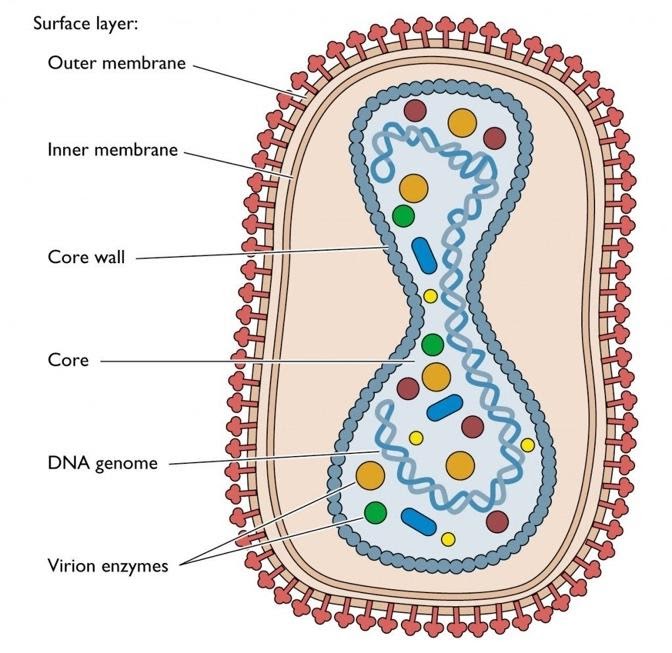
The general plan of all viruses or the general architecture is quite simple. Almost all viruses contain a protein coat or the capsid which encloses the viral genome which may be a DNA or an RNA sequence. Apart from this, viruses only contain those parts which are needed to invade and take control over the hosts cellular machinery. 

Some important terms are:

  • Capsid: The outer covering or the shell of the virus that surround the central nucleic acid core of the virus.
  • Nucleocapsid: The outer shell along with the nucleic acid core is called the nucleocapsid.
  • Naked viruses: Viruses that do not contain a nucleocapsid layer are called naked viruses.
  • Enveloped viruses: Some virus classes possess an additional covering which is external to the capsid which is called an envelope. This envelope structure is usually a piece of the hosts cell membrane. These types of viruses are called enveloped viruses.

THE VIRAL CAPSID:

The capsid layer of the virus, when magnified immensely, shows the appearance of small, prominent, geographic structures. These structural subunits of the capsid are called capsomeres. 

These capsomeres are capable of self-assembling into the finished capsid structure. Depending on the shape and assembly of the capsomeres, the resulting structure can be of two types; 

  1. Helical: Helical capsids have rod shaped capsomeres that bind together to form a structure similar to hollow discs (like a bracelet). During the process of formation, these discs link together to form a continuous helix.See the source image
  1. Icosahedral capsids: An icosahedron is a three-dimensional, 20-sided figure with 12 evenly spaced corners. Some viruses also show such an arrangement in this shape.
  2. Complex viruses: Such viruses may have a specific head, a neck and other structures specific for the invasion of host cells. The most common examples of such viruses is phage viruses.

THE VIRAL ENVELOPE:

Enveloped viruses, when released from the host cells sometimes carry forward a piece of the hosts cell membrane with them in the form of an envelope. Although it is derived from the host, the envelope is different in the virus because the normal proteins of the host get replaced with the viral proteins. 

VIRAL GENOME:

At the center of the viral structure, within the capsid lies the viral genome which may be single or double stranded. The genetic material may be RNA or it may be DNA but it is never both even in viruses. The genome may be a few hundred to thousands of base pairs long. 

Sources:

Foundations in Microbiology – Talaro, Kathleen P

BIOSAFETY CABINET

BY: Ezhuthachan Mithu Mohanan (MSIWM043)

A biological safety cabinet is an enclosed but ventilated workspace. It is mostly used while working with contaminated pathogens. There are many levels in BSC, depending on the contaminants. There are mainly three states of protections

  1. Personal protection
  2. Product protection
  3. Environment protection

There are three classes for BSC based on containment capabilities

  • Class 1 cabinet: This is used to provide personal as well as environment protection. Biological agents should be of low to moderate risk. BSL 1,2 and 3
  • Class 2 cabinets: This is used to provide personnel, environment as well as product protection. Biological agents should be of low to moderate risk. BSL 1,2 and 3
  • Class 3 cabinet: Also known as glove box. This is used to provide personnel, environment as well as product protection .BSL 4(highly infectious agents).

Biosafety level:


BSL are standard level defined by Biosafety in Biomedical Laboratories (BMBL), Which mainly measures the protection needed in a laboratory setting to protect workers, environment and public. Biological risk assessment (BRA) is used to conduct each experimental protocol. BRA are assessments which mainly used to evaluate the following The infectious or toxins transmitted and can cause disease.Availability of medical treatmentsHealth checkup and training of lab employees

The main requirement for any given Biosafety level are Laboratory designPPE (Personnel protective equipment)Biosafety equipment

There are mainly 4 BSL

Biosafety Level 1: BSL1 is used for those infectious agents which is mainly not considered for causing health risk to healthy individuals. The procedures followed are mainly under the category of Standard Microbiological practices (SMP). There comes no specific requirement of special equipment or design features. The main necessities are cleaned surfaces, withstanding basic chemicals etc.

Biosafety Level 2: BSL2 focus on study of moderate risk infectious agents. The risk of getting infectious may be due to accidental inhalation, swallowing, exposed to cut skin etc. The specific requirement such as hand washing sinks, eye washing, automatic door and lock.  There is basic requirement of equipment which can decontaminate lab waste, incinerator, and autoclave.

Biosafety Level 3:  BSL 3 mainly focus on infectious agents which can be potentially lethal, when accidentally inhaled or exposed. For any research studies with biological agents whose spread can be lethal, BSL 3 is used. The controlled airflow or sealed enclosures are important for such agents. Easy decontamination, directional airflow, two self-closing or interlocked, doors, sealed windows, properly sealed wall surfaces, filtered ventilation etc. are basic necessities under the category of BSL2. There is basic requirement of equipment which can decontaminate lab waste, incinerator, and autoclave.


Biosafety Level 4: BSL 4 mainly focus on those agents which have high risk of aerosol transmission an may be life threatening disease, having no vaccines or therapy developed till date. It includes all BSL 3 features, along with it should be developed in an isolated zone. Significant training should be provided for the workers. Careful and controlled access. There are mainly two types of BSL4 

.

Pathogen profile of Klebsiella pneumoniae:

BY: SHAILY SHARMA (MSIWM041)

Klebsiella pneumoniae is the pathogen that causes pneumonia and septicemia (blood infections) which is usually found in the normal flora of the mouth skin and the intestines. It may also cause meningitis and bacteremia.

Normally when they occur in the intestines, the organism is harmless. However, the spreading of the organism to other parts pf the body and under certain conditions causes diseases in humans.

Clinically, it is one of the most significant members of the genus Klebsiella of the Enterobacteriaceae. In the recent years, one of the most important pathogens of the nosocomial infections, involving the urinary and the pulmonary systems, has been the Klebsiella species. 

Naturally, it occurs in the soil and about 30 percent of the strains of Klebsiella show nitrogen fixing abilities under anaerobic conditions.

  • Microscopic morphology: 
  • It is a gram-negative organism that occurs in the encapsulated form.See the source image
  • It is a straight rod-shaped organism around 1 to 2 micrometers in length.
  • It is a non-motile organism which is facultatively anaerobic.
  • On MacConkey agar medium it appears as a mucoid lactose fermenter.
  • Habitat:
  • It is usually found in the mouth, skin and intestines of humans as normal flora.
  • Virulence factors:
  • The bacterium possesses a thick polysaccharide capsule which prevents the ingestion of the organism by the hosts phagocytes and somatic antigen from being detected by the host’s antibodies.
  • The bacterium also shows the presence of a thick lipopolysaccharide capsule which makes the serum complement activation more difficult for the host’s immune system.
  • K. pneumoniae protects itself and avoids damage by the host’s complement proteins by the extreme length of the molecules comprising the capsule and allows the membrane attack complex (MAC) to form away from the membrane. This helps in the prevention of opsonization and insertion of the MAC.
  • The bacterium uses the host’s ferric-siderophore receptors to activate its own Enterobactin-mediated iron-sequestering system.
  • Primary infections/disease:
  • Most commonly, Klebsiella causes pneumonia. Typically, in the form of bronchopneumonia and bronchitis. 
  • The organism is transmitted when a person is directly exposed to the bacteria. The bacteria must enter either directly enter the respiratory tract to cause pneumoniae or the blood stream to cause a bloodstream infection.See the source image
  • These patients have a higher tendency to develop other complications like lung abscess, cavitation, empyema and pleural adhesions.
  • Apart from or in addition to pneumonia, Klebsiella causes other infections like infections of the lower biliary tract, urinary tract and also infection of and around surgical wound sites. 
  • The range of these clinical infections include diseases like cholecystitis, diarrhea, upper respiratory tract infection, meningitis, sepsis etc. 
  • The bacterium can also enter the blood post sepsis and septic shock.
  • In most cases, patients suffering from Klebsiella pneumoniae cough up a characteristic sputum in addition to fever, nausea, tachycardia, and vomiting.
  • If a person acquires the infection in a community setting, like in a mall, community-acquired pneumonia occurs.
  • A urinary tract infection (UTI) may also be caused by the pathogen if it enters one’s urinary tract. It typically occurs in older women.
  • The pathogen may also cause wound infections like cellulitis, necrotizing fasciitis and myositis if it enters through a break in the skin and affects the soft tissue.
  • Diagnosis:
  • Susceptibility testing for (ESBL) Extended spectrum β-Lactamase.See the source image
  • Other tests that can be done for the diagnosis of K. pneumoniae include:
  1. CBC or complete blood count.
  2. Sputum culturing of the patient.
  3. Radiography of the chest to check for lung abnormalities visually.
  4. CT scans.
  • Treatment:
  • The treatment for Klebsiella pneumoniae infections mainly depends upon the patient’s health conditions, medical history and the level of severity of the disease. 
  • Treatment is by antibiotics like aminoglycosides and cephalosporins.

Sources: 

 Ryan, KJ; Ray, CG, eds. (2004). Sherris Medical Microbiology (4th ed.). McGraw HillISBN 978-0-8385-8529-0.

 “Klebsiella species – GOV.UK”. www.gov.uk

Human Mitochondrial DNA

BY: Ezhuthachan Mithu Mohanan (MIWM043)

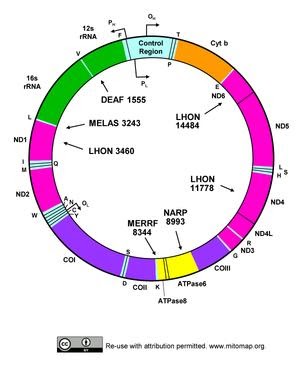
DNA within mitochondria was first detected in 1963. Human mitochondria represent the mammalian mtDNA. Human mtDNA is 16,569 bp, double stranded and circular. It codes for 13 polypeptides, belonging to OXPHOS family. mtDNA also codes for 22 tRNA,2 rRNA. It also has control noncoding regions. Various nuclear coded factors also known as precursor polypeptides are essential for the expression and maintenance of mtDNA. It was Sanger who found that circular mtDNA in vertebrates, has both Light Strand and Heavy strand. There are many differences considering nuclear DNA and mitochondrial DNA, which are as follows 

MITOCHONDRIAL DNA NUCLEAR DNA 
Present in mitochondria Present in nucleous
One cell contains 0.25% mtDNAOne cell has 99.75% n DNA
Mutation rate of mtDNA is 20 times faster than nDNASlow mutation rate 
circular Linear
1000’s of mtDNA copies/ cell2 Copies / cell
HaploidDiploid
Maternally inherited Biparental inheritance
Replication repair mechanism is absent Replication repair mechanism is present
Reference sequence by Anderson  and Colleagues in 1981Reference sequence in Human Genome Project in 2001
Size of genome is 16,569 bp Size of genome is 3.2 billion base pair

The genetic code of nuclear DNA differ from mtDNA as such ‘TGA’ codes for tryptophan in vertebrate mitochondria, while it is a stop codon for nuclear DNA. ‘ATA’ codes for Isoleucine in cytosol, while it codes for methionine in mitochondria.

Mitochondrial Inheritance: 

With most of the evidence provided, mostly there is maternal inheritance of mitochondria. Due to nucleotide imbalance and reduction in fidelity of polymerase γ, it causes higher mutation rate. This can be used as approach for human identity test, studying evolutionary and migration pattern.

mtDNA replication:  

Factors for mtDNA  replication: 

DNA Polymerase γ is the polymerase enzyme, it is a heterotrimer with one catalytic subunit ( POLγA). POLγA has 3’-5’ exonuclease activity for proofreading. TWINKLE is DNA Helicase which unwinds double stranded DNA. mtSSB is binds with single stranded DNA to protect from nucleases. Vinograd and coworkers proposed the strand displacement theory, which emphasize continuous DNA synthesis on H and O strand. The replication initiation begins from OH Strand, which proceeds unidirectional. During OL replication stem loop structure is formed which block mtSSB from binding, initiating primer synthesis. Thus the two strand synthesis occur in a continuous manner , until two complete double stranded DNA is formed.A triple-stranded displacement loop structure also known as D Loop is formed, When 7S DNA remains bound to parental L strand, while parental H-Strand is displaced.  The role of mtDNA D loop is not completely understood. 

Mitochondrial Diseases:

A dysfunction in mitochondria leads to mitochondrial disorder. Heteroplasmy  is condition due to presence of mutant mitochondrial DNA .  Various Mitochondrial disorders are as follows:

  1. Mitochondrial Myopathy:  Presence of ragged red muscle fibres is due to accumulation glycogen and neutral lipids which leads to decreased reactivity of cytochrome c oxidase
  2. Leber’s hereditary optic neuropathy : This is maternally inherited, which causes degeneration of retinal ganglion cells
  3. Leigh syndrome: It is a neurometabolic disorder affecting CNS( central nervous system)
  4. Myoneurogenic gastrointestinal encephalopathy : Autosomal recessive disorder. It is due to mutation of TYMP gene
  5. Mitochondrial DNA depletion syndrome: It is also known as Aplers disease. This is caused my mutation inTK2 gene.