OXIDATIVE AND NON-OXIDATIVE DEAMINATION

INTRODUCTION:

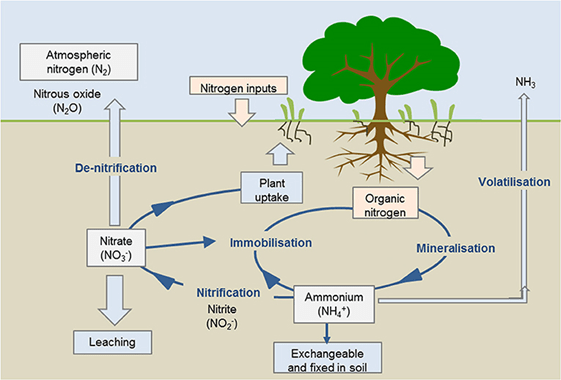
The removal of amino group from the amino acid as ammonia (NH3) is called deamination.

A chemical reaction that is catalysed by the deaminase class of enzymes which results in the liberation of ammonia is called deamination and this liberated ammonia is used for urea synthesis. 

These reactions occur in the liver and kidney of humans. In the kidney, the ammonia which is a result of the conversion of the amine group (that is removed) is excreted from the human body.

Deamination can be either oxidative or non-oxidative.

OXIDATIVE DEAMINATION:

When an amine group is removed from a molecule by the process of oxidation, the reaction is called an oxidative deamination reaction

These types of reactions largely occur in liver and kidney.

These reactions lead to the production of alpha-keto acids etc. via the amine groups.

This reaction is very important in the catabolism of amino acids as it forms a catabolized product from amino acids.

The by-product of this reaction is ammonia which is a toxic. Here, the amine group converts into ammonia. The ammonia that is formed is the transformed in urea which is an excretion product of the body.

Image result for non-oxidative deamination

The primary reactants of such a reaction are glutamic acid or glutamate. This is because usually the end product of most transamination reactions is glutamic acid.

Glutamate dehydrogenase is the enzyme involved that catalyzes the transfer of an amino group to an alpha-keto acid group. 

Another enzyme involved in these reactions is the monoamine oxidase enzyme that catalyzes the deamination via the addition of oxygen.

  • Glutamate dehydrogenase (GDH):

Glutamate dehydrogenase is a mitochondrial enzyme. It also contains the element zinc.

It contains six identical units and has a molecular eight of 56,000 each.

GDH is controlled by allosteric regulation where GTP, ATP, steroid and thyroid hormones inhibit GDH whereas GDP and ADP activate it.

  • Glutamate dehydrogenase and its roles in the process of oxidative deamination:

Glutamate serves as a “collection centre” for amino groups in biological systems because the amino groups of most amino acids are transferred to glutamate.

Rapid oxidative deamination of glutamate leads to the production of ammonia. This is catalysed by glutamate dehydrogenase.

The importance if this GDH catalysed reaction lies within the reversibility of linking up glutamate metabolism with the tricarboxylic acid cycle. This reversibility is credited to the enzyme of alpha-ketoglutarate that is involved.

GDH is unique because it can utilize either NAD+ or NADP+ as a coenzyme.

The intermediate that is formed during the conversion of glutamate to alpha-ketoglutarate is iminoglutarate.

  • Regulation of GDH activity:

The glutamate levels are increased in the body after the consumption of a protein-rich meal and glutamate is converted to alpha-ketoglutarate with the liberation of ammonia.

Further, the degradation of glutamate is increased when the cellular energy levels are low to provide alpha-ketoglutarate which enters the TCA cycle to liberate energy.

  • Process of oxidative deamination by amino acid oxidases:

Alpha-keto acids and ammonia are produced by L-amino acid oxidase and D-amino acid oxidase flavoproteins which possess FMN and FAD respectively.

The result of this reaction is a reduced form of oxygen, which is H2O2

This H2O2 then undergoes a decomposition reaction for which the enzyme is catalase.

L-amino acid oxidase does not act on glycine and dicarboxylic acids and therefore the activity of L-amino acid oxidases is much lower than that of D-amino acid oxidases.

  • Fate of D-amino acids:

D-amino acids are found in plants and microorganisms but are not found in mammalian cells. 

However, they are taken regularly in the diet and metabolised in the body by D-amino acid oxidases to produce respective alpha-keto acids by oxidative deamination.

The first step for the conversion of unnatural D-amino acids to L-amino acids is catalysed by D-amino acid oxidase and is therefore of value within the body.

NON-OXIDATIVE DEAMINATION:

The process of removal of amine groups from a molecule via reactions, all except the oxidation reactions, is called a non-oxidative deamination reaction

The main types of reactions that are involved in this process are: 

1. Reduction

2. Hydrolysis

3. Intramolecular reactions.

However, this reaction also involves the production of toxic by-product ammonia from amino acids. 

Moreover, the most common amino acids that undergo this type of reactions are hydroxy amino acids (serine, threonine, cysteine and histidine), sulphur amino acids (cysteine and homocysteine). Similarly, the most common enzymes involved in this reaction are dehydratases, desulphahydrases, lyase, histidase etc.

The examples of non- oxidative deamination are:

(a) Amino acid hydrases: The hydroxy amino acids undergo deamination by PLP-dependent dehydrases to produce respective alpha-keto acids with the release of ammonia.

(b) Amino acid desulphhydrases: Form keto acids by undergoing a coupled reaction of sulfur amino acids undergoing deamination along with desulphhydration.

DIFFERENCE BETWEEN OXIDATIVE AND NON-OXIDATIVE DEAMINATION:

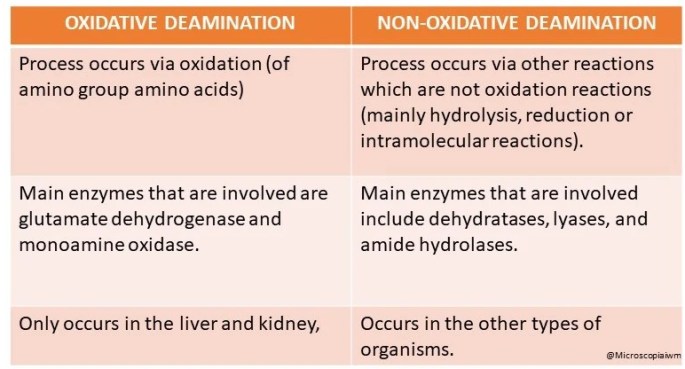
1. Oxidative deamination: Process occurs via oxidation (of amino group amino acids).

2. Non-oxidative deamination: Process occurs via other reactions which are not oxidation reactions (mainly hydrolysis, reduction or intramolecular reactions).

1. Oxidative deamination: Main enzymes that are involved are glutamate dehydrogenase and monoamine oxidase.

2. Non- oxidative deamination: Main enzymes that are involved include dehydratases, lyases, and amide hydrolases.

BY- Shaily Sharma (MSIWM041)
MITOSIS- its Occurrence, Stages and Significance.


  1. Mitosis is a type of cell division that takes place in living organisms and it is commonly defined as the process of duplication of chromosomes in eukaryotic cells and distributed during cell division.
  2.  The process where a single cell divides resulting in two identical cells, each resulted cell contains the same number of chromosomes and same genetic composition similar to the parent cell.
  3. Mitosis was first discovered in plant cells by Strasburger in 1875. In 1879, mitosis is also discovered in animal cells by W. Flemming. Flemming in 1882 gave the term Mitosis.
  4. The term mitosis is derived from the Greek word such as ‘Mitos’ means thread.
  1. The mitosis takes place in somatic cells. The cells which undergo mitosis are called  Mitocytes.
  2. In plants, the mitocytes are called meristematic cells. Some of the major sites of Mitosis in plants are root apex, shoot apex, intercalary meristem, lateral meristem, leaves, embryo, and seeds.
  3. In animals, the mitocytes are stem cells, germinal epithelium, and embryonic cells. In animals, it mainly takes place in Embryo, skin, and bone marrow.
  4. Mitosis also occurs during the regeneration of the cells. The mitosis takes place for three main reasons such as growth, repair, and asexual reproduction.

NUCLEUS:

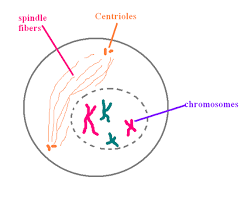
It is a membrane-bound cell organelle present in both animal and plant cells. It is the center of the cell where genetic material is stored in the form of DNA. The DNA is arranged into a group of proteins into thin fibers. During the Interphase of the cell division, the fibers are uncoiled and dispersed into the chromatin. During mitosis, these chromatin condenses to become chromosome.

 CHROMOSOME:

The chromosomes carry genetic material and they are made of DNA. The mitotic chromosomes possess two sister chromatids, they are narrow at the centromere. They also contain identical copies of original DNA. These Mitotic chromosomes are homologous, they are similar in shape, size, and location of centromere.

STAGES OF MITOSIS :

The mitosis cell division is broadly explained in two stages such

  1. Karyokinesis: Division of Nucleus. Greek ‘karyon’ means the nucleus, whereas ‘kinesis’ means movement.
  2. Cytokinesis: Division of Cytoplasm.

4 different stages that take place in Karyokinesis.

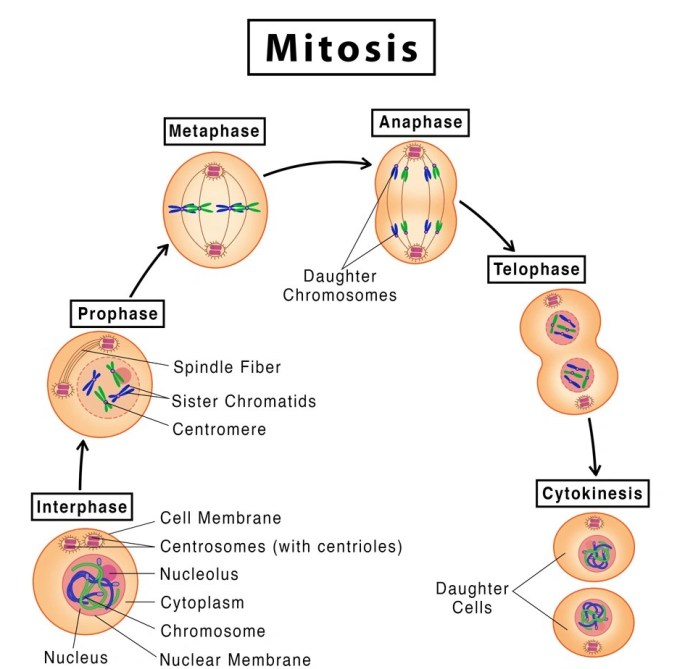
PROPHASE:

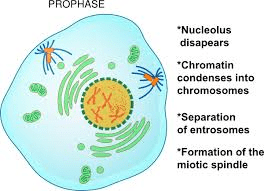
  1. The nucleus becomes spherical and the cytoplasm becomes more sticky.
  2. The chromatin slowly condenses into well-defined chromosomes.
  3. During Prophase, the chromosomes appear as a ball of wool. The chromosomes consists of two threads which are longitudinal known as chromatids.
  4. The chromosomes appear as two sister chromatids joined at the centromere.
  5. The microtubules are formed outside the nucleus.
  6. In plant cells, the spindle apparatus is formed without centriole. In animal cells, the centriole is divided into two moves towards opposite poles.

METAPHASE:

  1. Nuclear envelop breaks down into membrane vesicles and the chromosomes are set free into the cytoplasm.
  2. Chromosomes are attached to spindle microtubules through kinetochore.
  3. Nucleolus disappears.
  4. Kinetochore microtubules arrange the chromosomes in one plane to form a central equatorial plate.
  5. Centromeres lie on the equatorial plane while the chromosome arms are directed away from the equator called auto orientation.
  6. Smaller chromosomes remain towards the center while larger ones arrange at the periphery.
  7. Metaphase is the longest stage of Mitosis and takes place for about 20 minutes. It is the best stage to study the structure of chromosomes.

ANAPHASE:

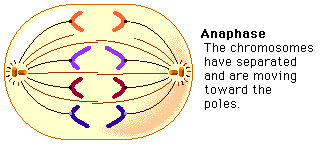
  1. Chromosomes split simultaneously at the centromeres so that the sister chromatids separate.
  2. The separated sister chromatids move towards the opposite poles.
  3. The daughter chromosomes appear in different shapes such as V-shaped(metacentric), L-shaped(sub-metacentric), J-shaped(acrocentric), rod-shaped(telocentric).
  4. The spindle fibers are attached to the centromere and pull the chromosomes to the poles.
  5. Anaphase is the shortest stage of Mitosis.

TELOPHASE:

  1. Daughter chromosomes arrive at the poles. Kinetochore microtubules disappear.
  2. Chromosomes uncoil into chromatin.
  3. Nucleolus reappears. The formation of nuclear envelope occurs around each pair of chromosomes.
  4. The Viscous nature of the cytoplasm decreases.
  5. Telophase is called a reverse stage of the prophase.

CYTOKINESIS:

Cytokinesis is defined as the division of cytoplasm.

  1. It starts during the anaphase and is completed by the end of the telophase.
  2. It takes place in 2 different methods.

a) Cell plate method: It takes place in plant cells. The vesicles of Golgi fuse at the center to form a barrel-shaped phragmoplast. The contents of the phragmoplast solidify to become a cell plate, this cell plate separates the two daughter cells.

b) Cleavage or cell furrowing method: It takes place in Animal cells. In this method, a Cleavage furrow appears in the middle, which gradually deepens and breaks the parent cell into two daughter cells.

  1. Mitosis is called as an equational division in which daughter cells produced are identical.
  2. It maintains the constant number of chromosomes and genetic stability in somatic and vegetative cells of the living organisms.
  3. It helps to increase the cell number so that zygote transforms into a multicellular adult.
  4. Healing wounds takes place by Mitosis.
  5. It helps in asexual reproduction.
  6. Mitosis is necessary for growth, maturity and to repair damaged cells.

BY: ABHISHEKA (MSIWM013)

Metamorphosis and its type

Metamorphosis can be said as both developmental and an ecological conversion

  • Developmental– Metamorphosis is initiated by specific hormones that reactivate the developmental process whereby it is adjusting itself morphologically, physiologically and behaviorally.
  • Ecological– This sort of evolution is associated with fluctuations in habitat, food and behavior.

Metamorphosis can be categorized in 2 types on the basis of formation: Complete and Incomplete metamorphosis-

Complete metamorphosis-It is a type of insect development in which egg, larva, pupal and adult stages differ among them greatly during the process of metamorphosis. The four stages that can be categorized are- Egg, larva, pupa and adult. Here, the metabolically active form is larvae and the inactive one is the pupa. The exoskeleton, particularly of the insect is completely molted. Sexually active is the final stage of the insect (adult). Examples of this type include Wasps, ants and fleas.

Incomplete metamorphosis-It is a type of insect development where gradual changes occur in the insect during the development from egg to adult. The three stages categorized are- Egg, nymph and adult. The nymph can be identified as a miniature adult. Certain portions of exoskeleton in the adults remain permanent throughout its life. Sexually active is the former stage of the insect. Examples of this type include termites, mantis and cockroach.

On the basis of the mode of developing, it is divided as: Direct and Indirect developers

Direct developers– Those organisms whose young structurally mimic the adult’s structure and are sexually inactive. Example- Humans.

Indirect developers– Those organisms which includes a larval stage with characteristics and features very different from those of adult organism. They can further be classified as primary and secondary larvae.

  • Primary larvae represent different body plans than adult one and are structurally very distinct. Example is sea urchin.
  • Secondary larvae are those larvae which are also the adults which possess basic body plan. Example is Butterfly.

Heterochrony It is the phenomenon whereby there is a genetically controlled time difference in the rate of development process in an organism compared to its ancestors, therefore, showcasing a marvelous morphological innovation. The notion “heterochrony” was first introduced by the German zoologist Ernst Haeckel in 1875 for which he mainly used it explain the rare conditions of “recapitulation theory” (a hypothesis where a developing embryo, when going through all walks of life resembles the adult form of distinct ancestors.) For now, we will ponder over pedomorphosis’s subtypes.

PAEDOMORPHOSIS:

* Progenesis– It involves the retention of juvenile form, but in this case, the gonads and germ cells develop at a faster rate than normal. This becomes sexually mature while the rest of the body is still in a juvenile phase.

* Neotony– It refers to the retention of the juvenile form owing to the retardation of body development relative to that of the germ cells and gonads, which achieve maturity at the normal time.

* Direct development– Here, the embryo skips the larval step and proceeds with the creation of adult stage.

PERAMORPHOSIS:

* Hypermorphosis- During the course of evolution, the rate of development is unchanged but the relative time duration is increased, thereby allowing the addition of new stages to the end of the ancestral categorization process.

* Acceleration- The essential developmental changes, but in a shorter time (varying growth rates).

* Predisplacement- A modification in the ontogeny of a successor such that some developmental process begins earlier than in its ancestor.

BY-  N. Shreya Mohan (MSIWM042)

Citric acid production and applications of submerged fermentation

Submerged fermentation is a type of fermentation in which the microorganisms are suspended in a liquid medium. The liquid medium also contains various other nutrients and growth factors in the necessary proportions in a dissolved or a particulate solids form.

The main application of submerged fermentation technique is in the extraction of metabolites (secondary metabolites) which are needed to be in liquid form for use.

  • The primary application of submerged fermentation is in the extraction process of metabolites (mostly secondary metabolites) that find applications in their liquid form.
  • Citric acid is one of the most important metabolites as the production volume of it is high, for the production of antibiotics like penicillin.
  • Submerged liquid fermentations are traditionally used for the production of microbially derived enzymes like cellulolytic enzymes.

CITRIC ACID PRODUCTION

  • Citric acid is widely distributed in plant and animal tissues.
  • It is an intermediate of the Krebb’s cycle, by which carbohydrate gets converted to CO2, in nature.
  • Citric acid can be produced on the industrial scale by employing submerged state fermentation as the fermentation method.

Type of bioreactor used for submerged fermentation: 

  1. Stirred tank bioreactor
  2. Airlift fermenter.

Selection of strain and storage:

  • Various criteria should be checked for the selection of production strains such as:

-High citric acid yield.

-Stability of the strain.

-Adequate amount of sporulation, etc.

Microorganisms used for the production of citric acid:

-Species of Penicillium and Aspergillus.

Aspergillus niger is used as the principal fungus for citric acid production as it can produce large quantities of citric acid while growing on a carbohydrate medium. 

  • Maintenance of the culture of the selected strain is the next important step in citric acid production and is done so by the storage of spores.

Steps used to carry out fermentation to ensure abundant production:

-High sugar concentration.

-Limited nitrogen/phosphorus concentration.

-Very low concentration of heavy metals like iron and manganese.

Submerged fermentation process:

-The strain used for the submerged fermentation of citric acid is Aspergillus japonicus.

-The organism shows sub-surface growth.

-Citric acid is produced within the culture solution.

-Using submerged fermentation for the production of citric acid is economical as compared to other fermentation methods.

Uses of citric acid:

  • It Is extensively used in the production of carbonated drinks.
  • It is used in plasticizers.
  • It is used as a chelating and sequestering agent.
  • Used in the pharmaceutical and food industries as an acidulant.

ADVANTAGES 

The advantages of submerged fermentation include:

  • The duration of the process is short, therefore saves time.
  • The overall cost of the process is low and the yield of products is high, making it a very economical process.
  • The process of purification and processing of the products is far simpler compared to other processes.
  • The cost of handling is low and the handling of the fermenter is easy therefore it reduces the labour involved.

LIMITATIONS

  • The overall volumetric productivity of this process is low.
  • The effluent that is generated during the process is high in quantity.
  • The equipment that is used is expensive and complex.
  • The products that are obtained by using this process may be of low concentration.

Article by– Shaily Sharma (MSIWM041)

Sources:

https://en.wikipedia.org/wiki/Fermentation

https://microbenotes.com/submerged-fermentation

FLUORESCENCE MICROSCOPY

Fluorescence microscopy is an essential tool in molecular and cellular biology. It is a technique that allows one to study and visualize the cellular structures and dynamics of tissues and organelles, and macromolecular assemblies inside the cell. It was devised in the early twentieth century by various scientists like Köhler, Lehmann, Reichert and others.

The wide utilization of fluorescent proteins since their discovery have revolutionized the applications and use of the microscope in biological studies.

A fluorescence microscope uses the property of fluorescence to generate an image. It uses a high-intensity light source that excites the fluorescent molecule that may be inherently present in the sample to be studied or may be artificially labelled with a fluorescent molecule. The fluorescent molecule is called the fluorophore which is usually present in the fluorescent dye. 

Therefore, one could say that any microscope that works on the same basis to study the properties of organic or inorganic substances is a fluorescent microscope.See the source image

A fluorescence microscope is a type of optical microscope that uses fluorescence (ability of a substance to emit light on excitation) and phosphorescence (ability of a substance to continue emitting light even after the removal or withdrawal of the excitation factor). It may use these properties instead of or in addition to the properties of scattering, absorption, reflection and attenuation. 

The setup for the microscope may be simple as in an epifluorescence microscope or it may have a complicated design like that of a confocal microscope. A confocal microscope uses optical sectioning to provide a better resolution of the fluorescence image.

Principle:

Fluorescent substances are the substances that absorb light of a particular energy and wavelength and then emit light of a longer wavelength and lesser energy.  

This phenomenon of fluorescent substances can be applied to the working of the fluorescent microscope. Fluorescent dyes (also called fluorochromes or fluorophores) are molecules that have the ability to absorb excitation light at a given wavelength, and then emit light of a comparatively longer wavelength after a delayed time interval.

In practical use, the sample is stained with a fluorescent dye and then illuminated with a blue light. The blue light (short wavelength) is absorbed by the fluorophores of the fluorescent dye, and the green light (which has longer wavelength) is emitted. This change is called the Stokes shift.

The light source that is used in fluorescent microscopy is a high intensity mercury arc lamp. The lamp emits white light when then passes through a device called an ‘exciter filter’. (as shown in the figure) This device filters the emission light to reveal the location of the fluorophores. It allows only the blue component of white light (white light comprises of coloured light of all wavelengths) to pass through and prevents the passage of light of other colors.

.See the source image

The dichroic mirror is used to reflect the blue light and allows the green light to pass. The angle of the mirror is fixed in such a way that the blue light is reflected towards the specimen placed below. It allows the passage of green light.

Finally, when the light reaches the ‘barrier filter’, it blocks out or removes all the remnants of the residual blue light from the specimen which may not have been ideally reflected by the dichroic mirror.

Thus, enabling the observer to perceive the glowing green portions of the specimen against the jet-black background of the dark field condenser that is used. The portions of the specimen that have not been stained remain invisible to the eye and this is how fluorescence microscopy provides a sharp image for the observation of the fine and intricate components of the sample to be studied.

Components:

The essential components of the fluorescence microscope are:

  • Fluorescent dyes (fluorophore): Chemical compounds that have the ability to re-emit light upon excitation. Examples include; nucleic acid stain like DAPI and Hoechst, phalloidin etc.Image result for fluorescence microscope structure
  • Light source: This is provided by a bright mercury vapor arc lamp, xenon lamp or LEDs with a dichroic excitation filter, lasers etc.
  • Heat filter: The lamp produces infrared rays which generate considerable heat. No other major uses of the heat filter exist.)
  • Exciter filter: The light undergoes cooling and passes through the exciter filter which allows the passage of the shorter waves which play a role in excitation of the fluorochrome dye coated sample on the slide and does not allow the other wavelengths to pass through.
  • Dichroic mirror: An accurate colour filter/mirror which selectively allows the passage of light of a particular wavelength and reflects the others. 
  • Condenser: A dark field condenser is usually used because it provides a dark background and it is easy to detect even mild fluorescence exhibited by the sample
  • Barrier filter: It removes all the remnants of the exiting light and is situated in the body tube of the microscope between the objectives and the eye piece. 

See the source image

Applications: 

  • Identify structures in fixed and live biological samples in microbiological studies.
  • Used in food chemistry for the assessment of the structural organization and spatial distribution of the components of food.
  • Used for the study of mineral like coal and graphene oxide in minerology.
  • Used in the textile industry for analysis of fibre dimensions. 

Article By- Shaily Sharma (MSIWM041)

References:

Fluorescence Microscopy (nih.gov)

Immunofluorescence staining – PubMed (nih.gov)

Fluorescence Microscopy – Explanation & Labelled Images (microscopeinternational.com)

Vaccine

QUIZ ON VACCINE

Que 1. Vaccine is prepared by

     a. weakened microorganism              b. toxins

        c. Surface protein                           d. all of the above

Que 2. The term vaccine and vaccination are coined by-

         a. Edward jenner                             b. Louis Pasture

         c. Robert Koch                                    d. Alexander Fleming

Que 3. Vaccine stimulates-

          a. T-cells                                               b. B-cells

          c. None of the above                      d. Both A and B

Que 4. Edward Jenner uses _______ to confer immunity against smallpox

          a. Polio virus                                     b. Cowpox virus

         c. HIV virus                                          d. Influenza virus

Que 5. _____ vaccine containing live organism which is weakened in the lab so that it cannot cause disease and activate the immune system against the antigen.

         a. Live attenuated                   b. Killed or Inactivated

         c. Subunit                                d. DNA

Que 6. Microorganism causing diseases are killed by the means of chemicals, heat or radiation. These are more stable and safer than live vaccines reason is that the dead microorganism cannot mutate back to cause diseases. Such type of vaccine is known as

         a. Live attenuated vaccine                  b. Killed or Inactivated vaccine

        c. Subunit vaccine                               d. DNA vaccine

Que 7. In ________ vaccine only the part which server as antigen and stimulate the immune system is used to prepare vaccine.

         a. Live attenuated                   b. Killed or Inactivated

         c. Subunit                                d. DNA

Que 8. The _____ vaccine is the DNA sequence used as vaccine.

         a. Live attenuated                   b. Killed or Inactivated

         c. Subunit                                d. DNA

Que 9. Examples of live attenuated vaccine-

        a. Mumps vaccine                   b. Measles vaccine

        c. Chickenpox                         d. All of the above

Que 10. Examples of DNA vaccine

        a. West nile virus                     b. Herpes virus

        c. Both A and B                      d. None of the above

ANSWERS

1. (D), 2. (A), 3. (D), 4. (B), 5. (A), 6. (B), 7. (C), 8. (D), 9. (D), 10. (C)

For detail study click on the link Vaccine

PHYTOHORMONES

By: N. Shreya Mohan (MSIWM042)

Plant hormone, also known as phytohormones are signal mediated molecules produced by plants commonly controlling plant growth aspects such as defense mechanisms, stress tolerance, metabolism, reproduction and size. Hormones are elated within the plant by utilizing four types of movements. For localized movement, cytoplasmic streams within cells where delayed diffusion of ions and molecules between the cells are utilized. Vascular tissues are used to commute hormones from one part of the plant to another. These include phloem that move sugars from the leaves to the roots and flowers, and xylem that moves water and mineral solutes from the roots to the foliage of the plant respectively.

We will ponder over the major 5 plant hormones systematically and briefly-

  • AUXINS– This hormone particularly takes part in cell enlargement, cell growth bud formation. It was the first hormone to have been discovered among the “big 5”. In collaboration with other hormones, auxins promote control the growth of stems, roots etc. It is primarily produced in certain parts of plants that are actively growing such as the stem. Auxins act in such a way that it inhibits growth of buds lower than the stem. This phenomenon is the apical dominance. In seeds, they promote certain protein synthesis, to which they develop after inside the flower after pollination resulting in fruit production. The most common found of auxin in plants are indole-3-acetic acid
  • GIBBERELLIN- These set of chemicals are produced naturally by the plants and fungi too. It was first discovered by Japanese researchers where they noticed a certain chemical compound caused by a fungus called Gibberella fujikuroi that produced abnormal growth and falling over in rice plants. The chemical causing this was isolated and named Gibberellin ever since. They play a vital in plant life by making the stems longer by elongating the nodes between the stems. They are also required by the pollen during the process of fertilization.
  • ABSCISIC ACID- Also known as the ABA. The chemical is usually abundant in chloroplast, thereby produced in the leaves of the plants particularly when the plant is under stress. It acts as a plant growth inhibitor and affects bud and seed dormancy. Without ABA, the seed would grown in warm temperatures during winters and can get killed if frozen. Therefore, plants start off as a seed with high concentrations of ABA. During water stress, ABA plays a pivotal role in plants. The water deficient plant sends a signal in via the root to the leaves, causing the ABA precursors to act and move back to roots, which ultimately closes the stomata from further transpiring.
  • CYTOKININS- These group of chemical compounds are responsible for shoot formation and cell division. They are also responsible for mediating auxin transport throughout the plant. They also help delay senescence. They were initially named kinins as they were isolated from yeast. Cytokinin counter the apical dominance as created by auxins. They, with conjunction with ethylene promotes abscission of leaves, flowers.
  • ETHYLENE-It is readily found in fast and dividing cells. They have very little solubility because they are gaseous in nature thereby diffusing easily from the plant. The concentration of ethylene depends on the amount of it diffusing and leaving the plant. The main role of ethylene is fruit ripening.

REFERENCES-

https://en.wikipedia.org/wiki/Plant_hormone

STEM CELLS

                     By: N. Shreya Mohan (MSIWM042)

Stem cells are a group of undifferentiated cells that will differentiate into various types cells and proliferate indefinitely. They originate from cell lineages. They exact opposite to the progenitor cells, which does not proliferate indefinitely. In mammal, typically about 50-150 cells combine to form the inner cell mass (ICM) during the blastocyst stage of the embryonic development. These cells are stem cells too, having the ability to differentiate into various cell of the body. But this process is characterized by differentiating into there germ layers (layers that differentiate and give rise to tissues, organs). The three germ layers are ectoderm, endoderm and mesoderm particularly clear in gastrulation stage. These can systematically be isolated and cultured invitro during the stem cell stage and they are known as embryonic stem cells (ESCs). Parallelly, adult stem cells are found in particular areas such as the bone marrow or gonads. Their purpose, unlike the ESCs is to replenish the lost cells of the body, most common stem cells are the hemopoietic stem cells, which replenish blood and immune cells. Mesenchymal stem cells maintain bone cartilage and fat cells. The term “stem cell” was given by Theodor Boveri and Valentin Hacker during the 19th century. The properties of the stem cell were given by Ernst McCulloh and James Till. We will ponder over the properties too-

  • Self-renewal- The ability of the cell to undergo numerous cycles of division and cell growth is known as cell proliferation. This should be done while the undifferentiated state.
  • Potency- The capability and power of the cell to differentiate into specialized cell types. Whether it be totipotent, pluripotent, multipotent or unipotent.

Potency refers to the potentiality to be able to differentiate into respective cell types. We will dive into a brief cognizance of each of the potent type:

  1. Totipotent- Also known as omnipotent, these stem cells into embryonic as well as cells which are not embryonic. These cells have the ability to make a complete, functional organism. Cells include the product between the fusion of sperm and egg and the cells made after the first few divisions.
  2. Pluripotent- They are the known “ancestors” of totipotent cells. They can differentiate into almost all cells, specifically, the cells derived from the three germ layers.
  3. Multipotent- These cells will differentiate those type of cells that are closely related to each other.
  4. Oligopotent- These cells will only differentiate into particular cells, such as the myeloid stem cells or the lymphoid cells.
  5. Unipotent- These cells do not differentiate into any cell, but they do have the property of self-renewal (unlike the progenitor cells).

Stem cell therapy- a boon or a bane?

A filed with high scope, stem cell therapy is being used to treat diseases. Bone marrow replacement is one of a stem cell research which has proven effective in clinical trials. One good advantage of getting treated under this is that they lower symptoms of the disease to some extent. This leads to reduced intake of drugs required to supress the disease. One con is that the patients may require immunosuppression because the patient undergoes radiation before the transplant to remove the existing cells. This can prove detrimental chronically. For ESCs, ethics come into play as few argue that killing a new lifeform is considered unethical. 

Therefore, we should look into several parameters and be aware for it run without hurdles because stem cells have a lot of scope in the future.

 REFERENCES-

https://en.wikipedia.org/wiki/Stem_cell

https://www.medicalnewstoday.com/articles/323343

BIOTECHNOLOGY

BY: Ezhuthachan Mithu Mohanan (MSIWM043)

In the emerging field of science and technology, Biotechnology is Growing and Developing field, where new ideas and Experiments and research make this field unique and diversifying. 

Biotechnology: The branch of science which uses technology with living system is biotechnology. Biotechnology uses modern system of modification of biological systems. There are many disciplines that belong to the field of Biotechnology. The development of various methods, approaches and research in this field gives a new way of approaching science and its outcomes.

Biotechnology an accidental history: 

Even though we consider biotechnology to be a modern science, but it was way 1000 years back when the methods and approaches where used by our ancient people, Around 7000 years ago there was accident use of bacteria to make vinegar by Mesopotamia. Before 2,300 years Theophrastus thought that brad beans left magic in soil, but later it was concluded that some bacteria’s could fix nitrogen which enriched the soil. Development of gene banks is not a new concept, In1495 BC Queen Hatshepsut of Egypt used the concept of collecting specimens of plants which produced Frankincense (hardened gum-like material from trunk of the Boswellia sacra tree). Fermentation was always an ancient method which evolved with upcoming generation. In 19th century Sir Louis Pasteur discovered the fermenting beer using yeast. Gregor Mendel the father of genetics, was the one who believed that mathematics can be used with biology, but since his ideas and concepts were new and people considered it unbelievable was never awarded during is period. 

Evolution of Biotechnology :

  • 6000 BC :Babylonians used yeast in beer industry 
  • 320 BC :  Aristotle coined the theory of inheritance from father 
  • 1630 : William Harvey explained sexual reproduction
  • 1673:  Anton van Leeuwenhoek developed Microscope., identified that these microorganism
  • 1859: Charles Darwin  Proposed Natural selection
  • 1863 : Pasteurization discovered by Pasteur
  • 1863 : Pasteurization discovered by Pasteur
  • 1870: Mitosis discovered by Walter  Flemming
  • 1880: Louis Pasteur discovered weak stain of Cholera
  • 1902: Sutton discovered that segments get transferred from Chromosomes
  • 1906: Salvarsan was discovered by Paul Ehrlich 
  • 1907: Mutation theory by Hunt Morgan 
  • 1909:Wilhelm Johannsen Coined word genotype and phenotype
  • 1912:William Lawrence Bragg Discovered application of X-Rays
  • 1926: The Theory of gene by Morgan
  • 1928: Transforming principle by Fredrick Griffith
  • 1941: George Wells Beadle and Edward L Tatum proposed one gene one enzyme theory 
  • 1944: Selman Abraham Waksman discovered streptomycin as antibiotic
  • 1945–1950: Animal tissue culture developed
  • 1947: transposable elements  by Barbara MacClintock
  • 1950: Chargaff rule
  • 1953: Double helix model by Watson and crick
  • 1957:Crick and Gamov studied ‘central dogma
  • 1972: First recombinant DNA molecule
  • 1973: Ames test
  • 1990: Human Genome Project commencement 
  • 1993: Kary Mulis developed PCR

Biotech Industries: 

  1.  Genentech Inc. : This Company produced somatostatin in a bacteria in 1977
  2.  Eli Lily : produced insulin using site directed Mutagenesis
  3. Chiron crop: developed recombinant vaccine for hepatitis
  4. Calgene Inc. : tomato polygalacturonase DNA used to synthesize antisense RNA
  5. Novo Nordisk : focus mainly on Diabetes and hormone replacement therapy
  6. Regeneron : Aims to develop largest gene sequencing
  7. Alexion : develop immune-regulatory drugs
  8. Biomarin  : Develop drugs for lysosomal storage disorder
  9. Alkermes : Treatment for central nervous disorder
  10. Ionis : Develop  RNA-based therapeutic products

 Top Indian Biotech Industries 

  1. Biocon Limited:  Manufacture biotechnology products
  2. Serum Institute of India: Worlds largest vaccine manufacturer
  3. Panacea Biotec : 3rd largest Biotech company

Scope of Biotechnology : 

Since, Biotechnology shares an integrated value with many other disciplines of science , it holds a very key and vital role in the field of science. The various fields associated with biotechnology is as follows 

“Biotechnology is the new brightest star in the field of techniques and Biology”- E Mithu  

DIABETES

BY: Ezhuthachan Mithu Mohanan (MSIWM043)

Diabetes is a metabolic disorder characterized by hyperglycaemia which results in a lack of insulin secretion, insulin action, or both the conditions. Metabolic abnormalities are caused due to a low level of resistance to insulin. The effect of symptoms can be classified based on the type and duration of diabetes. Diabetes has also been associated with many metabolic disorders such as acromegaly and hypercortisolism for example insulin resistance has been observed in patients with acromegaly in the liver. Hypercortisolism (Cushing syndrome) produces visceral obesity, insulin resistance, dyslipidaemia which leads to hyperglycaemia and reduces glucose tolerance. Besides, diabetes been associated with metabolic disorders, clinical convergence between type 1 diabetes (T1D), and type 2 diabetes(T2D) is also observed. T2D patients develop a progressive decline in total beta-cell mass. Thus there are many interlinked complications due to diabetes.

According to the report by WHO 2019, 10 main issues demand attention one of them is noncommunicable diseases such as diabetes, cancer, and heart disease. These are collectively responsible for 70% of deaths worldwide. According to the National Health Portal, the Government of India, nearly 5.8 million deaths occur due to noncommunicable diseases in India (WHO 2015). As per data provided by Directorate General of Health Services Ministry of Health & Family Welfare, Government of India (MoHFW) 2016-2017, 2.24 core persons were screened for Common noncommunicable diseases like diabetes, hypertension, cardiovascular disorders, and common cancers. From this, 9.7 % was diagnosed to be diabetes, 12.09% was diagnosed to be hypertension, 0.55% was diagnosed to be cardiovascular disease and 0.17% was with common cancers.

Events occurred from discovery of Diabetes to development of various drugs 

YEAREVENTS
1552 BCHESY-RA documented urination as symptom of mysterious disease
133 ADAraetus of Cappodocia coined the word diabetes
1675Thomas Willis coined the word mellitus
1776Dobson confirmed presence of excess sugar in patients
1800Discovered chemical test for presence of sugar in urine
1700’s and 1800’sPhysician began to realize dietary changes help manage diabetes
1857Claude Bernard confirmed that the diabetes occur due to excess glucose production
1870’sDuring Franco Prussian war French physician Apollinaire Bouchardat proved that the diabetes patients symptoms improved due to war related food rationing
1889Oskar Minkowski and Joseph Von Mering extract obtained from dogs pancreas
Early 1900Development of oat cure, potato therapy, starvation diet.George Zuelzar injected pancreatic extract to control diabetes
1916Boston scientist Elliott Joslin wrote book “ The Treatment Of Diabetes Mellitus “
1922Frederick Banting discovered insulin to treat diabetes and won Nobel Prize in medicine 1923
1978Production of recombinant human DNA insulin
1996For the treatment of type 22 diabetes Thiazolidinediones (TZDs) were introduced.
2005The  amylin analogue known as pramlintide, which was approved by the FDA
2008Colesevelam approved for type 2 diabetes by FDA
2009Bromocriptine approved for diabetes
2013Canagliflozin  is the first SGLT- 2 inhibitor  approved by FDA  [Sodium Glucose Co-Transporter 2 Inhibitors], Dapagliflozin approved in 2014 by FDA

(Source: Saudi Med et al., 2002, John et al., 2014)

Diagnosis of Diabetes: 

There are several methods used for the diagnosis of Diabetes Mellitus. According to American Diabetes Association (ADA) the most standard diagnostic criteria is as follows 

  1. Hemoglobin A1c (HbA1c)
  2. Fasting Plasma Glucose (FPG)
  3. Oral Glucose Tolerance Test (OGTT)

 Hemoglobin A1c (HbA1c):

The average level of blood sugar over past two to three months can be diagnosed using hemoglobin A1c test. The main advantage of this type of diagnosis is that there is no need of fasting. A1c is measured using percentage The standard referred by ADA for normal person is less than 5.7%.

 Diagnosis of Diabetes by checking Hemoglobin A1c (HbA1c)


Hemoglobin A1c
NormalLess than 5.7%
Prediabetes 5.7% to 6.4%
Diabetes 6.5% higher

Fasting Plasma Glucose (FPG):

It is used to check fasting blood sugar levels. The patient should fast for 8 hours before the test. It is mainly done during morning. For normal person the FPG is lower than 100mg/dl.

Diagnosis of Diabetes by checking Fasting Plasma Glucose (FPG)

FPG
Normal100mg/dl or less
Pre diabetes100 mg/dl to 125 mg/dl
Diabetes 126 mg/dl or high

Oral Glucose Tolerance Test (OGTT)

This method is used to diagnose blood sugar level before and after 2 hours of a sweet drink. For normal person the OGTT is less than 140mg/dl

 Diagnosis of Diabetes by checking Oral Glucose Tolerance (OGTT)

OGTT
Normal140mg/dl or less
Pre diabetes 149 to 199mg/dl
Diabetes200 mg/dl or high