OXIDATIVE AND NON-OXIDATIVE DEAMINATION

INTRODUCTION:

The removal of amino group from the amino acid as ammonia (NH3) is called deamination.

A chemical reaction that is catalysed by the deaminase class of enzymes which results in the liberation of ammonia is called deamination and this liberated ammonia is used for urea synthesis. 

These reactions occur in the liver and kidney of humans. In the kidney, the ammonia which is a result of the conversion of the amine group (that is removed) is excreted from the human body.

Deamination can be either oxidative or non-oxidative.

OXIDATIVE DEAMINATION:

When an amine group is removed from a molecule by the process of oxidation, the reaction is called an oxidative deamination reaction

These types of reactions largely occur in liver and kidney.

These reactions lead to the production of alpha-keto acids etc. via the amine groups.

This reaction is very important in the catabolism of amino acids as it forms a catabolized product from amino acids.

The by-product of this reaction is ammonia which is a toxic. Here, the amine group converts into ammonia. The ammonia that is formed is the transformed in urea which is an excretion product of the body.

Image result for non-oxidative deamination

The primary reactants of such a reaction are glutamic acid or glutamate. This is because usually the end product of most transamination reactions is glutamic acid.

Glutamate dehydrogenase is the enzyme involved that catalyzes the transfer of an amino group to an alpha-keto acid group. 

Another enzyme involved in these reactions is the monoamine oxidase enzyme that catalyzes the deamination via the addition of oxygen.

  • Glutamate dehydrogenase (GDH):

Glutamate dehydrogenase is a mitochondrial enzyme. It also contains the element zinc.

It contains six identical units and has a molecular eight of 56,000 each.

GDH is controlled by allosteric regulation where GTP, ATP, steroid and thyroid hormones inhibit GDH whereas GDP and ADP activate it.

  • Glutamate dehydrogenase and its roles in the process of oxidative deamination:

Glutamate serves as a “collection centre” for amino groups in biological systems because the amino groups of most amino acids are transferred to glutamate.

Rapid oxidative deamination of glutamate leads to the production of ammonia. This is catalysed by glutamate dehydrogenase.

The importance if this GDH catalysed reaction lies within the reversibility of linking up glutamate metabolism with the tricarboxylic acid cycle. This reversibility is credited to the enzyme of alpha-ketoglutarate that is involved.

GDH is unique because it can utilize either NAD+ or NADP+ as a coenzyme.

The intermediate that is formed during the conversion of glutamate to alpha-ketoglutarate is iminoglutarate.

  • Regulation of GDH activity:

The glutamate levels are increased in the body after the consumption of a protein-rich meal and glutamate is converted to alpha-ketoglutarate with the liberation of ammonia.

Further, the degradation of glutamate is increased when the cellular energy levels are low to provide alpha-ketoglutarate which enters the TCA cycle to liberate energy.

  • Process of oxidative deamination by amino acid oxidases:

Alpha-keto acids and ammonia are produced by L-amino acid oxidase and D-amino acid oxidase flavoproteins which possess FMN and FAD respectively.

The result of this reaction is a reduced form of oxygen, which is H2O2

This H2O2 then undergoes a decomposition reaction for which the enzyme is catalase.

L-amino acid oxidase does not act on glycine and dicarboxylic acids and therefore the activity of L-amino acid oxidases is much lower than that of D-amino acid oxidases.

  • Fate of D-amino acids:

D-amino acids are found in plants and microorganisms but are not found in mammalian cells. 

However, they are taken regularly in the diet and metabolised in the body by D-amino acid oxidases to produce respective alpha-keto acids by oxidative deamination.

The first step for the conversion of unnatural D-amino acids to L-amino acids is catalysed by D-amino acid oxidase and is therefore of value within the body.

NON-OXIDATIVE DEAMINATION:

The process of removal of amine groups from a molecule via reactions, all except the oxidation reactions, is called a non-oxidative deamination reaction

The main types of reactions that are involved in this process are: 

1. Reduction

2. Hydrolysis

3. Intramolecular reactions.

However, this reaction also involves the production of toxic by-product ammonia from amino acids. 

Moreover, the most common amino acids that undergo this type of reactions are hydroxy amino acids (serine, threonine, cysteine and histidine), sulphur amino acids (cysteine and homocysteine). Similarly, the most common enzymes involved in this reaction are dehydratases, desulphahydrases, lyase, histidase etc.

The examples of non- oxidative deamination are:

(a) Amino acid hydrases: The hydroxy amino acids undergo deamination by PLP-dependent dehydrases to produce respective alpha-keto acids with the release of ammonia.

(b) Amino acid desulphhydrases: Form keto acids by undergoing a coupled reaction of sulfur amino acids undergoing deamination along with desulphhydration.

DIFFERENCE BETWEEN OXIDATIVE AND NON-OXIDATIVE DEAMINATION:

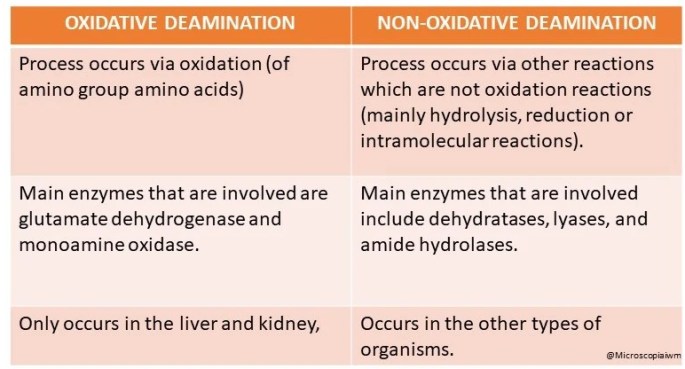
1. Oxidative deamination: Process occurs via oxidation (of amino group amino acids).

2. Non-oxidative deamination: Process occurs via other reactions which are not oxidation reactions (mainly hydrolysis, reduction or intramolecular reactions).

1. Oxidative deamination: Main enzymes that are involved are glutamate dehydrogenase and monoamine oxidase.

2. Non- oxidative deamination: Main enzymes that are involved include dehydratases, lyases, and amide hydrolases.

BY- Shaily Sharma (MSIWM041)
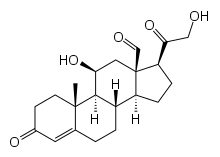
Cholesterol: Sources, Structure and Biosynthesis.

Cholesterol present in the body is derived from dietary foods, hydrolysis of cholesteryl esters and synthesis of cholesterol (more than half of the cholesterol is present due to synthesis).

fig:

                     Figure: Chemical structure of cholesterol

The biosynthesis of cholesterol takes place in the endoplasmic reticulum and the cytosol of the cell. Majorly, the process takes place in nucleated cells of the liver, like hepatic cells. The biosynthesis takes place in 5 major steps:

  1. Biosynthesis of mevalonate:
  • Mevalonate, a conjugate base of mevalonic acid, is formed from acetyl CoA during the synthesis of cholesterol.
  • This takes place in the cytosol of the cell.
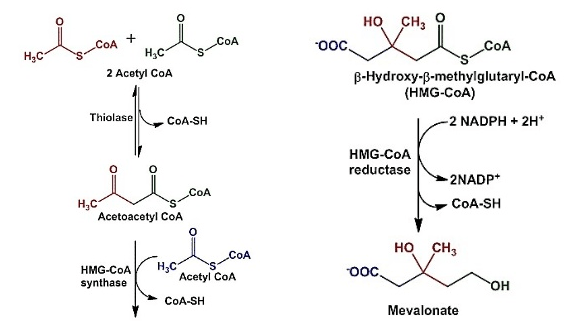
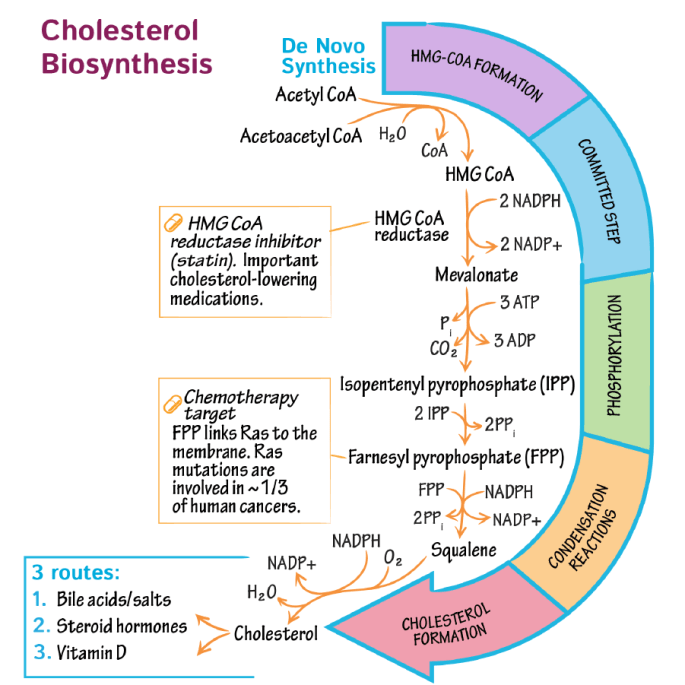
  • Aceto-acetyl CoA is formed by the condensation of 2 molecules of Acetyl CoA, catalyzed by thiolase.
  • This product further condenses with another acetyl CoA molecule to give HMG-CoA, a reaction catalysed by HMG-CoA synthase.
  • This HMG-CoA is reduced to mevalonate by NADPH. This is catalysed by HMG-CoA reductase.
  • This is an important regulatory step as well in the biosynthesis of cholesterol, where HMG-CoA reductase plays a key role.

Figure: Biosynthesis of Mevalonate

  1. Formation of isoprenoid units
  • Isoprenoid units are formed when mevalonate is phosphorylated sequentially in the presence of ATP and Mg2+ and 3 kinases to give mevalonate-3-phospho-5-diphosphate.
  • The final kinase of the phosphorylation, mevalonate-3-phospho-5-diphosphate undergoes decarboxylation to give an active isoprenoid unit.

Figure: Biosynthesis of isoprenoid

  1. Formation of Squalene
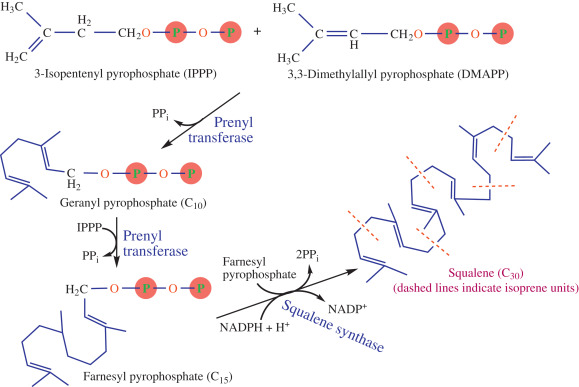
  • Six molecules of Isopentenyl Pyrophosphate (C5) undergo condensation to form a 30 carbon molecule known as Squalene.
  • It is a sequential pathways which proceeds as: C5——>C10——->C15——>C30
  • Intermediates that are observed are geranyl diphosphate (C10), farnesyl diphosphate (C15)  and finally which goes on to form squalene (C30).

Figure: Biosynthesis of Squalene

  1. Formation of Lanosterol
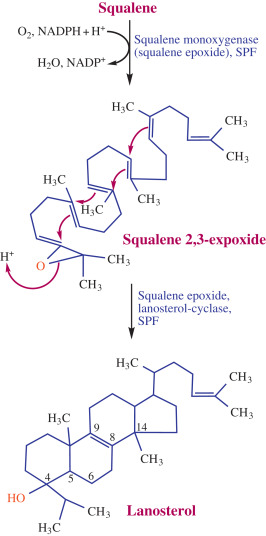
  • Squalene is converted to squalene-2,3-epoxide in the endoplasmic reticulum by squalene epoxidase.
  • After this, ring closure occurs in the presence of oxidosqualene: lanosterol cyclase  to give lanosterol, which is a freshly formed cyclic structure.

Figure: Biosynthesis of Lanosterol

  1. Cholesterol formation
  • Finally, cholesterol is formed from lanosterol in the membranes of the endoplasmic reticulum.
  • This takes place through a number of changes in the side chains and the steroid nucleus.
  • An intermediate known as desmosterol is also formed due to the shift of a double bond.
  • This double bond of the side chain is reduced, which ultimately forms cholesterol.

Figure: Formation if cholesterol from lanosterol

Cholesterol is thus synthesized by nucleated cells in the body through a long pathway involving numerous enzymes and steps. It is an essential molecule as it has various biological functions such as it acts as the precursor for steroid hormones and bile salts, it is required for nerve transmission and is a major constituent of plasma membrane and lipoproteins.

BY- Shaily Sharma (MSIWM041)

MITOSIS- its Occurrence, Stages and Significance.


  1. Mitosis is a type of cell division that takes place in living organisms and it is commonly defined as the process of duplication of chromosomes in eukaryotic cells and distributed during cell division.
  2.  The process where a single cell divides resulting in two identical cells, each resulted cell contains the same number of chromosomes and same genetic composition similar to the parent cell.
  3. Mitosis was first discovered in plant cells by Strasburger in 1875. In 1879, mitosis is also discovered in animal cells by W. Flemming. Flemming in 1882 gave the term Mitosis.
  4. The term mitosis is derived from the Greek word such as ‘Mitos’ means thread.
  1. The mitosis takes place in somatic cells. The cells which undergo mitosis are called  Mitocytes.
  2. In plants, the mitocytes are called meristematic cells. Some of the major sites of Mitosis in plants are root apex, shoot apex, intercalary meristem, lateral meristem, leaves, embryo, and seeds.
  3. In animals, the mitocytes are stem cells, germinal epithelium, and embryonic cells. In animals, it mainly takes place in Embryo, skin, and bone marrow.
  4. Mitosis also occurs during the regeneration of the cells. The mitosis takes place for three main reasons such as growth, repair, and asexual reproduction.

NUCLEUS:

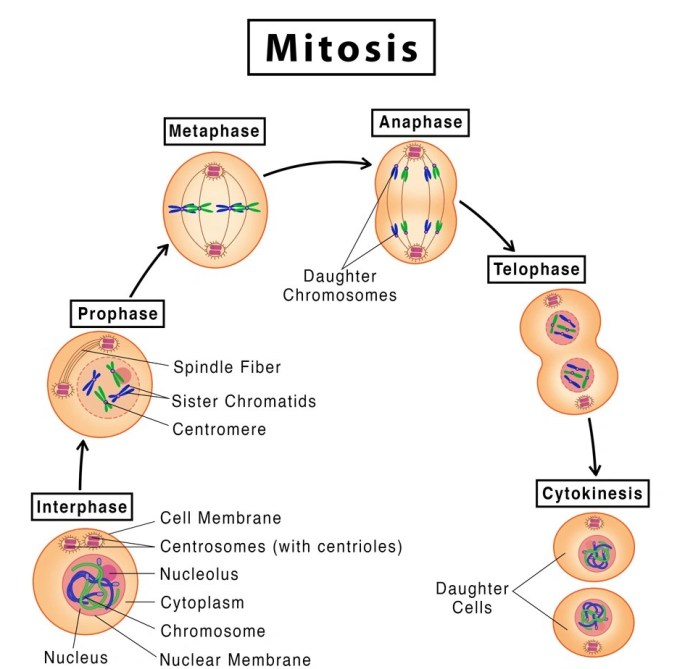
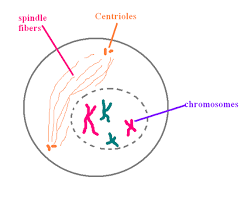
It is a membrane-bound cell organelle present in both animal and plant cells. It is the center of the cell where genetic material is stored in the form of DNA. The DNA is arranged into a group of proteins into thin fibers. During the Interphase of the cell division, the fibers are uncoiled and dispersed into the chromatin. During mitosis, these chromatin condenses to become chromosome.

 CHROMOSOME:

The chromosomes carry genetic material and they are made of DNA. The mitotic chromosomes possess two sister chromatids, they are narrow at the centromere. They also contain identical copies of original DNA. These Mitotic chromosomes are homologous, they are similar in shape, size, and location of centromere.

STAGES OF MITOSIS :

The mitosis cell division is broadly explained in two stages such

  1. Karyokinesis: Division of Nucleus. Greek ‘karyon’ means the nucleus, whereas ‘kinesis’ means movement.
  2. Cytokinesis: Division of Cytoplasm.

4 different stages that take place in Karyokinesis.

PROPHASE:

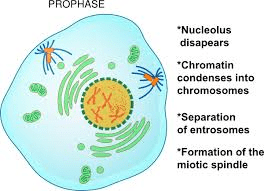
  1. The nucleus becomes spherical and the cytoplasm becomes more sticky.
  2. The chromatin slowly condenses into well-defined chromosomes.
  3. During Prophase, the chromosomes appear as a ball of wool. The chromosomes consists of two threads which are longitudinal known as chromatids.
  4. The chromosomes appear as two sister chromatids joined at the centromere.
  5. The microtubules are formed outside the nucleus.
  6. In plant cells, the spindle apparatus is formed without centriole. In animal cells, the centriole is divided into two moves towards opposite poles.

METAPHASE:

  1. Nuclear envelop breaks down into membrane vesicles and the chromosomes are set free into the cytoplasm.
  2. Chromosomes are attached to spindle microtubules through kinetochore.
  3. Nucleolus disappears.
  4. Kinetochore microtubules arrange the chromosomes in one plane to form a central equatorial plate.
  5. Centromeres lie on the equatorial plane while the chromosome arms are directed away from the equator called auto orientation.
  6. Smaller chromosomes remain towards the center while larger ones arrange at the periphery.
  7. Metaphase is the longest stage of Mitosis and takes place for about 20 minutes. It is the best stage to study the structure of chromosomes.

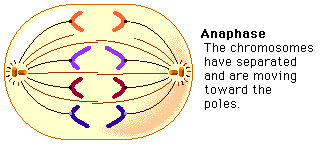
ANAPHASE:

  1. Chromosomes split simultaneously at the centromeres so that the sister chromatids separate.
  2. The separated sister chromatids move towards the opposite poles.
  3. The daughter chromosomes appear in different shapes such as V-shaped(metacentric), L-shaped(sub-metacentric), J-shaped(acrocentric), rod-shaped(telocentric).
  4. The spindle fibers are attached to the centromere and pull the chromosomes to the poles.
  5. Anaphase is the shortest stage of Mitosis.

TELOPHASE:

  1. Daughter chromosomes arrive at the poles. Kinetochore microtubules disappear.
  2. Chromosomes uncoil into chromatin.
  3. Nucleolus reappears. The formation of nuclear envelope occurs around each pair of chromosomes.
  4. The Viscous nature of the cytoplasm decreases.
  5. Telophase is called a reverse stage of the prophase.

CYTOKINESIS:

Cytokinesis is defined as the division of cytoplasm.

  1. It starts during the anaphase and is completed by the end of the telophase.
  2. It takes place in 2 different methods.

a) Cell plate method: It takes place in plant cells. The vesicles of Golgi fuse at the center to form a barrel-shaped phragmoplast. The contents of the phragmoplast solidify to become a cell plate, this cell plate separates the two daughter cells.

b) Cleavage or cell furrowing method: It takes place in Animal cells. In this method, a Cleavage furrow appears in the middle, which gradually deepens and breaks the parent cell into two daughter cells.

  1. Mitosis is called as an equational division in which daughter cells produced are identical.
  2. It maintains the constant number of chromosomes and genetic stability in somatic and vegetative cells of the living organisms.
  3. It helps to increase the cell number so that zygote transforms into a multicellular adult.
  4. Healing wounds takes place by Mitosis.
  5. It helps in asexual reproduction.
  6. Mitosis is necessary for growth, maturity and to repair damaged cells.

BY: ABHISHEKA (MSIWM013)

Metamorphosis and its type

Metamorphosis can be said as both developmental and an ecological conversion

  • Developmental– Metamorphosis is initiated by specific hormones that reactivate the developmental process whereby it is adjusting itself morphologically, physiologically and behaviorally.
  • Ecological– This sort of evolution is associated with fluctuations in habitat, food and behavior.

Metamorphosis can be categorized in 2 types on the basis of formation: Complete and Incomplete metamorphosis-

Complete metamorphosis-It is a type of insect development in which egg, larva, pupal and adult stages differ among them greatly during the process of metamorphosis. The four stages that can be categorized are- Egg, larva, pupa and adult. Here, the metabolically active form is larvae and the inactive one is the pupa. The exoskeleton, particularly of the insect is completely molted. Sexually active is the final stage of the insect (adult). Examples of this type include Wasps, ants and fleas.

Incomplete metamorphosis-It is a type of insect development where gradual changes occur in the insect during the development from egg to adult. The three stages categorized are- Egg, nymph and adult. The nymph can be identified as a miniature adult. Certain portions of exoskeleton in the adults remain permanent throughout its life. Sexually active is the former stage of the insect. Examples of this type include termites, mantis and cockroach.

On the basis of the mode of developing, it is divided as: Direct and Indirect developers

Direct developers– Those organisms whose young structurally mimic the adult’s structure and are sexually inactive. Example- Humans.

Indirect developers– Those organisms which includes a larval stage with characteristics and features very different from those of adult organism. They can further be classified as primary and secondary larvae.

  • Primary larvae represent different body plans than adult one and are structurally very distinct. Example is sea urchin.
  • Secondary larvae are those larvae which are also the adults which possess basic body plan. Example is Butterfly.

Heterochrony It is the phenomenon whereby there is a genetically controlled time difference in the rate of development process in an organism compared to its ancestors, therefore, showcasing a marvelous morphological innovation. The notion “heterochrony” was first introduced by the German zoologist Ernst Haeckel in 1875 for which he mainly used it explain the rare conditions of “recapitulation theory” (a hypothesis where a developing embryo, when going through all walks of life resembles the adult form of distinct ancestors.) For now, we will ponder over pedomorphosis’s subtypes.

PAEDOMORPHOSIS:

* Progenesis– It involves the retention of juvenile form, but in this case, the gonads and germ cells develop at a faster rate than normal. This becomes sexually mature while the rest of the body is still in a juvenile phase.

* Neotony– It refers to the retention of the juvenile form owing to the retardation of body development relative to that of the germ cells and gonads, which achieve maturity at the normal time.

* Direct development– Here, the embryo skips the larval step and proceeds with the creation of adult stage.

PERAMORPHOSIS:

* Hypermorphosis- During the course of evolution, the rate of development is unchanged but the relative time duration is increased, thereby allowing the addition of new stages to the end of the ancestral categorization process.

* Acceleration- The essential developmental changes, but in a shorter time (varying growth rates).

* Predisplacement- A modification in the ontogeny of a successor such that some developmental process begins earlier than in its ancestor.

BY-  N. Shreya Mohan (MSIWM042)

Citric acid production and applications of submerged fermentation

Submerged fermentation is a type of fermentation in which the microorganisms are suspended in a liquid medium. The liquid medium also contains various other nutrients and growth factors in the necessary proportions in a dissolved or a particulate solids form.

The main application of submerged fermentation technique is in the extraction of metabolites (secondary metabolites) which are needed to be in liquid form for use.

  • The primary application of submerged fermentation is in the extraction process of metabolites (mostly secondary metabolites) that find applications in their liquid form.
  • Citric acid is one of the most important metabolites as the production volume of it is high, for the production of antibiotics like penicillin.
  • Submerged liquid fermentations are traditionally used for the production of microbially derived enzymes like cellulolytic enzymes.

CITRIC ACID PRODUCTION

  • Citric acid is widely distributed in plant and animal tissues.
  • It is an intermediate of the Krebb’s cycle, by which carbohydrate gets converted to CO2, in nature.
  • Citric acid can be produced on the industrial scale by employing submerged state fermentation as the fermentation method.

Type of bioreactor used for submerged fermentation: 

  1. Stirred tank bioreactor
  2. Airlift fermenter.

Selection of strain and storage:

  • Various criteria should be checked for the selection of production strains such as:

-High citric acid yield.

-Stability of the strain.

-Adequate amount of sporulation, etc.

Microorganisms used for the production of citric acid:

-Species of Penicillium and Aspergillus.

Aspergillus niger is used as the principal fungus for citric acid production as it can produce large quantities of citric acid while growing on a carbohydrate medium. 

  • Maintenance of the culture of the selected strain is the next important step in citric acid production and is done so by the storage of spores.

Steps used to carry out fermentation to ensure abundant production:

-High sugar concentration.

-Limited nitrogen/phosphorus concentration.

-Very low concentration of heavy metals like iron and manganese.

Submerged fermentation process:

-The strain used for the submerged fermentation of citric acid is Aspergillus japonicus.

-The organism shows sub-surface growth.

-Citric acid is produced within the culture solution.

-Using submerged fermentation for the production of citric acid is economical as compared to other fermentation methods.

Uses of citric acid:

  • It Is extensively used in the production of carbonated drinks.
  • It is used in plasticizers.
  • It is used as a chelating and sequestering agent.
  • Used in the pharmaceutical and food industries as an acidulant.

ADVANTAGES 

The advantages of submerged fermentation include:

  • The duration of the process is short, therefore saves time.
  • The overall cost of the process is low and the yield of products is high, making it a very economical process.
  • The process of purification and processing of the products is far simpler compared to other processes.
  • The cost of handling is low and the handling of the fermenter is easy therefore it reduces the labour involved.

LIMITATIONS

  • The overall volumetric productivity of this process is low.
  • The effluent that is generated during the process is high in quantity.
  • The equipment that is used is expensive and complex.
  • The products that are obtained by using this process may be of low concentration.

Article by– Shaily Sharma (MSIWM041)

Sources:

https://en.wikipedia.org/wiki/Fermentation

https://microbenotes.com/submerged-fermentation

FLUORESCENCE MICROSCOPY

Fluorescence microscopy is an essential tool in molecular and cellular biology. It is a technique that allows one to study and visualize the cellular structures and dynamics of tissues and organelles, and macromolecular assemblies inside the cell. It was devised in the early twentieth century by various scientists like Köhler, Lehmann, Reichert and others.

The wide utilization of fluorescent proteins since their discovery have revolutionized the applications and use of the microscope in biological studies.

A fluorescence microscope uses the property of fluorescence to generate an image. It uses a high-intensity light source that excites the fluorescent molecule that may be inherently present in the sample to be studied or may be artificially labelled with a fluorescent molecule. The fluorescent molecule is called the fluorophore which is usually present in the fluorescent dye. 

Therefore, one could say that any microscope that works on the same basis to study the properties of organic or inorganic substances is a fluorescent microscope.See the source image

A fluorescence microscope is a type of optical microscope that uses fluorescence (ability of a substance to emit light on excitation) and phosphorescence (ability of a substance to continue emitting light even after the removal or withdrawal of the excitation factor). It may use these properties instead of or in addition to the properties of scattering, absorption, reflection and attenuation. 

The setup for the microscope may be simple as in an epifluorescence microscope or it may have a complicated design like that of a confocal microscope. A confocal microscope uses optical sectioning to provide a better resolution of the fluorescence image.

Principle:

Fluorescent substances are the substances that absorb light of a particular energy and wavelength and then emit light of a longer wavelength and lesser energy.  

This phenomenon of fluorescent substances can be applied to the working of the fluorescent microscope. Fluorescent dyes (also called fluorochromes or fluorophores) are molecules that have the ability to absorb excitation light at a given wavelength, and then emit light of a comparatively longer wavelength after a delayed time interval.

In practical use, the sample is stained with a fluorescent dye and then illuminated with a blue light. The blue light (short wavelength) is absorbed by the fluorophores of the fluorescent dye, and the green light (which has longer wavelength) is emitted. This change is called the Stokes shift.

The light source that is used in fluorescent microscopy is a high intensity mercury arc lamp. The lamp emits white light when then passes through a device called an ‘exciter filter’. (as shown in the figure) This device filters the emission light to reveal the location of the fluorophores. It allows only the blue component of white light (white light comprises of coloured light of all wavelengths) to pass through and prevents the passage of light of other colors.

.See the source image

The dichroic mirror is used to reflect the blue light and allows the green light to pass. The angle of the mirror is fixed in such a way that the blue light is reflected towards the specimen placed below. It allows the passage of green light.

Finally, when the light reaches the ‘barrier filter’, it blocks out or removes all the remnants of the residual blue light from the specimen which may not have been ideally reflected by the dichroic mirror.

Thus, enabling the observer to perceive the glowing green portions of the specimen against the jet-black background of the dark field condenser that is used. The portions of the specimen that have not been stained remain invisible to the eye and this is how fluorescence microscopy provides a sharp image for the observation of the fine and intricate components of the sample to be studied.

Components:

The essential components of the fluorescence microscope are:

  • Fluorescent dyes (fluorophore): Chemical compounds that have the ability to re-emit light upon excitation. Examples include; nucleic acid stain like DAPI and Hoechst, phalloidin etc.Image result for fluorescence microscope structure
  • Light source: This is provided by a bright mercury vapor arc lamp, xenon lamp or LEDs with a dichroic excitation filter, lasers etc.
  • Heat filter: The lamp produces infrared rays which generate considerable heat. No other major uses of the heat filter exist.)
  • Exciter filter: The light undergoes cooling and passes through the exciter filter which allows the passage of the shorter waves which play a role in excitation of the fluorochrome dye coated sample on the slide and does not allow the other wavelengths to pass through.
  • Dichroic mirror: An accurate colour filter/mirror which selectively allows the passage of light of a particular wavelength and reflects the others. 
  • Condenser: A dark field condenser is usually used because it provides a dark background and it is easy to detect even mild fluorescence exhibited by the sample
  • Barrier filter: It removes all the remnants of the exiting light and is situated in the body tube of the microscope between the objectives and the eye piece. 

See the source image

Applications: 

  • Identify structures in fixed and live biological samples in microbiological studies.
  • Used in food chemistry for the assessment of the structural organization and spatial distribution of the components of food.
  • Used for the study of mineral like coal and graphene oxide in minerology.
  • Used in the textile industry for analysis of fibre dimensions. 

Article By- Shaily Sharma (MSIWM041)
References:

Fluorescence Microscopy (nih.gov)

Immunofluorescence staining – PubMed (nih.gov)

Fluorescence Microscopy – Explanation & Labelled Images (microscopeinternational.com)

Vaccine

QUIZ ON VACCINE

Que 1. Vaccine is prepared by

     a. weakened microorganism              b. toxins

        c. Surface protein                           d. all of the above

Que 2. The term vaccine and vaccination are coined by-

         a. Edward jenner                             b. Louis Pasture

         c. Robert Koch                                    d. Alexander Fleming

Que 3. Vaccine stimulates-

          a. T-cells                                               b. B-cells

          c. None of the above                      d. Both A and B

Que 4. Edward Jenner uses _______ to confer immunity against smallpox

          a. Polio virus                                     b. Cowpox virus

         c. HIV virus                                          d. Influenza virus

Que 5. _____ vaccine containing live organism which is weakened in the lab so that it cannot cause disease and activate the immune system against the antigen.

         a. Live attenuated                   b. Killed or Inactivated

         c. Subunit                                d. DNA

Que 6. Microorganism causing diseases are killed by the means of chemicals, heat or radiation. These are more stable and safer than live vaccines reason is that the dead microorganism cannot mutate back to cause diseases. Such type of vaccine is known as

         a. Live attenuated vaccine                  b. Killed or Inactivated vaccine

        c. Subunit vaccine                               d. DNA vaccine

Que 7. In ________ vaccine only the part which server as antigen and stimulate the immune system is used to prepare vaccine.

         a. Live attenuated                   b. Killed or Inactivated

         c. Subunit                                d. DNA

Que 8. The _____ vaccine is the DNA sequence used as vaccine.

         a. Live attenuated                   b. Killed or Inactivated

         c. Subunit                                d. DNA

Que 9. Examples of live attenuated vaccine-

        a. Mumps vaccine                   b. Measles vaccine

        c. Chickenpox                         d. All of the above

Que 10. Examples of DNA vaccine

        a. West nile virus                     b. Herpes virus

        c. Both A and B                      d. None of the above

ANSWERS

1. (D), 2. (A), 3. (D), 4. (B), 5. (A), 6. (B), 7. (C), 8. (D), 9. (D), 10. (C)

For detail study click on the link Vaccine

Inflammation

Introduction

Inflammation is part of the complex biological reaction of the tissues of the body to harmful stimuli, such as bacteria, damaged cells or irritants, and is a defensive reaction involving immune cells, blood vessels and molecular mediators. 

Inflammation has the purpose of removing the initial cause of cell injury, clearing necrotic cells and damaged tissues from the initial insult and inflammatory process, and initiating tissue repair.

Inflammation is a generalized response, and thus, opposed to adaptive immunity, which is unique to each pathogen, it is regarded as a mechanism of innate immunity. Too little inflammation could cause the harmful stimulus (e.g. bacteria) to slowly kill tissue and threaten the organism’s survival.

There are two main types of inflammation:

  1. Acute inflammation: It typically occurs for a short time (though sometimes severe). In two weeks or less, it generally resolves itself. Symptoms soon emerge of an injury or illness after acute inflammation is seen in the body.
  1. Chronic inflammation: It is a slower form of inflammation and usually less severe. Usually, it lasts longer than 6 weeks. Even when there is no prominent disease, injury or illness, it can happen, and it doesn’t necessarily stop when the disease or injury is cured. Autoimmune conditions and even prolonged stress have been associated with chronic inflammation.

Inflammation symptoms

The five major signs that indicate the presence of inflammation are:

  • heat
  • pain
  • redness
  • swelling
  • loss of function

Symptoms widely depend on the stage and condition that causes the inflammation in the body. Other symptoms that are observed in chronic inflammation include:

  • body pain
  • constant fatigue and insomnia
  • depression, anxiety, and other mood disorders
  • gastrointestinal issues, like constipation, diarrhea, and acid reflux
  • weight gain
  • frequent infections

Causes that lead to inflammation in the body

There are different factors which cause inflammation in the body. 

This include:

  • Acute and chronic disorders 
  • Some drugs 
  • The body cannot quickly remove exposure to irritants or foreign materials. 

A chronic inflammatory response may also arise from repeated episodes of acute inflammation. 

In persons with autoimmune conditions, there are also certain forms of foods that can induce or exacerbate inflammation. 

These foods include:

  • sugar
  • refined carbohydrates
  • alcohol
  • processed meats
  • trans fats

Treatment of Inflammation

There are a number of tests that can be carried out which show the presence of inflammation in the body. It can be as easy to combat inflammation as improving one’s diet.Inflammation is greatly subsided by eliminating sugar, trans fats, and processed foods. Some common anti-inflammatory foods are:

  • berries and cherries
  • fatty fish
  • broccoli
  • avocados
  • green tea
  • Tomatoes

Other remedies that can be practiced are:

  • Consistently take required vitamins. 
  • To decrease swelling and pain,  hot or cold treatment for physical wounds can be used.
  • Exercise more often.
  • Manage and lower the levels of stress. 
  • Stop smoking. 
  • Treat any preexisting conditions and control them.

Other treatment options:

NSAIDs and aspirin

In treating short-term pain and inflammation, non-steroidal anti-inflammatory drugs (NSAIDs) are typically the first line of protection. It is an over the counter drug.

NSAIDs that are popular include: 

  • Aspirin
  • ibuprofen (Advil, Motrin, Midol) 
  • naproxen (Aleve)

Corticosteroids 

Corticosteroids are a form of steroid widely used to treat allergic reactions as well as swelling and inflammation. 

Typically, corticosteroids come as either a nasal spray or an oral pill. 

Article By- Ria Fazulbhoy (MSIWM031)

Research methodology

By- Ezhuthachan Mithu Mohanan, ( MSIWM043 )
Research methodology: The method of conducting research, by formulating problems, finding objectives, presenting result is all the crucial steps in any research. Sources of data and population consideration, ethical values, sample determination, methods executing plays a vital role before undertaking the research proposal.

Objectives

  • Obtaining novel opinions and developing skills
  • Characterizing particular character, group or condition.
  • Finding interlinked connections
  • To test hypothesis.

In biological research following types can be included:

Process

Identifying Research problem

  The initial step of any researcher is to identify the general are of interest. There are main two steps in formulating any research 

  • Understanding the problem
  • Reshape according to analytical view.

Having guidance and restoring problems already existing and engaging oneself in discussion makes it easy for identifying the research problem.

Literature review

 This is basically done to get a familiarity with the problem. Literature can be conceptual, empirical, etc. There are many source of literature; it could be abstracts, journals, bibliographies, conferences, academic journals, government reports, books. This helps in formulating problems. After the review one should focus on writing a synopsis.

Formulation of hypothesis:

Hypothesis is a tentative explanation made based on the available limited evidences. Formulating hypothesis enables to find the objective as well as result interpretation. Various approaches for formulating hypotheses:

  • Discussion with guide, and coworkers
  • Assessments of records and available data
  • Evaluating previous studies done
  • Personal investigation

Research design:

After the research problem is designed then the next step is to design the research. It involves choosing various components for  research Study.

Determining sample:

Selection of sample is utmost necessary for the development of any protocol or formulation. There are mainly two types of samples, which includes Nonprobability and probability.

  • Nonprobability sampling:  subjective methods of sampling
  • Probability sampling: It is simple random sampling, systematic sampling, cluster sampling

 Data Collection:

The process of gathering information enabling answer stated questions, testing hypothesis and evaluating outcomes. To maintain integrity of research accurate data collection is necessary.

Proper data collected must include:

  • Ability to answer research questions
  • Ability to repeat and validate the study
  • Less wastage of resources
  • No compromises for the fulfillment of requirement
  • No harm to human or subject studies

To maintain integrity there are two elements which is helpful

Quality assuranceQuality control
Before data collectionDuring or after data collection
Standardization of protocolCareful documentation of protocol.

Data analysis:

Process of applying statistical and logical techniques systematically, to describe, illustrate and evaluate data is known as data analysis.

Proper data analysis must include:

  • Skills to analyze data
  • Appropriate subgroup analysis
  • Acceptable discipline norms
  • Statistical significance
  • Clearly defined objective
  • Accurate results
  • Presenting data
  • Reliability and validity
  • Appropriate category considerations

 Testing hypothesis:

Process to evaluate the strength of evidence and providing framework for determination.

The two main steps in testing hypothesis is framing null hypothesis and alternative hypothesis

Null hypothesis: No statistical significance exists in the given set of observation. This is assumed to be true.

Alternative hypothesis: It is opposite to null hypothesis

 Interpretation: After analytical and experimental study, the drawn inferences is known as interpretation. The major aspects of interpretation is 

  • Establish continuity
  • And establish explanation concepts.
  • Preparation of report:

There should always be the necessary documentation of each and every result. The research reports contains following  elements

  • Description and methodology
  • Obtained results
  • The recommendations made

There are two types of Research reports 

  • Technical reports: which aim to specific group of people, including scientist, researchers, guides, belonging to the area
  • Popular reports: which can be understood my lay man or common people, in more easy and feasible way, with less technical words.
  • Presentation of results: It can be done in various ways including writing research papers, presenting in conferences, writing drafts, discussing, Seminar presentation or oral presentation.

Corona Virus

QUIZ ON CORONA VIRUS

Que 1: Latin word “corona” means

        a. Crown                  b. Lethal

        c. Spherical             d. Contagious

Que 2: Coronavirus belongs to _______ subfamily-

        a. Avulavirinae            b. Comovirinae

        c. Orthocoronavirinae       d. Parvovirinae

Que 3: SARS cov was transmitted from-

        a. Civet cats             b. Camels

        c. Dogs                      d. Bats

Que 4: MERS cov was transmitted from-

         a. Civet cats          b. Camels

         c. Dogs                   d. Bats

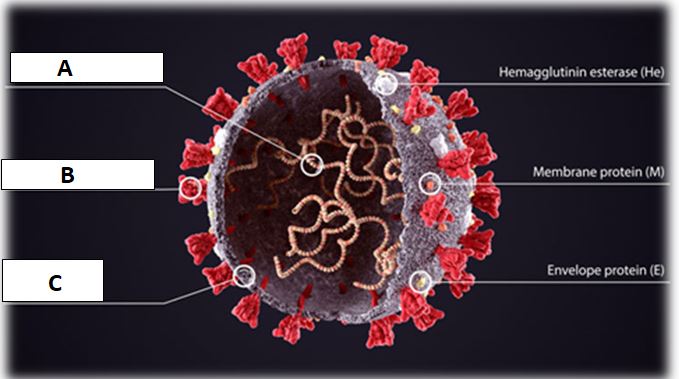
Que 5: Arrange in sequence

                a. A- Nucleocapsid  protein and Rna

                    B- Lipid bilayer membrane

                    C- Spike glycoprotein 

                b. A- Lipid bilayer membrane

                    B- Spike glycoprotein 

                    C- Nucleocapsid  protein and Rna

                c. A- Nucleocapsid  protein and Rna

                    B- Spike glycoprotein 

                    C- Lipid bilayer membrane

                d. None of the above

ANSWER:

1. (a)  2. (c)  3. (a)  4. (b)  5. (c)

For detail study click on the link Corona Virus